Category Archives: media ethics

How startups focus on the execution of business plans, with less intent on controlling IP

By MARK PEARSON

Entrepreneurs might undertake strategies that abandon formal IP protection in favour of being quicker to market and investing in capabilities – that is, focussing on an idea’s execution – University of Toronto Professor Joshua Gans told the 2015 IP and Media Law Conference, in his keynote address at the University of Melbourne Law School today (November 23).
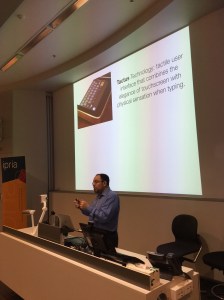
JoshuaGandCMCL

Professor Joshua Gans delivering the keynote to the Media and IP Law Conference at the University of Melbourne.

He unveiled an economic model developed with colleagues Scott Stern and Kenny Ching featuring two key propositions.

“Execution allows you to maintain market leadership so control buys you only delay,” he said.

“Control only is cost in that regard. It only delays you without giving you additional benefit.

“Even aside from resource constraint issues, control and execution are substitute strategies. The whole is not greater than the sum of the parts. You want to advise firms to pursue control or execution but not both.”

He explained execution-oriented firms will hit key milestones more quickly and will be less dependent on significant venture capital investment.

He argued against what he said was the common assumption of IP analysis that the strength and use of IP is exogenous.

CMCLlogoforblog19-11-15“Here I argue that is is endogenous and depends on the choices of entrepreneurs/innovators in their business strategy,” he promised in his abstract.

“I demonstrate that entrepreneurs can undertake strategies that abandon formal IP protection in favour of being quicker to market and investing in capabilities — that is, focussing on execution.”

Joshua Gans is a Professor of Strategic Management and holder of the Jeffrey S. Skoll Chair of Technical Innovation and Entrepreneurship at the Rotman School of Management, University of Toronto (with a cross appointment in the Department of Economics). Since 2013, he has also been Area Coordinator of Strategic Management. He is also Chief Economist of the University of Toronto’s Creative Destruction Lab. In 2012, Joshua was appointed as a Research Associate of the NBER in the Productivity, Innovation and Entrepreneurship Program.

He has also co-authored (with Stephen King and Robin Stonecash) the Australasian edition of Greg Mankiw’s Principles of Economics (published by Cengage), Core Economics for Managers (Cengage), Finishing the Job (MUP) and Parentonomics (New South/MIT Press). Most recently, he has written an eBook, Information Wants to be Shared (Harvard Business Review Press).

The full conference program is here. Our paper (Pearson, Bennett and Morton) is titled ‘Mental health and the media: a case study in open justice’ (see earlier blog here).

———–

Disclaimer: While I write about media law and ethics, nothing here should be construed as legal advice. I am an academic, not a lawyer. My only advice is that you consult a lawyer before taking any legal risks.

© Mark Pearson 2015
Leave a comment

Filed under free expression, intellectual property, media ethics, media law, Media regulation, Uncategorized

How to challenge a ban on naming a mental health patient

By MARK PEARSON

UTS colleague Associate Professor Tom Morton, ABC lawyer Hugh Bennett and I will deliver a paper in Melbourne next week on our experiences applying to the Mental Health Tribunal of NSW for permission to name a forensic mental health patient in an ABC documentary and in our academic works.

CMCLlogoforblog19-11-15The occasion is the 2015 IP and Media Law Conference, hosted by the Centre for Media and Communications Law at the University of Melbourne Law School, November 23-24. The full program is here. I plan to blog a few of the highlights of the sessions I attend.

Our paper is titled ‘Mental health and the media: a case study in open justice’ and we present on the first morning of the conference. Here is its abstract:

News and current affairs reportage about forensic mental health cases raises a host of competing interests, including the public’s right to know about mental health tribunal processes; a patient’s right to privacy, treatment, and recovery; and victims’ and the broader community’s interest in learning the longer term consequences of a publicised serious criminal act. This article details a case study of the legal processes involved in applications for permissions to identify a forensic mental health patient in NSW in an Australian Broadcasting Corporation Radio National Background Briefing documentary ‘The Man Without a Name’ and in subsequent research blogs and scholarly works including this article. It begins by backgrounding the restrictions on publicising mental health tribunal cases in Australia, summarising the case study, examining the specific restrictions applying to the Mental Health Review Tribunal in NSW, detailing the processes followed in the successful application by the authors to name the patient, comparing the case with Australian and British cases, and making some recommendations for further research and reform.

Tom and I recently co-authored an article on the ethics of that same experience in Pacific Journalism Review, titled ‘Zones of silence: Forensic patients, radio documentary, and a mindful approach to journalism ethics’. Here is our abstract. Full contents of the edition and subscription details can be seen here. Reference: Morton, T. and Pearson, M. (2015). Zones of silence: Forensic patients, radio documentary, and a mindful approach to journalism ethics. Pacific Journalism Review, 21(2), 11-32.

———–

Disclaimer: While I write about media law and ethics, nothing here should be construed as legal advice. I am an academic, not a lawyer. My only advice is that you consult a lawyer before taking any legal risks.

© Mark Pearson 2015
3 Comments

Filed under blogging, Buddhism, citizen journalism, Eightfold Path, free expression, media ethics, mental health, social media, Uncategorized

Mindful Journalism – thanks for the reviews

By MARK PEARSON

Thanks to colleagues Lisa Waller and Franz-Josef Eilers SVD for their recent reviews of our book Mindful Journalism in academic journals.

“This volume […] makes a significant international contribution to the discipline by demonstrating how a Buddhist approach can build understanding of journalism’s place in the world and its power, and be used to improve journalism practice.” —Lisa Waller, Australian Journalism Review 37(1)

“All in all, the book is an important contribution to the value of religions – here Buddhism – for journalism ethics though one might also argue that this is not only for journalists in the strict sense but for anybody involved in communication which is in a digital world almost everybody.” — Franz-Josef, svd, Journal of the Asian Research Center for Religion and Social Communication

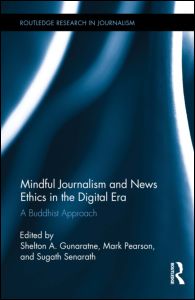
Our book Mindful Journalism and News Ethics in the Digital Era: A Buddhist Approach (Shelton Gunaratne, Mark Pearson and Sugath Senarath eds; Routledge, NY) was published in February 2015.

Review copies are available from Routledge by filling out this request form. Please see the publisher’s synopsis.

MindfulJournalismCoverThe term ‘mindful journalism’ is a concept I introduced more than a year ago in the inaugural UNESCO World Press Freedom address at AUT University Auckland, drawing upon the earlier substantive work by my esteemed colleague (and lead editor of our book), Emeritus Professor Shelton Gunaratne, who has been working for decades on the intersection between Buddhism and journalism.

I developed my application of this in a paper to the International Association for Media and Communication Research (IAMCR) conference in Dublin in July 2014, which was revised for publication as an article in Ethical Space published in December 2014.

It has been published as part of the Routledge New York Research in Journalism series. My key point was that one does not have to be a Buddhist to incorporate the key principles of mindful journalism into one’s work. In fact, most of these very moral principles are evident in the teachings of all the world’s great religions. However, for those who lack a moral framework for their ethical decision-making, a secular application of these non-theistic principles can offer a moral compass. They offer a series of normative or aspirational goals we can strive for, but rarely reach. They also provide a schema for the analysis of ethical decision-making by journalists.

Interested? You can read  extracts from the book using the “Look Inside” interface at Amazon. Enjoy.

———–

Disclaimer: While I write about media law and ethics, nothing here should be construed as legal advice. I am an academic, not a lawyer. My only advice is that you consult a lawyer before taking any legal risks.

© Mark Pearson 2015
Leave a comment

Filed under blogging, Buddhism, citizen journalism, Eightfold Path, free expression, media ethics, mental health, social media, Uncategorized

Zones of silence: Forensic patients, radio documentary, and a mindful approach to journalism ethics

By MARK PEARSON

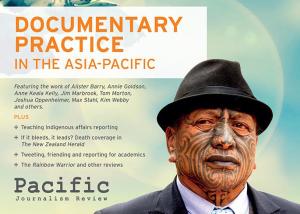
Congratulations to Pacific Journalism Review editors David Robie, Annie Goldson and Barry King on their newly released special edition ‘Documentary Practice in the Asia-Pacific’.

I was honoured to be invited by research colleague Associate Professor Tom Morton from UTS to co-write an article centred upon the law and ethics behind his ABC Background Briefing documentary ‘The Man Without A Name’, broadcast in 2014. In the article we detail the story behind the documentary and the legal and ethical challenges we faced in navigating the publishing restrictions of the NSW Mental Health Act and some related legislation.

PJR Special Edition vol21(2) OP FINAL CORRECTED 685wide_0

Cover of the special Pacific Journalism Review edition Volume 21 (2)

Here is our abstract:

This article explains a collaborative and critically reflective journalism research project stemming from the wish of an incarcerated forensic mental health patient to be named in public communication about his case. The authors are academics and journalists who embarked upon a combination of journalism, legal processes and academic research to win the right to name Patient A in a radio documentary and in academic works—including this journal article and research blogs. As a case study, it explains the theoretical and ethical considerations informing the journalism and the academic research, drawing upon traditions of documentary production, the principle of open justice and the ethical framework of ‘mindful journalism’. It concludes by drawing lessons from the project that might inform future practitioners and researchers embarking upon works of journalism and research involving vulnerable people and a competing set of rights and public interests.

Full contents of the edition and subscription details can be seen here.

———–

Disclaimer: While I write about media law and ethics, nothing here should be construed as legal advice. I am an academic, not a lawyer. My only advice is that you consult a lawyer before taking any legal risks.

© Mark Pearson 2015
Leave a comment

Filed under blogging, Buddhism, citizen journalism, Eightfold Path, free expression, media ethics, mental health, social media, Uncategorized

Mindful journalism in focus on @RNmediareport

By MARK PEARSON

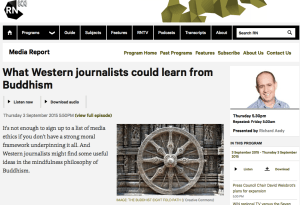
Mindful journalism was the focus of a segment on Radio National’s Media Report (@RNmediareport) this week (September 3, 2015) when I was interviewed by host Richard Aedy (@richardaedy) on the application of Buddhist ethics to reporting.

Interested? You can listen to the 10 minute segment here.

Screen Shot 2015-09-04 at 9.46.24 am

Our book Mindful Journalism and News Ethics in the Digital Era: A Buddhist Approach (Shelton Gunaratne, Mark Pearson and Sugath Senarath eds; Routledge, NY, 2015)  explored the possibilities of applying mindfulness techniques to journalism practice.

I’ve also written a shorter account of the basic principles in the journal Ethical Space: The International Journal of Communication Ethics, and the editors have been kind enough to make that article available for free viewing as a feature item on their website here. You might also want to explore some of their other fascinating articles on media ethics here and perhaps subscribe.

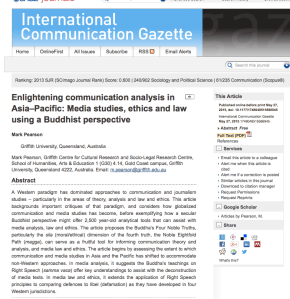
I’ve also written an article on the “Right Speech” aspect of mindful journalism for the International Communication Gazette titled ‘Enlightening communication analysis in Asia-Pacific: Media studies, ethics and law using a Buddhist perspective’. Its abstract and link to the full article is available here.

Screen Shot 2015-05-29 at 3.08.59 pmThe article backgrounds important critiques of the Western approach to communication  studies, and considers how globalized communication and media studies has become, before exemplifying how a secular Buddhist perspective might offer 2,500 year-old analytical tools that can assist with media analysis, law and ethics.

The article proposes the Buddha’s Four Noble Truths and their associated Noble Eightfold Path (magga) can be fruitful tools for informing communication theory and analysis, and media law and ethics.

The article begins by assessing the extent to which communication and media studies in Asia and the Pacific has shifted to accommodate non-Western approaches.

In media analysis, it suggests the Buddha’s teachings on Right Speech (samma vaca) offer key understandings to assist with the deconstruction of media texts. In media law and ethics, it extends the application of Right Speech principles to comparing defences to libel (defamation) as they have developed in four Western jurisdictions.

Here is a brief extract on that aspect:

In this globalised, multi-cultural and multi-jurisdictional Web 2.0 era there should be no reason why the Judeo-Christian lens should have a monopoly on our examination of communication law. A mindful reading of defamation law benefits from a consideration of both Right Speech principles and concepts of necessary truth-telling. While it is far-fetched to expect judges and legislators in the West would turn to Buddhism for the reform of defamation law, an effort to abide by truth-telling and Right Speech principles could operate effectively when professional communicators are attempting to avoid libel litigation when pursuing their stories. Further, they present excellent tools for an alternative analysis.

Analysis of the development of defamation defences in Canada, the UK, Australia and the U.S. benefit from a Buddhist reading. In Grant v. Torstar Corp., 2009 SCC 61, [2009] 3 S.C.R. 640, the Supreme Court of Canada developed a ‘responsible communication’ defence to defamation for matters which might not have been able to be proven absolutely as true, but were still diligently reported and were clearly in the public interest to be aired within the spirit of the Canadian Charter of Rights and Freedoms protection of free expression. ..

It is possible to implement a Buddhist approach using the Right Speech teachings from the Noble Eightfold Path to conduct an analysis in this area of communication law. The author proposes to do this more thoroughly in future work. However, for the purposes of this argument we might return to the Abhaya Sutta cited earlier and contrast these defences as they have been developed in these jurisdictions (Thanissaro, 1997). Crucial to the Canadian ‘responsible communication’ defence and its qualified privilege cousins in the UK and Australia is the extent to which reporters and publishers honestly believe in the truth of the defamatory material published, even though they might not have the firm evidence to prove this in court. They would pass the Buddhist (mindful journalism) test if they had an honest belief the material was “factual, true, beneficial” while perhaps being “unendearing and disagreeable to others”, as long as they had chosen the “proper time” for reporting it (Thanissaro, 1997). However, the U.S. defences driven by the First Amendment takes this liberty a step too far under this schema, because it allows unbeneficial, unendearing and disagreeable material to be published about public figures as long as it has not been done with malice. It also allows for untruthful gossip-mongering, as identified earlier in the Saleyyaka Sutta (Nanamoli, 1994) as ethically problematic. Such analysis shows promise in the field of media law analysis, reform and policy development because it provides a working ethical framework to apply to legislation and the fact scenarios of particular cases.

The article applies the ‘Right Speech’ principles of Buddhist ethics to analysis of the Royal family prank call episode which resulted in a High Court appeal in Australia and to a racial discrimination case heard in Australia’s Federal Court over comments on a West Australian news website.

———–

Disclaimer: While I write about media law and ethics, nothing here should be construed as legal advice. I am an academic, not a lawyer. My only advice is that you consult a lawyer before taking any legal risks.

© Mark Pearson 2015

Leave a comment

Filed under blogging, Buddhism, citizen journalism, Eightfold Path, free expression, media ethics, mental health, social media

Towards a mindful approach to media law and ethics

By MARK PEARSON

Our book Mindful Journalism and News Ethics in the Digital Era: A Buddhist Approach (Shelton Gunaratne, Mark Pearson and Sugath Senarath eds; Routledge, NY, 2015)  explored the possibilities of applying mindfulness techniques to journalism practice.

How might we begin to apply Buddhist ethical systems to the analysis of media law and ethics?

I explore this question in an article just published online and to appear in a forthcoming print edition of the International Communication Gazette.

It is titled ‘Enlightening communication analysis in Asia-Pacific: Media studies, ethics and law using a Buddhist perspective’. Its abstract and link to the full article is available here.

Screen Shot 2015-05-29 at 3.08.59 pmThe article backgrounds important critiques of the Western approach to communication  studies, and considers how globalized communication and media studies has become, before exemplifying how a secular Buddhist perspective might offer 2,500 year-old analytical tools that can assist with media analysis, law and ethics.

The article proposes the Buddha’s Four Noble Truths and their associated Noble Eightfold Path (magga) can be fruitful tools for informing communication theory and analysis, and media law and ethics.

The article begins by assessing the extent to which communication and media studies in Asia and the Pacific has shifted to accommodate non-Western approaches.

In media analysis, it suggests the Buddha’s teachings on Right Speech (samma vaca) offer key understandings to assist with the deconstruction of media texts. In media law and ethics, it extends the application of Right Speech principles to comparing defences to libel (defamation) as they have developed in four Western jurisdictions.

Here is a brief extract on that aspect:

In this globalised, multi-cultural and multi-jurisdictional Web 2.0 era there should be no reason why the Judeo-Christian lens should have a monopoly on our examination of communication law. A mindful reading of defamation law benefits from a consideration of both Right Speech principles and concepts of necessary truth-telling. While it is far-fetched to expect judges and legislators in the West would turn to Buddhism for the reform of defamation law, an effort to abide by truth-telling and Right Speech principles could operate effectively when professional communicators are attempting to avoid libel litigation when pursuing their stories. Further, they present excellent tools for an alternative analysis.

Analysis of the development of defamation defences in Canada, the UK, Australia and the U.S. benefit from a Buddhist reading. In Grant v. Torstar Corp., 2009 SCC 61, [2009] 3 S.C.R. 640, the Supreme Court of Canada developed a ‘responsible communication’ defence to defamation for matters which might not have been able to be proven absolutely as true, but were still diligently reported and were clearly in the public interest to be aired within the spirit of the Canadian Charter of Rights and Freedoms protection of free expression. ..

It is possible to implement a Buddhist approach using the Right Speech teachings from the Noble Eightfold Path to conduct an analysis in this area of communication law. The author proposes to do this more thoroughly in future work. However, for the purposes of this argument we might return to the Abhaya Sutta cited earlier and contrast these defences as they have been developed in these jurisdictions (Thanissaro, 1997). Crucial to the Canadian ‘responsible communication’ defence and its qualified privilege cousins in the UK and Australia is the extent to which reporters and publishers honestly believe in the truth of the defamatory material published, even though they might not have the firm evidence to prove this in court. They would pass the Buddhist (mindful journalism) test if they had an honest belief the material was “factual, true, beneficial” while perhaps being “unendearing and disagreeable to others”, as long as they had chosen the “proper time” for reporting it (Thanissaro, 1997). However, the U.S. defences driven by the First Amendment takes this liberty a step too far under this schema, because it allows unbeneficial, unendearing and disagreeable material to be published about public figures as long as it has not been done with malice. It also allows for untruthful gossip-mongering, as identified earlier in the Saleyyaka Sutta (Nanamoli, 1994) as ethically problematic. Such analysis shows promise in the field of media law analysis, reform and policy development because it provides a working ethical framework to apply to legislation and the fact scenarios of particular cases.

The article applies the ‘Right Speech’ principles of Buddhist ethics to analysis of the Royal family prank call episode which resulted in a High Court appeal in Australia and to a racial discrimination case heard in Australia’s Federal Court over comments on a West Australian news website.

———–

Disclaimer: While I write about media law and ethics, nothing here should be construed as legal advice. I am an academic, not a lawyer. My only advice is that you consult a lawyer before taking any legal risks.

© Mark Pearson 2015

2 Comments

Filed under blogging, Buddhism, citizen journalism, Eightfold Path, free expression, media ethics, mental health, social media, Uncategorized

Mindful Journalism in action – in dialogue with University of Canterbury students

By MARK PEARSON

Graduate students in journalism from the University of Canterbury studying under Associate Professor Donald Matheson interviewed me via Skype on the principles of mindful journalism.

With their permission, I provide the recording of that interview here for the interest of those exploring the application of Buddhist ethical systems to their journalism work.

Our book Mindful Journalism and News Ethics in the Digital Era: A Buddhist Approach (Shelton Gunaratne, Mark Pearson and Sugath Senarath eds; Routledge, NY) was published in February 2015.

Review copies are available from Routledge by filling out this request form. Please see the publisher’s synopsis.

MindfulJournalismCoverThe term ‘mindful journalism’ is a concept I introduced more than a year ago in the inaugural UNESCO World Press Freedom address at AUT University Auckland, drawing upon the earlier substantive work by my esteemed colleague (and lead editor of our book), Emeritus Professor Shelton Gunaratne, who has been working for decades on the intersection between Buddhism and journalism.

I developed my application of this in a paper to the International Association for Media and Communication Research (IAMCR) conference in Dublin in July 2014, which was revised for publication as an article in Ethical Space published in December 2014.

It is being published as part of the Routledge New York Research in Journalism series. My key point was that one does not have to be a Buddhist to incorporate the key principles of mindful journalism into one’s work. In fact, most of these very moral principles are evident in the teachings of all the world’s great religions. However, for those who lack a moral framework for their ethical decision-making, a secular application of these non-theistic principles can offer a moral compass. They offer a series of normative or aspirational goals we can strive for, but rarely reach. They also provide a schema for the analysis of ethical decision-making by journalists.

Interested? You can read further extracts from the book using the “Look Inside” interface at Amazon. Enjoy.

———–

Disclaimer: While I write about media law and ethics, nothing here should be construed as legal advice. I am an academic, not a lawyer. My only advice is that you consult a lawyer before taking any legal risks.

© Mark Pearson 2015

1 Comment

Filed under blogging, Buddhism, citizen journalism, Eightfold Path, free expression, media ethics, mental health, social media, Uncategorized

Lessons in ‘Right Speech’ and mindful communication in Queensland defamation case

By MARK PEARSON

THE comedians on the Ten network’s ‘The Project’ had some fun with defamation last Friday when they used a fairly sobering Queensland case as the reason to interview me on the basics of that law.

First up, a clarification. Near the end of the segment they seemed to imply quite incorrectly that I am a lawyer which, of course, I am not!

Mark Pearson (@journlaw) interviewed on The Project about defamation 24.4.15 [At 33 mins 15 secs]

Mark Pearson (@journlaw) interviewed on The Project about defamation 24.4.15 [At 33 mins 15 secs]

There is a serious side to this. The Queensland case they used as the segue to my very rudimentary explanation of defamation law was Sierocki & Anor v Klerck & Ors (No 2) [2015] QSC 092 where Justice Flanagan had ordered a total of $260,000 in damages be awarded to the plaintiff and his company over various Internet slurs against them by his former business partner and others.

The defendants had earlier failed in their attempt to prove the truth of the imputations that the plaintiff was fraudulent; was a conman; had committed adultery; had used illegal drugs; was evil; was a thief; was a liar; and preyed on the innocent and that his company’s services were disreputable; unprofessional and encouraged threatening behaviour. Quite a slur indeed.

33671_GAZThe Courier Mail reported earlier that the plaintiff was also suing Google for $2.6 million over its search results linking him to the sites containing those imputations.

The case is interesting for media law students for a range of reasons – the large award of damages, the fact that they were Internet publications, and for the proposed action against Google.

But I find the most instructive lesson is the extent to which a dispute between business partners can escalate so far out of control that one should take to the Internet to cast these kinds of aspersions against the other.

Justice Flanagan noted in the judgment that the cause of the original dispute was unknown, but the result has been enormous financial and emotional cost to all parties.

Our new book Mindful Journalism and News Ethics in the Digital Era: A Buddhist Approach (Shelton Gunaratne, Mark Pearson and Sugath Senarath eds; Routledge, NY) examined some of the causes of such disputes and the damage that language can cause to reputations and relationships.

I take this further in a forthcoming article in a special issue of the academic journal International Communication Gazette, edited by my Mindful Journalism lead editor Shelton Gunaratne.

In that article I examine the religious origins of defamation law and proceed to link it to the Buddhist concept of “Right Speech”, writing:

In this globalised, multi-cultural and multi-jurisdictional Web 2.0 era there should be no reason why the Judeo-Christian lens should have a monopoly on our examination of communication law. A mindful reading of defamation law benefits from a consideration of both Right Speech principles and concepts of necessary truth-telling. While it is far-fetched to expect judges and legislators in the West would turn to Buddhism for the reform of defamation law, an effort to abide by truth-telling and Right Speech principles could operate effectively when professional communicators are attempting to avoid libel litigation when pursuing their stories. Further, they present excellent tools for an alternative analysis.

The basic premise of Right Speech in Buddhism is that words should not be spoken (or written or published) if they are not factual or true, or if they are unbeneficial, unendearing or disagreeable to others. All of these elements seemed to apply in this case, or at least that was the tenor of the judgment. Of course, sometimes hard truths do need to be told, but we need to ensure they are provable as true or that we can operate under some other defence excusing their publication.

The Internet offers inordinate opportunities to those seeking to defame others. This is the latest in a series of judgments demonstrating that even when one side wins a record damages payout for defamation, nobody is really a winner when reputations are damaged for no defensible reason.

We need to look to our moral compass when speaking or writing ill of others and ask whether we have an ethical foundation for doing so.

———–

Disclaimer: While I write about media law and ethics, nothing here should be construed as legal advice. I am an academic, not a lawyer. My only advice is that you consult a lawyer before taking any legal risks.

© Mark Pearson 2015

1 Comment

Filed under blogging, Buddhism, citizen journalism, Eightfold Path, free expression, media ethics, mental health, social media, Uncategorized

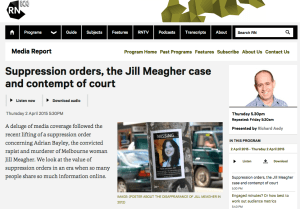
For those who missed it – the @RNMediaReport story on the Bayley suppression order #auslaw

By MARK PEARSON

As most people were heading off for their Easter vacation, Radio National’s Media Report ran a segment on how we discovered the new edition of our textbook was in breach of a suppression order on the name of Adrian Bayley – the man who murdered Jill Meagher.

My article in  The Conversation (excerpted below) explained what happened, and RN Media Report’s Richard Aedy followed it up with this interview last week:

Screen Shot 2015-04-10 at 5.17.41 PM


March 27, 2015 blog:

How the Adrian Bayley suppression order forced the reprinting of our new media law book #auslaw ]

It is somewhat alarming when a media law academic finds himself on the wrong side of a media law. But that is exactly what happened to me when I discovered the new edition of our textbook was in breach of a suppression order on the name of Adrian Bayley – the man who murdered Jill Meagher.

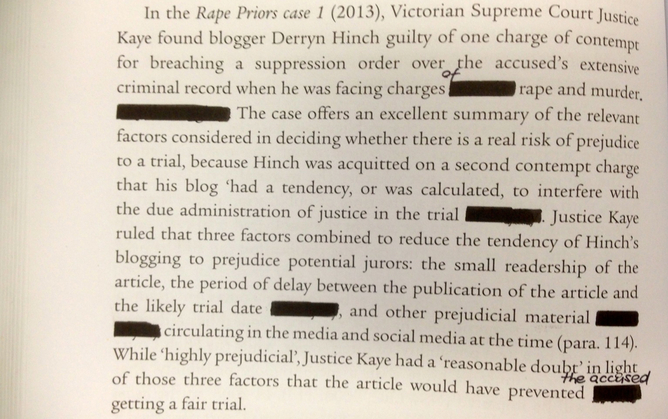
One of the manually redacted pages sent out to reviewers before our book was reprinted

One of the manually redacted pages sent out to reviewers before our book was reprinted

Our experience highlights serious problems with the system of suppression orders in the courts today as they try to grapple with the ever-increasing challenge of keeping internet-savvy jurors from having access to reports of the past trials or convictions of the accused.

Victorian County Court judge Sue Pullen issued the suppression order against anyone publishing “any information relating to previous convictions, sentences, or previous criminal cases of the accused”. The orders were lifted on Thursday after Bayley was convicted of raping three other women before he raped and murdered Meagher in September 2012.

On one view, Pullen’s orders constituted a “super injunction” because they suppressed mention of the proceedings – and therefore of the suppression order itself. Perhaps understandably, news of the order had not spread beyond the inner circle of lawyers and mainstream court reporters and editors, mainly in Victoria.

The suppression order only came to my knowledge as a Queensland-based academic when I happened to be sitting on a conference panel in Melbourne with a media lawyer and a judge last year discussing the futility of suppression orders in the modern era.

The media lawyer told the audience of court officers, lawyers, journalists and academics that he had recently appeared in court several times to try to have this particular suppression order overturned – without success. He said he could not be specific about the suppressed identity of the accused (wisely, as representatives of that court were sitting in the audience).

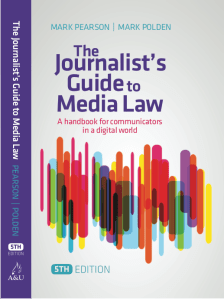
But when he mentioned the notorious crime itself my heart skipped a beat. It dawned on me that our new edition of The Journalist’s Guide to Media Law, which was sitting in the publisher’s warehouse awaiting distribution, was in clear breach of the order. Bayley had been named and linked to the Meagher murder on three pages of the book. He also appeared in its index.

Continue reading the full version of this commentary in The Conversation

Disclaimer: While I write about media law and ethics, nothing here should be construed as legal advice. I am an academic, not a lawyer. My only advice is that you consult a lawyer before taking any legal risks.

© Mark Pearson 2015

Leave a comment

Filed under blogging, citizen journalism, contempt of court, free expression, journalism, media ethics, media law, Media regulation, social media, sub judice

How the Adrian Bayley suppression order forced the reprinting of our new media law book #auslaw

By MARK PEARSON

It is somewhat alarming when a media law academic finds himself on the wrong side of a media law. But that is exactly what happened to me when I discovered the new edition of our textbook was in breach of a suppression order on the name of Adrian Bayley – the man who murdered Jill Meagher.

One of the manually redacted pages sent out to reviewers before our book was reprinted

One of the manually redacted pages sent out to reviewers before our book was reprinted

Our experience highlights serious problems with the system of suppression orders in the courts today as they try to grapple with the ever-increasing challenge of keeping internet-savvy jurors from having access to reports of the past trials or convictions of the accused.

Victorian County Court judge Sue Pullen issued the suppression order against anyone publishing “any information relating to previous convictions, sentences, or previous criminal cases of the accused”. The orders were lifted on Thursday after Bayley was convicted of raping three other women before he raped and murdered Meagher in September 2012.

On one view, Pullen’s orders constituted a “super injunction” because they suppressed mention of the proceedings – and therefore of the suppression order itself. Perhaps understandably, news of the order had not spread beyond the inner circle of lawyers and mainstream court reporters and editors, mainly in Victoria.

The suppression order only came to my knowledge as a Queensland-based academic when I happened to be sitting on a conference panel in Melbourne with a media lawyer and a judge last year discussing the futility of suppression orders in the modern era.

The media lawyer told the audience of court officers, lawyers, journalists and academics that he had recently appeared in court several times to try to have this particular suppression order overturned – without success. He said he could not be specific about the suppressed identity of the accused (wisely, as representatives of that court were sitting in the audience).

But when he mentioned the notorious crime itself my heart skipped a beat. It dawned on me that our new edition of The Journalist’s Guide to Media Law, which was sitting in the publisher’s warehouse awaiting distribution, was in clear breach of the order. Bayley had been named and linked to the Meagher murder on three pages of the book. He also appeared in its index.

Continue reading the full version of this commentary in The Conversation

Disclaimer: While I write about media law and ethics, nothing here should be construed as legal advice. I am an academic, not a lawyer. My only advice is that you consult a lawyer before taking any legal risks.

© Mark Pearson 2015

1 Comment

Filed under blogging, citizen journalism, contempt of court, free expression, journalism, media ethics, media law, Media regulation, social media, sub judice