News Media Council proposal: be careful what you wish for #ausmedia #MediaInquiry #Finkelstein

By MARK PEARSON

The Finkelstein (and Ricketson) Independent Media Inquiry report released yesterday is a substantial and well researched document with a dangerously flawed core recommendation.

An impressive distillation of legal, philosophical and media scholarship (compulsory reading for journalism students) and worthy recommendations for simpler codes and more sensitivity to the needs of the vulnerable are overshadowed by the proposal that an ‘independent’ News Media Council be established, bankrolled by at least $2 million of government funding annually.

This Council would have the ‘power’ to order corrections and apologies – but not to fine or jail journalists. That would be left to a higher court if a media outlet did not comply.

Several academics and small publishers have given it their approval. Even the Greens have applauded it, having demanded such an inquiry in the midst of the News of the World scandal in the UK and continued adverse coverage in News Limited publications locally.

The politicised circumstances of the inquiry’s birth fuelled a cry of ‘something must be done’ about the news media – for once and for all.

Criticism of the recommendations by the larger media groups on free expression grounds have been dismissed as a defence of their vested interests. It should surprise nobody that News Limited chief executive Kim Williams holds such a view, but such pigeon-holing of Finkelstein’s serious critics is a great shame. History is littered with examples of politicians withdrawing citizens’ rights to free expression because they did not like what they had been saying about them at a particular moment in history.

Scratch the surface of this proposal and you will find a harsh new regime which stands to damage Australia’s reputation as a democracy and might well come back to bite the politicians, academics and publishers who are supporting it today.

The key problems are with independence, enforcement and duplication.

The report details a process whereby the Council would be funded by the government, yet kept at arms length from it via an ‘independent’ board headed by an appointed ‘independent’ chair.

Only the chronically naïve would believe true independence could be established and maintained through such an appointment process in a relatively small government-funded instrumentality. It would, after all, be the government selecting the initial appointments committee.

Even the appointment process to the High Court suffers criticism from time to time, and the independence of the Australian Broadcasting Corporation’s chair and board has been questioned in recent history by the same academics and politicians applauding this new ‘independent’ body.

Those very people argue that News Corporation editors do not need explicit directions from Rupert Murdoch  – that their very appointment implies they will toe the line. That may well be the case, so why would it be different here?

Although this statutory body will not have the power to fine or jail journalists, its appeal lies in its ‘regulatory teeth’, powers that the Australian Press Council has lacked and the Australian Communication and Media Authority has been loathe to use.

At face value, the News Media Council would only have the power to “require a news media outlet to publish an apology, correction or retraction, or afford a person a right to reply”.

However, what if a news blogger or publisher should disagree with such a direction so strongly that they refused to comply with such an order?

Well, then they would be cited for contempt and tried in a court which would have the power to fine or jail them. Several Australian journalists have suffered that fate in recent years. Such a court would be charged with the relatively straightforward task of determining whether the publisher has disobeyed an order of the statutory council.

Only then might publishers get the opportunity for an appeal – again by a judge in court:

11.78   In order to preserve the ability of the News Media Council to act swiftly, there should be no internal appeal from, or internal merits review of, a determination. Nor should there be external merits review via the Administrative Appeals Tribunal.

11.79   It would, however, be neither desirable nor possible to preclude all judicial supervision of determinations. In any event, because enforcement may need to be by way of court order, judicial supervision would be built into the process. In the course of enforcement proceedings a collateral challenge to a determination may be available and this would provide a sufficient mechanism for judicial supervision.

And who can guess what such appeals might cost your impoverished blogger or start-up publisher in legal fees – pitted against publicly funded prosecutors and their team of silks? So much for a quick and cheap dispute resolution process.

It’s a slippery slope – all rosy for its supporters who can only see themselves calling to account the multinational News Corporation and its anti-Left line.

But they might consider how this might operate under a change of government, perhaps under a Howard-like government with individuals sitting on the Council like those appointed to the ‘independent’ ABC board during that period?

And what if such a Council orders a leading environmental news site or magazine to publish an apology to a mining magnate for the ethical breach of publishing a ‘biased’ and inaccurate report about the company’s waste disposal practices, based on sensitive material from confidential sources? Where would the power and resources rest in a court appeals process in that situation?

To publish such an apology or retraction would be an affront to the blogger, and in their principled belief it would be a lie to do so.

Yet, they would face a hefty fine or jail – or risk losing their home in an expensive court appeal process – if they chose to stand their ground.

This proposal effectively converts the MEAA Code of Ethics and the scores of in-house and industry codes of practice into laws – enforceable, ultimately, in the courts.

I suggested in my personal submission (PDF) to the inquiry and in my appearance at its Melbourne hearings that Australia already has enough of those laws. Hundreds of them. I suggested alternative mechanisms using existing laws. I argued that we did not need more media laws and more expensive legal actions and that a government-funded statutory regulator would send the wrong message to the international community. It is the approach adopted by the world’s most repressive regimes.

Which brings us to the matter of duplication. I have seen few serious ethical breaches that could not be handled by existing laws like defamation, contempt, consumer law, confidentiality, injurious falsehood, trespass and discrimination. There are existing mechanisms to pursue them properly through established legal processes.

All of the serious examples cited at 11.11 of the report could have been addressed using other laws such as defamation, ACMA remedies or breach of confidence (or the proposed privacy tort). But the new regulator would do away with all the normal trappings of natural justice, dealing speedily with matters on the papers only without legal representation a media defendant would expect in a court of law.

Small publishers and bloggers might well be bullied into corrections or apologies because they would not have the time, energy or resources to counter a contempt charge in the courts.

This proposal (bizarrely titled “enforced self-regulation” at 11.33) risks duplicating the offences via ethical code breaches, with a big stick of a contempt charge hanging over a media offender who might well have been able to defend an action taken through the traditional channels.

The cost of this inquiry and its $2 million proposed annual funding would be much better spent on media literacy campaigns for the community, law and ethics training programs for journalists and bloggers, and the establishment of a one-stop referral service within the ACMA so complainants can get help in making their complaints through existing channels.

The budget would probably even cover a means-tested advocacy service to help poorer complainants pursue the most serious breaches of existing laws through the courts.

Australia is rare among Western democracies in that we do not have free expression or media freedom enshrined in our Constitution or in a Bill of Rights. Other countries like Britain and New Zealand proposing similar regulating mechanisms have free expression as an explicit right informing their jurisprudence.

The High Court demonstrated this week (PDF) that it is in no rush to progress its so-called “freedom to communicate on matters of politics and government”.

While rejecting the notion of licensing news media, the proposal quite rightly points out the problems in deciding the ‘news media’ that will be policed – in itself a defacto system of licensing journalists. It admits it could have no jurisdiction over foreign news outlets, which means the paparazzi and hundreds of offensive bloggers need only operate under an offshore enterprise.

Supporters of this News Media Council proposal should look again at the scenarios that could play out under a tough new regime of media regulation duplicating the court system. They might well heed that lyric from Australian songwriter Paul Kelly: “Be careful what you pray for. You might just get it.”

Mark Pearson is professor of journalism at Bond University and Australian correspondent for Reporters Without Borders. His views here do not purport to represent those of either of those organisations.

© Mark Pearson 2012

Disclaimer: While I write about media law and ethics, nothing here should be construed as legal advice. I am an academic, not a lawyer. My only advice is that you consult a lawyer before taking any legal risks.

14 Comments

Filed under Uncategorized

Media regulation: my interview with @RichardAedy on @RNmediareport

By MARK PEARSON


I was interviewed for the ABC Radio National Media Report program last week on the upcoming Independent Media Inquiry report.

You can hear the full program here,  where you can also view the complete transcript.

I’ve just copied below the segment of the transcript featuring my own comments:

———–

ABC Radio National Media Report 

Finkelstein Inquiry into Newspapers

Broadcast:Friday 24 February 2012 5:30PM 

…Richard Aedy: …There are other perspectives beyond those of the Press Council and the publishers. Mark Pearson’s Professor of Journalism at Bond University on the Gold Coast. He’s particularly interested in that intersection between journalism and the law and he’s come up with one of the most novel submissions to the inquiry.


Mark Pearson: There are already so many laws controlling the behaviour of news organisations and journalists, we don’t really need any more. We need to make those that exist more effective. But if there had to be something more, the consumer law that exists at the moment, and already applies to the media in many ways, could be extended to cover heinous ethical breaches.


Richard Aedy: Didn’t the media used to be subject to those laws?


Mark Pearson: Yes they were the old Trade Practices Act. It’s now changed its name to the Competition and Consumer Act. It was introduced in 1974 and it has a provision, basically banning misleading and deceptive conduct, which is normally applying to advertising. But for the first few years, some court decisions held that it might also apply to misleading claims made in news stories; the editorial columns of newspapers and their equivalent in broadcast. So because they didn’t want this impingement on free expression and because of lobbying by the major media groups, they had an exemption to that introduced for prescribed news providers which basically, unless it was in advertising or promoting their own products and so on, they would be exempted from these misleading and deceptive conduct provisions.


Richard Aedy: Right. So to clarify. You don’t think we need additional laws. You don’t even think we need tougher existing laws. What you think we need is a much better understanding of what the laws are and perhaps getting rid of this exemption the media has had to what is effectively, I think, corporations law?


Mark Pearson: Well I certainly wouldn’t propose getting rid of that exemption because otherwise we’d be back to that 1970s position where the media were being prosecuted for their news columns. But I don’t think some tinkering with that would do any great harm which would cover the most drastic ethical breaches, clearly contrary to the public interest, where there’s been real misleading and deceptive conduct involved, of the order of your cash for comment kind of situation.


Richard Aedy: Right. I was going to say give me an example. Well all right that’s a good one. And who would be the regulator? Would it be what, the ACCC?


Mark Pearson: Well it would be the ACCC. The more the media is moving towards breaking down that firewall between editorial and advertising the more they need to be treated like just another business except where they’re doing genuine public interest journalism.


Richard Aedy: So what about the Press Council and Julian Disney asking for greater powers and saying, well look we could do with some government money for this?


Mark Pearson: I think it’s always dangerous to start introducing government funding for media self-regulatory bodies. The instant the government starts funding such things, the instant you have genuine government regulation.


Richard Aedy: But what’s wrong with that? I know editors and journalists always say this would be terrible, real government regulations. But lots of industries are regulated by the government. Why shouldn’t the media be?


Mark Pearson: Well one of our biggest problems in Australia is that we don’t have a Bill of Rights. We don’t have a Constitution with any formal protection of free expression. So it means that these other laws as they’re applied, the courts don’t have something else to look to. The High Court’s made a few decisions introducing freedom to communicate on political matters but all of that’s a little vague. And so there’s really no underpinning of free expression in this country other than a tradition that we’ve had which has been intruded upon time and time again through these hundreds of laws.


Richard Aedy: Mark Pearson from Bond University. He too opposes any move by the Press Council to accept money from the government. But the big worry for the industry isn’t really that the Press Council will get some of its funding from Canberra. It’s that Mr. Finkelstein will recommend that Canberra becomes altogether more involved.


 —————

Mark Pearson is professor of journalism at Bond University and Australian correspondent for Reporters Without Borders. His views here do not purport to represent those of either of those organisations.

© Mark Pearson 2012

Disclaimer: While I write about media law and ethics, nothing here should be construed as legal advice. I am an academic, not a lawyer. My only advice is that you consult a lawyer before taking any legal risks.

Leave a comment

Filed under Uncategorized

The Privacy Mandala: A tool for ethical newsroom decision-making

By MARK PEARSON Follow @Journlaw

Amidst the international fallout from the News of the World scandal, and as the Australian media braces for the release of new proposals for regulation, I thought I would showcase a newsroom ethical decision making tool I developed some years ago which seems to have even more relevance today.

True self-regulation must happen at the moment a journalist, editor, news director or producer is confronted with an ethical dilemma. Whether to intrude into the privacy of an individual, perhaps at a moment of extreme vulnerability, is a decision journalists should make on an informed basis, having weighed legitimate public interest concerns against the potential harm they might cause the person involved.

While the courts have been active in considering privacy actions against the media in recent years, many more privacy cases have been dealt with by self-regulatory bodies, particularly the Australian Press Council. As well as the Press Council, a further five Australian media bodies feature privacy guidelines as part of their ethical codes.

Whether or not a court or a self-regulatory body ultimately reviews a journalist’s decisions in privacy matters, reporters and news directors are frequently called to account for such decisions by other media or by their own audiences.

Journalists would be better equipped to engage in such debate, answer such challenges and defend their decisions if they had more effective and transparent processes in place when handling an ethical decision in the newsroom. There is no doubt the daily editorial conferences in major news organizations sometimes feature ethical discussion over whether a particular photograph should be used and whether certain facts about a person should be revealed. A full anthropological study of such meetings might give an insight into the processes and language used when discussing such decisions. This author’s experience of such meetings is that they would benefit from some basic tools to help guide discussion and ensure all bases are covered when reaching a privacy-related news decision.

The different legal approaches to privacy throughout the world reflect different cultural approaches to the notion of personal privacy and the different weightings accorded to free expression as a competing value. The topic is a complex one, as evidenced by the closeness of decisions of the highest courts and regulatory bodies of Europe, the UK, Australia and New Zealand when trying to adjudicate cases where the media have infringed upon individuals’ privacy.

Those very courts have looked to the internal mechanisms of news organizations and the codes of their self-regulatory bodies in trying to determine whether credible and professional decision-making processes have been followed in deciding whether to publish ethically dubious material. In fact, in the UK the courts are required to look to “any relevant privacy code” for guidance in balancing public interest vs. privacy disputes in their determinations under s.12 of the Human Rights Act 1998.

It is difficult in the cut and thrust of pressing deadlines for editors and journalist to adopt comprehensive and detailed checking processes. Sometimes there are just minutes available for key ethical decisions about whether to use a photograph, to crop it in a certain way, or to include a particular paragraph in a story. That said, there are codes of practice we can look to for general guidance in such matters. In Australia they include the MEAA (AJA) Code of Ethics, the Australian Press Council’s Statement of Principles and its accompanying Privacy Standards, the codes of the various broadcasting co-regulatory bodies, and various in-house codes adopted by major news organizations.

While all these are useful documents, they are either sparse in their directions or are not worded in a form which would be readily accessible for working journalists and therefore unlikely to be a reference point for editorial conferences or regulatory hearings where such matters are under debate. Further, many media organizations work under several sets of guidelines simultaneously. All operate with reference to their journalists’ ethical code and at least their own industry’s code of practice.

I have taken several self-regulatory codes and developed from them a more useful schema of situations, actions, and individuals which might in turn lead into a workable device for journalists (reporters, editors, news directors, and photographers) and regulatory bodies and perhaps even courts seeking to weigh up the competing privacy-public interest elements of a story. It aims to help journalists cover the main avenues of consideration when reaching their own decisions and, in turn, offer them a tool for explaining their decisions logically and systematically. I have called it the “Privacy Mandala”.

The ethical and industry codes typically flag potential danger zones for privacy material, including journalistic use of rumour, confidential information, offensive material particularly photographs and file footage.

The codes also identify several methods of privacy intrusion. They deal with individuals’ status as public figures or, alternatively, with their naivety of media practice in dealing with whether intrusion of their privacy might be more or less justifiable. These also deal with the kinds of individuals involved, with special concern over the intrusion into the lives of children. Some suggest public figures should be prepared to sacrifice their right to privacy “where public scrutiny is in the public interest”, while others say intrusion may be justified when it relates to a person’s “public duties”. Some warn journalists not to exploit those who may be “vulnerable or unaware of media practice”. Some counsel journalists against intruding into the lives of innocent third parties. Some make special mention of the vulnerability of children and recommend protocols for getting consent.

All this concern over the category of individual whose privacy might be intruded upon links with Chadwick’s (Chadwick 2004) notion of a “taxonomy of fame”. Former Victorian Privacy Commissioner (now ABC Director of Editorial Policies) Paul Chadwick devised a useful starting point for weighing up whether someone is deserving of a certain level of privacy. He called it the ‘five categories of fame’, each justifying different levels of protection. He argued that public figures who had courted fame or sought a public position deserved less privacy than those who found themselves in the public spotlight by the hand of fate or because they have been born into a famous family. His five distinct categories include: fame by election or appointment, fame by achievement, fame by chance, fame by association and royal fame. He suggested the tension over media exposure of private details of an individual can be “eased” by the use of such categories. Nevertheless, even the codes seem to go further than Chadwick’s list which does not account for the special circumstances of children in the news.

Clearly the potential damage to an individual resulting from a privacy invasion is an important consideration, however it gains scant attention in the codes themselves. This may be because much of the damage of a gross invasion of privacy might be incalculable, such as emotional scarring and other traumas.

The “public interest” exception to many of these requirements almost always features in media codes, with varying degrees of explanation. Public interest is the trump card in many of our decisions, but we need to explain why a photo of Nicole Kidman collecting her children from school is of such social importance if we are to justify our intrusion into her privacy. Perhaps it is of social importance because she has publicly criticized formal schooling, or perhaps because she has publicly claimed to be home-schooling them, or perhaps it is not of social importance but just mere curiosity and we have no right publishing this photo at all.

The Australian Press Council suggests an important further step publications should take when relying on public interest exemption: they should explain the basis of that decision to their readers.

How do we combine these multifarious considerations into a useful device for journalists and editors to use in a newsroom when confronted with a privacy dilemma? We can start by identifying the main spheres of concern with privacy issues, including a version of Chadwick’s categories of fame. As a final consideration we feed in the public interest / social importance of the material.

This means we can feature the following key factors for a journalist or editor to consider when weighing up a privacy intrusion:

  1. The nature of private material.
  2. The means of intrusion:
  3. The fame of individual (adaptation of Chadwick’s categories of fame): Red flag items here include children and the “media vulnerable”.
  4. The damage caused. That is, the level of directly predictable monetary loss, shock or embarrassment (variable according to individual’s circumstances and cultural factors) and potential for future loss or harm.

We then need to factor into the consideration the crucial “public interest” value, presented as a counterpoint to the above. This would operate on a scale from the prevention of death or injury and exposure of crime or corruption through the exposure of hypocrisy, setting the record straight, exposure of waste or inefficiency, preventing death or injury, or something merely of curiosity or gossip value. Part of the social importance decision-making process requires a decision on the level of centrality of the private material to the story.

The web of relationships and considerations is illustrated here as the Privacy Mandala.


A “mandala” metaphor has been borrowed from Buddhist terminology to aid with the analysis of the media-privacy issue here, but also ultimately with analysis of a matter in the newsroom. It would have been simpler, perhaps, to choose a more straightforward metaphor like a compass. However, there are aspects of the mandala which add value to our discussion. Like the Western concepts of privacy and reputation, it relates to an individual’s value of the self, often a deeply spiritual phenomenon. Mandala, which can take a range of forms, are also meant to be vehicles for meditation, and here ours provides a mechanism to do just that as we meditate in the professional workplace upon the values of privacy and press freedom. The intercultural nature of the metaphor is also no accident. In an increasingly globalised and multicultural society, media organizations occasionally need reminders that there are numerous interpretations of “privacy” among their audiences and news sources which might require special respect or consideration. Further, mandala are inherently complex. The Tibetan mandala are laden with meaning at a multitude of levels. So too is the privacy debate, with each of the four axes listed here representing a series of subsidiary factors needing to be considered in any decision to intrude. While there may be occasional clear-cut cases where privacy or the public interest are overwhelming “winners”, the majority of news situations fall into a negotiable zone where the most we can ask of a media organization is that it has considered the relative values carefully before deciding to, first intrude on a citizen’s privacy, and, secondly, publish the result of such an intrusion. The mandala can be used effectively to help with decision-making at both of those key moments in the news process.

When presented in this graphical form, some of the first four realms of privacy could further be displayed in shades of pink, with some listed as “code red” items. From the above discussion, it is clear that it would take a matter of overwhelming public interest to successfully counter a “code red” matter like the invasion of privacy of a child or a grieving relative of someone killed in tragic circumstances. These would need to have their social importance factors clearly articulated by an editor choosing to go ahead and publish the item.

Quite separate from the mandala graphic is an independent area of consideration which is rarely mentioned in the ethics textbooks: the commercial impact of a story.  It is rarely addressed because theorists seem to work on the assumption that media organizations should be motivated primarily by a public or social good which is forever being compromised by a commercial imperative. However, the reality is that editors and news directors are motivated at least as much by circulation, ratings and page views as by a public duty to deliver the news. Their own tenure depends on their success in this regard, and it has been demonstrated that celebrity news and gossip sells newspapers and magazines and that hidden cameras and consumer advocacy doorstops boost current affairs television ratings. That said, the commercial impact of privacy decisions might be positive, negative or neutral, as illustrated by the following graphic.


The table takes account of the fact that there may be a range of potential profits or costs resulting from a story involving a privacy intrusion, including gained or lost circulation or ratings, advertising, syndication rights, corporate reputations, legal damages, and court or regulator costs. The courts would frown upon news organizations formally weighing up the potential monetary outcomes against the intangible human damage which could be caused by a privacy invasion. That said, there is little doubt journalists go through such a process, either formally or informally, when deciding whether to run with a story which pushes the privacy margins.

While there is little doubt many media organizations go through considerable angst in deciding whether or not to run a story which features some level of privacy intrusion, they have been inclined to keep the reasons for those decisions to themselves unless there is an ensuing disciplinary hearing or court case. News organizations should be encouraged to explain their ethical decision-making to their readers, viewers and listeners. It would take only a few paragraphs in a newspaper to accompany an intrusive photograph with an account of why there is an overwhelming public interest in readers seeing the material in question. Similarly, a news or current affairs anchor could devote a couple of sentences to say: “We realize this story involves a compromise of Miss X’s privacy, but we feel there is a greater public interest served by audiences viewing first-hand the emotional impact of a tragic event.” Such transparency would demonstrate to regulators and courts that a decision had been considered carefully and might well minimize the groundswell of protest from readers and audiences which often follows a privacy intrusion.

Here we have covered considerable terrain on the topic of privacy and journalism. We have distilled from Australian media regulations the key elements of privacy as they apply to the practice of journalism. We have grouped them into five key categories, covering the nature of the private material, the means of intrusion, the relative fame of those intruded upon, the level of damage caused, and the level of public interest or social importance of the story at hand. We have pointed to the importance of commercial considerations through increased ratings, circulation, or advertising sales as an additional consideration editors and news directors might taken into account before finalizing their privacy decisions. Finally, we have demonstrated that transparency in ethical decisions can provide some benefits to news organizations.

It is not claimed that the Privacy Mandala holds all the answers for a journalist faced with a privacy decision. Other factors might deserve inclusion.

This research should serve to demonstrate that there are workable models for ethical decision-making in the newsroom which can elevate discussion in editorial conferences above the gut feelings of news executives and force the articulated justification of decisions to intrude. Further, such a model might even help journalists proceed through an ethical minefield like privacy confident they have at least considered carefully the implications of their actions. That, surely, is in the public interest.

* Note: An earlier fully referenced version of this blog was presented as a conference paper at the Journalism Education Association conference on the Gold Coast, Australia in 2005. The research was undertaken with funding from the Australian Press Council. For a full-text version of the original article please visit the Proceedings of the 2005 Journalism Education Association Conference, Editors: Associate Professor Stephen Stockwell and Mr Ben Isakhan, ISBN: 1920952551.

© Mark Pearson 2012

Disclaimer: While I write about media law and ethics, nothing here should be construed as legal advice. I am an academic, not a lawyer. My only advice is that you consult a lawyer before taking any legal risks.

Leave a comment

Filed under Uncategorized

Order form for @journlaw book ‘Blogging and Tweeting Without Getting Sued’ and contacts for review copies.

By MARK PEARSON

Blogging and Tweeting Without Getting Sued. A Global Guide to the Law for Anyone Writing Online (RRP A$22.99) is now available.

Australian purchasers can buy direct from the author at a 10% discount with free postage by emailing journlaw@gmail.com. (Note, no credit cards, just direct bank account transfers, cheques, money orders or corporate/government purchase orders.)

Here is the order form from Allen & Unwin:

Blogging & Tweeting Without Getting Sued A5 Flyer

Online orders can be placed with Booktopia.

The A&U catalogue entry is here.

The book is not aimed at lawyers or academics. It’s meant to be an accessible read for the lay blogger or social media user who wants an introduction to the main pitfalls in the law of online writing and publishing.

While there was considerable research involved, I prefer to see it as a work of journalism than of legal or media scholarship – explaining and interpreting the law for the ordinary global citizen.

Here is the cover and blurb:

“What you post on a blog or tweet to your followers can get you arrested or cost you a lot of money in legal battles. This practical guide shows you how to stay out of trouble when you write online.

“Every time you post a blog or tweet you may be subject to the laws of more than 200 jurisdictions throughout cyberspace. As more than a few bloggers or tweeters have discovered, you can be sued in your own country, or arrested at the airport heading off to a holiday in another country. Just for writing something that wouldn’t raise an eyebrow at a bar.
“In this handy guide, media law expert Mark Pearson explains how you can get your message across online without landing yourself in legal trouble. In straightforward language, he explains what everyone writing online needs to know about reputation, privacy, secrets, bigotry, national security, copyright and false advertising.
“Whether you host a celebrity Facebook page, tweet about a hobby, or like to try your hand at citizen journalism, you need this guide to keep on the right side of cyberlaw.”

[Media: Please contact Allen & Unwin direct for any requests for advance copies for review. Contact publicity@allenandunwin.com or call +61 2 8425 0146]

© Mark Pearson 2012

Disclaimer: While I write about media law and ethics, nothing here should be construed as legal advice. I am an academic, not a lawyer. My only advice is that you consult a lawyer before taking any legal risks.

5 Comments

Filed under Uncategorized

My Online Opinion piece explains Australia’s fall to #30 in RSF World Press Freedom Index

By MARK PEARSON

The international media freedom group Reporters Sans Frontières (RSF – Reporters Without Borders) has released its 2011-12 World Press Freedom Index and Australia has slipped 12 places from 18th to 30th among the 179 countries ranked.

That result and the organisation’s methodology deserve explanation and debate, which I offer in my article in Online Opinion today.

As RSF’s Australian correspondent for the past six years, I offer some insights on both fronts.

First I assess the factors contributing to Australia’s decline in its media freedom status since 2010.

Then I explain why the RSF ranking process is indicative rather than scientifically precise.

Interested? Read my piece in Online Opinion today.

© Mark Pearson 2012

Disclaimer: While I write about media law and ethics, nothing here should be construed as legal advice. I am an academic, not a lawyer. My only advice is that you consult a lawyer before taking any legal risks.

2 Comments

Filed under Uncategorized

A Journalist’s ‘If’ (with apologies to Kipling)

By MARK PEARSON

Way back in 1975 the Sydney television newsreader Roger Climpson delivered a memorable rendition of Rudyard Kipling’s inspirational poem ‘If’ at my Caringbah High School speech night.

It prompted me to buy a poster of the famous verse and hang it next to Kahlil Gibran’s ‘Desiderata’ on my bedroom wall.

Thirty years later I was moved to bend and stretch Kipling’s precious words for the benefit of my Newspaper Reporting class. Each year I start my first lecture for that subject with its recital.

Today I share the product of that desecration of rhyme and meter with my Journlaw.com readers.

Perhaps your own J-students or junior colleagues might be inspired – if they can forgive my literary sins.

Or maybe you’d like to add a verse by way of ‘Comment’?

————————————-

A JOURNALIST’S ‘IF’ (with apologies to Rudyard Kipling)

By MARK PEARSON Follow @Journlaw

If you can make some sense out of a complicated mess

And craft a bright, clear lead of 20 words or less

If you can take pride in the words that stand beneath your name

But know a byline carries more responsibility than fame


If you can stay well beyond your shift and burn the midnight oil

Just to get the story done, expecting nothing for your toil

When all your friends are partying the wee small hours away

While you’re still at the office – just because you want to stay.


If you can realise journalism holds a place for every type,

The quiet golden retriever and the terrier with its bark and hype

That there are many ways to chase a story and do our very best

We match our methods to our type and aim to beat the rest.


If you can drive to work not knowing where you’ll finish up that day

And accept that some disaster might be just an hour away

Or that you might be with a sporting star or chatting with Tom Cruise

Or editing the tidal charts and checking crossword clues.


If you can interview a president and then a homeless soul

And learn to listen to them both to make your story whole

Because listening and questioning are the golden pair

Then accuracy, a nose for news, and a commitment to be fair.


If you learn writing is important, but it’s not the florid kind

“Keep it simple stupid” is the motto to bear in mind.

There’s scope for creativity with the angle, not the facts,

And adjectives and adverbs are bound to get the axe.


If you shelve your own opinions, despite how heartfelt they may be
Allowing others their full say, erasing that word “me”.

Remember readers own the press – it’s not there for you

It’s not your job to impress, but to seek another view.

If you can rise above the pressure of all your precious peers

And snatch a story from beneath their noses which burns their lazy ears

But still realise that sometimes you need to hunt in packs

Ever mindful of the need to keep arm’s length from all the hacks.


If you can take a newsroom full of cynics – crusty, gnarled and tired

And ignite them with that passion for which you have been hired

And see them reinvent themselves and restart their careers

All because your zest for life is music to their ears.


And then if a disaster strikes, if you can set aside your fears

And focus on the story amidst the blood and gore and tears

While many of your readers may be floating upside down

You get the presses rolling with the news to that wet town.


If you can defy the speed of sound and take a steady note

When all around are struggling to record a simple quote

And sit and watch the television replay those words you heard

Quoted on your own front page – exactly word for word.


If you can convince the toughest source you are someone they can trust

And don’t go off the record unless you truly must

And if you do, assure them that your honour will not fail

Even when you’re threatened with a lengthy stay in jail.


If you take yourself to places you would normally not go

In search of fresh new contacts – people you don’t know

Because stories lie in wait of you in clubs and shops and bars

Folks with different interests, who might well come from Mars.


If you can build a contact book others would kill to access

And keep it safe because that may be truer than you guess

Double check the spelling of even the simplest name

Cos even Jonny Smyth might not be spelt the same.


If you know when to knock upon the door of a grieving mother

And, equally, when to leave that same job to another

Yet show her it was worthwhile letting others see her tears

Because that’s the way we change the world and allay each other’s fears.


If you can stand at the dinner table among the chattering classes

And defend the freedom of the press as they snigger in their glasses

As they try to shoot the messenger for all and sundry ills

Remind them that it’s not the pen, but the crooked sword that kills.


And finally, if you can craft a masterpiece, and have it chopped from the end
Yours is the world and everything that’s in it, and – which is more – you’ll be a journalist, my friend!


© Mark Pearson 2005

Leave a comment

Filed under Uncategorized

My piece in The Drum: Media regulation made simple by ‘responsible truth-telling’

By MARK PEARSON

Some of you might have missed my opinion piece at ABC’s The Drum Opinion published on December 22.

I reproduce it here for your interest and you might like to add your comments to the other 100+ featured on The Drum .

—————————

Media regulation made simple

MARK PEARSON

The solution to the news media regulation problem lies in two or three simple words, depending on whether you choose to hyphenate: ‘responsible truth-telling’.

Those words should replace the myriad of codes of ethics, codes of practice, and statements of principles that Australian journalists are expected to follow in their daily reportage.

It might sound idealistic and over-simplified but that’s what it comes down to. It is a phrase that can be read to incorporate truth-seeking, across all platforms of new, social and legacy media, by those practising the pursuit many of us still call ‘journalism’ and by those blogging, tweeting or standing on soap boxes in public parks claiming to be speaking in the public interest.

As the Supreme Court of Canada recently decided, ‘responsible communication on a matter of public interest’ is worth protecting and irresponsible communication should be discouraged.

Regulation in the form of laws has worked reasonably well to deal with irresponsible investigations and publications and harmful falsities and continues to do so.

Just because ‘co-regulation’ via the Australian Communication and Media Authority and ‘self-regulation’ via industry groups, the Australian Press Council and the journalists’ union have floundered, does not make straight-out government control of the media any more acceptable in a Western democracy.

There is already an oversupply of regulation of the media and free expression generally in this country – across all levels of government and via quasi-governmental and self-regulatory and co-regulatory bodies. Added to this there is considerable censorship of free expression in government and the corporate sector in the form of ‘spin’.

Australia’s free expression is particularly fragile because it lacks any formal expression in our Constitution, especially when this is combined with at least five inquiries into the news media this year (2011) and proposals for a press regulator with government teeth, against a backdrop of Senator Conroy’s attempts at imposing an internet filtering scheme.

The Convergence Review quite rightly takes a 21st century broad-brush view of media regulation, but the Media Inquiry chair Ray Finkelstein QC appears focussed on a mechanism to prop up the very 20th century complaints system of the Press Council, proposing some government sanctions on the publication of findings and some taxpayer funding to supplement the reluctant sponsorship of the major newspaper groups.

My own submission to the Media Inquiry proposed there should be no more laws controlling the media in this country – just better access for media consumers to the laws that already exist and a one-stop shop for the handling of complaints. It also suggested a reworking of consumer laws so that ‘prescribed news providers’ do not get an automatic exemption from the ‘misleading and deceptive conduct’ actions over their news material.

No journalists can be expected to operate effectively within deadline paying heed to all the five or six codes that might apply to them.

A single code of ethics applying to journalists and their employers across all news media, under the banner of ‘responsible truth-telling’ would address fundamental principles of truth, accuracy, verification, attribution, transparency, honesty, respect, equity, fairness, independence, originality and integrity, with exceptions only for matters of substantial legitimate public concern.

It would be supplemented by industry or workplace ‘information and guidance’ documents to help explain to journalists and editors the fact scenarios and precedents applying to a particular medium or specialty.

Any government funding could establish and maintain a one-stop media complaints shop for referring consumers’ concerns to the appropriate self-regulatory or co-regulatory body and an accompanying media literacy campaign for the broader community. The several million dollars spent on these inquiries would have been better spent on this.

Broader citizen access to broadband and the sands of time will solve most of the media regulation problems we have today, but applying existing consumer law to the news media would help. That’s the way it was for a few years after the Trade Practices Act was introduced in 1975 until intensive lobbying by media groups won them a news provider exemption from its operations.

Why revisit consumer law? Because these days most news provision is ‘just another business’ and the only news media candidates for any regulation with teeth are usually operating across state borders in ‘trade or commerce’ and are therefore subject to the provisions of what has been rebadged the Competition and Consumer Act.

The Web 2.0 environment has motivated the traditional media to focus more strongly on commercial interests than it has ever had to do previously, breaking down the traditional ‘firewall’ between advertising and editorial material. Traditional revenue streams have reduced to a trickle. That’s why they have staff freezes and can’t increase their funding of the Press Council.

Such an adjustment to consumer law would mean a scandal on a scale of ‘Cash for Comment’ or the News of the World episode could be handled for what it is: irresponsible deception of media consumers by powerful, cynical, corporate players.

It’s not a radical suggestion. The ACCC entered the Cash for Comment fray early on, but backed off when the then Australian Broadcasting Authority started investigating. Perhaps it should have persisted. Just two years ago the High Court found against Seven under the former Trade Practices Act in a case false claims about goods and services. The reform would extend this to other ethical breaches.

‘Responsible truth-telling’ would remain protected, as it should be in a Western democracy. The onus would be on the ACCC to prove the irresponsibility or falsity of the misleading material or actions and that it was contrary to the public interest.

Media Inquiry chair Ray Finkelstein dismissed my suggestions as ‘impractical’ when I appeared in the Melbourne hearings last Thursday. He seemed intent on his Bandaid-like solution for the Australian Press Council.

He might be willing to take another look at it now that the Convergence Review has flagged its own big-picture approach and its intention to return to the drawing board of media regulation.

Mark Pearson is professor of journalism at Bond University and Australian correspondent for Reporters Without Borders. His views here do not purport to represent those of either of those organisations.

© Mark Pearson 2012

Disclaimer: While I write about media law and ethics, nothing here should be construed as legal advice. I am an academic, not a lawyer. My only advice is that you consult a lawyer before taking any legal risks.

Leave a comment

Filed under Uncategorized

April release for @journlaw book ‘Blogging and Tweeting Without Getting Sued’

By MARK PEARSON

Allen & Unwin has now listed my forthcoming book in its 2012 catalogue and it will be available in both print and ebook formats from April.

It’s called Blogging and Tweeting Without Getting Sued. A Global Guide to the Law for Anyone Writing Online.

The A&U catalogue entry is here.

And here’s the cover:

It’s not aimed at lawyers or academics. It’s meant to be an accessible read for the lay blogger or social media user who wants an introduction to the main pitfalls in the law of online writing and publishing.

While there was considerable research involved, I prefer to see it as a work of journalism than of legal or media scholarship – explaining and interpreting the law for the ordinary global citizen.

Here’s the blurb:

“What you post on a blog or tweet to your followers can get you arrested or cost you a lot of money in legal battles. This practical guide shows you how to stay out of trouble when you write online.

“Every time you post a blog or tweet you may be subject to the laws of more than 200 jurisdictions throughout cyberspace. As more than a few bloggers or tweeters have discovered, you can be sued in your own country, or arrested at the airport heading off to a holiday in another country. Just for writing something that wouldn’t raise an eyebrow at a bar.
“In this handy guide, media law expert Mark Pearson explains how you can get your message across online without landing yourself in legal trouble. In straightforward language, he explains what everyone writing online needs to know about reputation, privacy, secrets, bigotry, national security, copyright and false advertising.
“Whether you host a celebrity Facebook page, tweet about a hobby, or like to try your hand at citizen journalism, you need this guide to keep on the right side of cyberlaw.”

Stay tuned for more as the April release date approaches.

[Media: Please contact the publisher direct for any requests for advance copies for review.]

© Mark Pearson 2011

Disclaimer: While I write about media law and ethics, nothing here should be construed as legal advice. I am an academic, not a lawyer. My only advice is that you consult a lawyer before taking any legal risks.

Leave a comment

Filed under Uncategorized

My Media Inquiry appearance: the transcript

By MARK PEARSON

I appeared at the Independent Media Inquiry on Thursday, December 8, 2011 to address my two submissions – one a personal submission addressing issues of media regulation and the other on behalf of our ARC Vulnerability Linkage Grant group. I have summarised the content of each in earlier blogs, hyperlinked in the last sentence.

For the gratification of those of you wanting an insight into a single witness’s testimony to such an inquiry, I reproduce the transcript of the session below:

                    Independent Inquiry into

                   Media and Media Regulation

                    Public Hearings


                         Held at the Monash University Law Chambers

                                   Ground Floor Auditorium

                       Marsh Building, 555 Lonsdale Street, Melbourne


                              Thursday, 8 December 2011 at 9.35am

                                           (Day 3)


                               Before:  Mr Ray Finkelstein QC and

                                        Dr Matthew Ricketson


            .08/12/11  (3)              254

                             Transcript produced by Merrill Corporation


         1       PROFESSOR MARK PEARSON

         2

         3       MR FINKELSTEIN:   Thanks, Professor, for coming down.

         4

         5       PROFESSOR PEARSON:   Thank you.

         6

         7       MR FINKELSTEIN:   We did hear you had some problems with

         8       your flight.

         9

        10       PROFESSOR PEARSON:   Yes, the Gold Coast airport was closed

        11       temporarily, bad weather.  It is much better down here

        12       today.

        13

        14       DR RICKETSON:   But you got here okay.

        15

        16       PROFESSOR PEARSON:   Yes, in the end.

        17

        18       MR FINKELSTEIN:   Our normal practice is to allow people

        19       who have come to give evidence to also speak to their

        20       submission and most do, some don’t.  It is purely

        21       voluntary, Professor.  So, we will proceed in whichever way

        22       you feel most comfortable with.  Would you like to say a

        23       few words first?

        24

        25       PROFESSOR PEARSON:   I think I do need to say something

        26       because I have in fact made two submissions.  One was in my

        27       capacity as part of a research group, which I understand

        28       was the main reason you asked me here today, and that is

        29       our ARC linkage grant looking at vulnerability and the news

        30       media.  So all I would say by way of introduction is that

        31       when I do make comments I would need to distinguish between

        32       my role in that capacity where I put together the

        33       submission on behalf of the group, but I’m only one of five

        34       or six researchers from different institutions.  The

        35       project is led by Professor Kerry Green from the University

        36       of South Australia.  As with most linkage grants, we have

        37       industry partners.  In fact, one of the sponsors of the

        38       research is the Australian Press Council, which also needs

        39       to be stated by way of disclosure for that submission.

        40

        41            I did submit a private submission in which in turn

        42       I had to distinguish between my various roles because of

        43       course with a private submission I do not speak on behalf

        44       of my institution, Bond University, and I also happen to be

        45       Australian correspondent for the international press

        46       freedom organisation, Reporters Without Borders, and I had

        47       to make it clear in that submission that I was not speaking


            .08/12/11  (3)              362         M PEARSON

                             Transcript produced by Merrill Corporation


         1       in any way on behalf of Reporters Without Borders.  In

         2       fact, they insist upon their correspondents not speaking on

         3       their behalf, just as any news organisation insists on its

         4       own reporters not speaking on its behalf.

         5

         6            So I just wanted to make those comments by way of

         7       clarification.  Is my understanding correct that you mainly

         8       wanted me because of the submission to do with the

         9       vulnerability project?

        10

        11       MR FINKELSTEIN:   Yes, we did.  But I do have some

        12       questions in any event about your own submission.

        13

        14       PROFESSOR PEARSON:   Sure.

        15

        16       MR FINKELSTEIN, it might be easiest to get that out of the

        17       road first, and I will ask you questions and bearing in

        18       mind what you have said I will be asking after your

        19       personal views, not the view of any organisation that you

        20       might represent in other respects.

        21

        22       PROFESSOR PEARSON:   Indeed.

        23

        24       MR FINKELSTEIN:   It is to do with the topic of standards.

        25       I think both standards and access really are the two issues

        26       that I wanted to take up with you.

        27

        28       PROFESSOR PEARSON:   With my personal submission?

        29

        30       MR FINKELSTEIN:   Yes, from your personal submission.

        31       Could I start with standards first.  You make the point,

        32       which I think is a point made elsewhere by other people

        33       making submissions, that there should be a single code of

        34       ethics which applies across the field of journalists and we

        35       have had a few submissions, one from the Media Alliance

        36       itself, but others as well, saying the plethora of

        37       standards and ethics is apt to cause confusion rather than

        38       have necessarily beneficial results.  But what I’m

        39       interested to know, because you don’t say very much about

        40       it in your personal submission, is what your views are

        41       about the methods by which either the multiple codes that

        42       exist or a single uniform code which is to be preferred

        43       comes into existence, how either the multiple or the single

        44       can or should be enforced.

        45

        46       PROFESSOR PEARSON:   The word “enforced” is one that raises

        47       concern, I think, in a context of press as a fourth estate


            .08/12/11  (3)              363         M PEARSON

                             Transcript produced by Merrill Corporation


         1       in a democratic western society.  My colleagues at

         2       Reporters Without Borders are always alarmed when

         3       government inquiries ask about enforcement of such

         4       standards.  Nevertheless, your first point is to do with

         5       the complexity of all of the different codes.  As an

         6       educator, I make the point in both submissions that in

         7       basic education it is very hard to get students or

         8       practitioners to understand fundamental concepts and work

         9       within them, and with the codes of practice and the code of

        10       ethics and all of these various principles.  A single

        11       journalist may well be working under four, five or six of

        12       these codes of practice quite separate from other

        13       principles issued by the Press Council on particular topic

        14       areas and quite separate from the law of these areas, which

        15       are the main regulatory regime.

        16

        17            So how do I think they would be enforced?  I think the

        18       thrust of this personal submission is basically that there

        19       are already so many laws applying to the news media, actual

        20       laws, that almost all serious complaints to the

        21       self-regulatory or co-regulatory bodies would actually come

        22       within the ambit of one of the existing laws.

        23

        24       MR FINKELSTEIN:   You mean the laws of the land that apply

        25       to all and sundry?

        26

        27       PROFESSOR PEARSON:   Yes, although, as you would well know,

        28       there are certain areas of media law – almost all areas

        29       apply to all and sundry, but certain areas apply much more

        30       to the media because they are coming in contact with them

        31       in their daily practice, and I’m talking about defamation,

        32       contempt of court, confidentiality, trespass, the

        33       developing law of privacy for which there is a separate

        34       inquiry at the moment, nuisance, stalking, police powers,

        35       move along powers.  All of these sorts of laws already

        36       exist.  The problem is more community or ordinary citizens’

        37       access to many of these laws.

        38

        39       MR FINKELSTEIN:   And for the most part access to law is

        40       access in theory only but not in practice, so that for most

        41       members of the community the fact that there’s the law of

        42       the land in a practical sense means nothing to them at all

        43

        44       PROFESSOR PEARSON:   No, but what it does, and it is coming

        45       back to your question to do with enforcement.  To my mind,

        46       to set up a whole new regulatory enforcement mechanism in

        47       addition to the existing laws is unnecessary —


            .08/12/11  (3)              364         M PEARSON

                             Transcript produced by Merrill Corporation


         1

         2       MR FINKELSTEIN:   Because?

         3

         4       PROFESSOR PEARSON:   Because one mechanism would be to give

         5       the existing community better access to the existing laws,

         6       and this might be idealistic, but via Legal Aid or

         7       whatever —

         8

         9       MR FINKELSTEIN:   There is no practical way that will

        10       happen in my lifetime.

        11

        12       PROFESSOR PEARSON:   Okay.

        13

        14       MR FINKELSTEIN:   Which means in a practical sense it is

        15       easier for me just to put that to one side.  I think the

        16       last witness said he liked practical outcomes and, unless

        17       it has some practical content, it doesn’t really help any

        18       member of the community to proceed on the basis that what

        19       exists in theory but is not real for them is a panacea for

        20       anything.

        21

        22       PROFESSOR PEARSON:   And I take that point.  What I think

        23       is a practical outcome or would be a practical outcome

        24       would be to beef up the alternative dispute resolution

        25       functions without enforcement, without a big stick, and

        26       also to beef up the community education and awareness about

        27       where they can make complaints and really to develop,

        28       I suppose, a single reference point for a single code where

        29       people can go to file complaints.

        30

        31       MR FINKELSTEIN:   When you speak about a single code

        32       applying to journalists and presumably media outlets as

        33       well, would you include radio and TV amongst the people,

        34       organisations – I mean the journalists who work on radio

        35       and TV – and the proprietors of radio and TV outlets?

        36       Would you include them in the single code formula?

        37

        38       PROFESSOR PEARSON:   I see nothing wrong with some sort of

        39       extension document explaining how a basic common code would

        40       apply across all journalism.  Certainly radio,

        41       photojournalism, web-based media, print, each has their own

        42       idiosyncrasies where practitioners would need extension or

        43       support material.

        44

        45            But when you look at any code internationally and, as

        46       you were saying in the last session, it comes down to just

        47       some basic principles: accuracy, verification, fairness,


            .08/12/11  (3)              365         M PEARSON

                             Transcript produced by Merrill Corporation


         1       equity, right of reply, respect, respect for other people’s

         2       rights and underscored by fundamentally truth-telling,

         3       responsible truth-telling.  You could sum up a code in two

         4       words, responsible truth-telling, and that is what

         5       journalism is or should be about.

         6

         7       MR FINKELSTEIN:   What happens if the current means or

         8       methods of self-regulation will not be beefed-up by the

         9       participants?  Is that then the point at which some

        10       government action is required or, if a government acts

        11       responsibly, is it at that point that it should intervene

        12       and do something?

        13

        14       PROFESSOR PEARSON:   Like I said earlier, people have

        15       recourse through various laws and often this is funded by

        16       various groups, anyway; it is not individual funding.  So

        17       it is not to say that only wealthy people in society can

        18       take legal action.  That is not the case.  It is quite

        19       often a union or perhaps a support group of some sort —

        20

        21       MR FINKELSTEIN:   That’s usually true for those who come

        22       into contact with the criminal law, but it is barely true

        23       for those who come into contact with the civil law.  You

        24       are right to say that, if a worker is injured, his or her

        25       union might come to the aid of the worker because of the

        26       collective responsibility that some unions see they should

        27       owe to the membership, but that’s not really the kind of

        28       situation that a person who is in a dispute with the press

        29       finds himself or herself in.

        30

        31            In other words, I don’t know of any support group or

        32       any kind of access for average income earners or less than

        33       average income earners if they are in a dispute with the

        34       press, and sometimes the dispute isn’t a dispute that can

        35       be dealt with through the courts because there might be

        36       false statements or something said but not of a defamatory

        37       kind, so that the law, even for the rich, is unavailable

        38       because the complaint is not about an event which

        39       constitutes a transgression of a law, a civil law.

        40

        41       PROFESSOR PEARSON:   So your question is should there be a

        42       government mechanism for recourse.  I think the system as

        43       it has been operating does not have fatal flaws and it is

        44       very important in a western democracy, without a bill of

        45       rights enshrining freedom of expression, certainly some

        46       High Court movements in that direction but nothing

        47       constitutionally beyond that implied political


            .08/12/11  (3)              366         M PEARSON

                             Transcript produced by Merrill Corporation


         1       communication defence.  It would be sending all of the

         2       wrong messages for a government body to have a brief of

         3       enforcing a journalism code of ethics.

         4

         5       MR FINKELSTEIN:   Why?

         6

         7       Lots of people say that, but I’m not

         8       sure often why they say that.  The code of ethics here

         9       would be – we have, say, the Press Council’s code of ethics

        10       developed by the Press Council in consultation with the

        11       press, so it is not a government code of ethics.  As we

        12       have discussed very briefly, there are common themes

        13       running through all the codes in any event.  So you have a

        14       code which is obviously acceptable to the press, or at

        15       least objectively ought be acceptable, but we know that it

        16       is in fact acceptable.  What is wrong in a democratic

        17       society where the rule is you have to abide by your code?

        18

        19       PROFESSOR PEARSON:   Because basically if you are saying

        20       the existing legal mechanisms are inaccessible, you would

        21       be introducing yet another legal mechanism through such a

        22       formal system of regulation.

        23

        24       MR FINKELSTEIN:   Correct.  One would be effective in the

        25       circumstances where the others are ineffective.  In other

        26       words, introducing something that works in a situation

        27       where the existing methods don’t work.  Why is that

        28       anti-democratic?

        29

        30       PROFESSOR PEARSON:   We already have mechanisms like that

        31       and, as I explain in the submission, we have a media that

        32       is moving more and more towards a consumer model.  The

        33       existing media are under threat.  We already have the ACCC

        34       and consumer law that applies there.

        35

        36       MR FINKELSTEIN:   By and large the kinds of laws that the

        37       ACCC administer, at least the anti-trust provisions of the

        38       relevant legislation, don’t touch any issue that we are

        39       concerned with, and the false and misleading conduct

        40       provisions, the press being the press, have got express

        41       exemption from them.

        42

        43       PROFESSOR PEARSON:   That’s what my submission addresses.

        44       It talks about the fact that that exemption when introduced

        45       was a blanket exemption for prescribed news providers.  In

        46       the new environment prescribed news providers are

        47       effectively your traditional media and my suggestion in the


            .08/12/11  (3)              367         M PEARSON

                             Transcript produced by Merrill Corporation


         1       submission is that responsible journalism basically be a

         2       rebuttal presumption for anyone practising journalism, fourth

         3       estate style of journalism, and that that be modified so

         4       that you then have a misleading and deceptive conduct

         5       provision applying, which is already being applied in some

         6       circumstances.  In a commercial situation it is being

         7       applied —

         8

         9       MR FINKELSTEIN:   Part of the problem with that is, from my

        10       perspective, that the first is that if you lift the

        11       exemption or have circumstances where it doesn’t apply, it

        12       only affects statements made in trade or commerce because

        13       that’s the constitutional reach of section 52 or whatever

        14       new number it has got in the redrafted legislation, so it

        15       is of limited application; and the second problem is it

        16       says “Go to the court,” and you walk into a solicitor’s

        17       office and you will say to your solicitor, “I would like to

        18       sue this news outlet for false and misleading conduct,” and

        19       the solicitor will say, “Fine, we’ll take a $50,000 deposit

        20       and then we’ll see how we go as the case progresses.”

        21

        22            In other words, what worries me is that’s another

        23       exercise in unreality in a practical sense, not in a legal

        24       sense.  You can make it work in a legal sense and look

        25       fantastic, but it’s not going to actually help people.

        26

        27       PROFESSOR PEARSON:   My concern about an alternative model,

        28       where you are giving tough powers to enforce an ethical

        29       code through an existing body or a modified body, is that

        30       you would have exactly the same problem.

        31

        32       MR FINKELSTEIN:   You make assumptions, though.  You use

        33       the words “tough powers”.  You might have a particular

        34       meaning for those words which may differ from mine.  What

        35       happens if the “tough powers” were print a retraction,

        36       print a correction?

        37

        38       PROFESSOR PEARSON:   I think we come back to the debate

        39       your previous – remember I’m still speaking personally, not

        40       on behalf of the research group.

        41

        42       MR FINKELSTEIN:   Yes

        43

        44       PROFESSOR PEARSON:   I was listening to your earlier

        45       discussion with Mark Hollands.  I think one of the points

        46       that informs that attitude amongst editors is this notion

        47       of fourth estate which is still a residual ideal and it is


            .08/12/11  (3)              368         M PEARSON

                             Transcript produced by Merrill Corporation


         1       much more than just a commercial ethic on the part of

         2       editors.  It is a fierce independence from government, from

         3       government funded regulatory bodies —

         4

         5       MR FINKELSTEIN:   Perfectly happy to make it a levy and

         6       make the media organisations pay it.

         7

         8       PROFESSOR PEARSON:   It is still a government —

         9

        10       MR FINKELSTEIN:   It is not government funded.

        11

        12       PROFESSOR PEARSON:   It is still a government initiative.

        13

        14       MR FINKELSTEIN:   Correct.

        15

        16       PROFESSOR PEARSON:   It would be an initiative of the

        17       Australian government on an independent inquiry’s advice to

        18       force, with newspapers, a publication of certain material

        19       into a certain page of a newspaper.

        20

        21       MR FINKELSTEIN:   To force them to do what they say they

        22       should do.  Do you see the dilemma?  It is not creating a

        23       new rule.  It is not creating a new standard.  It is just

        24       saying, “This is what you say should happen.  Good.  Make

        25       it happen.”

        26

        27       PROFESSOR PEARSON:   All I’m saying is that without free

        28       expression entrenched in any constitution or bill of rights

        29       in this country, unlike most other western democracies, it

        30       would certainly send the message to the international

        31       community that the Australian government wants to force a

        32       will, whether it is its will in the circumstance, upon

        33       mainstream media organisations.

        34

        35       MR FINKELSTEIN:   It would be doing no more than at least

        36       the law of the land applies to broadcasters because it is

        37       very difficult even for those with an entrenched

        38       constitutional right, at least at the moment, to say you

        39       can’t have a rule like that in the case of broadcasters.

        40       In the United States the Supreme Court has said this kind

        41       of regulation about which I’m speaking or more stringent

        42       regulation, right of reply, is perfectly constitutional,

        43       consistent with the first amendment.  So that if you had a

        44       public outcry saying it is an imposition on free speech, it

        45       would be a relatively uninformed outcry.  I’m not sure that

        46       governments or people like me should worry about uninformed

        47       outcries.


            .08/12/11  (3)              369         M PEARSON

                             Transcript produced by Merrill Corporation


         1

         2       PROFESSOR PEARSON:   The other thing that would happen with

         3       this would be you would be establishing basically a

         4       two-speed regulatory process in a period of rapid media

         5       change.  We already have that, without entering into it and

         6       not knowing a lot about it, but with the purchase of

         7       consumer goods on-line you already have that sort of

         8       two-speed double standard applying.  Now, I might be an

         9       exception as an academic, but I now get all of my material,

        10       my news material, on-line and I’m just as likely to be

        11       reading the New York Times or Slate or Arstechnica as I am

        12       the Sydney Morning Herald or The Australian.

        13

        14       MR FINKELSTEIN:   True, but you will get news about quite

        15       different things.

        16

        17       PROFESSOR PEARSON:   Not necessarily.

        18

        19       MR FINKELSTEIN:   Overwhelmingly.

        20

        21       PROFESSOR PEARSON:   Perhaps overwhelmingly, but

        22       international news in Australia would have a double

        23       standard applying.  If you were applying Australian ethical

        24       code through a regulator in this country for a major event

        25       happening in Australia, you would be getting or you may

        26       well get quite different standards applying, one where

        27       there would be the reach of your proposed new regulator and

        28       one where there would not be the reach.

        29

        30            While it may not happen all that often, it will happen

        31       on the really big stories.  It will happen on the miners

        32       trapped or the collapse of government or the major protests

        33       in the streets, because you are not going to be able to

        34       enforce your new rules upon these international providers,

        35       just as you can’t enforce them at the moment and the states

        36       are having all sorts of trouble enforcing their various

        37       publication restrictions on suppression orders and contempt

        38       of court and all the rest of it on Facebook or Twitter.  So

        39       traditional media groups —

        40

        41       MR FINKELSTEIN:   I understand that.  That’s pointing out a

        42       consequence, but it is not really pointing to a reason.

        43       What you say is true of almost every current restriction

        44       which is imposed on not just media but on speech.  In other

        45       words, we have rules about obscenity, we have rules about

        46       pornography, we have rules about paedophilia, we have rules

        47       about what you can and what you can’t publish about court


            .08/12/11  (3)              370         M PEARSON

                             Transcript produced by Merrill Corporation


         1       proceedings and so on and so on and so on, and if the

         2       answer was if somebody in the United States could broadcast

         3       the material here with impunity and if that was relevant,

         4       then you would just get rid of all of those rules.  That is

         5       not a rational approach, in my mind.

         6

         7       PROFESSOR PEARSON:   My view is that why would you have a

         8       whole new regulatory regime and a whole new mechanism when

         9       you don’t need that.  I think the existing ones work

        10       reasonably well, but people don’t know about them, people

        11       are illiterate about the media, people, as the main

        12       submission I’m talking about today talks about, they have

        13       various levels of vulnerability to the media and aren’t

        14       able to – don’t want to go through the process and the

        15       grueling complaints system.

        16

        17            So, I think if you wanted to introduce such a system

        18       I would suggest you only did that after at least a trial of

        19       a better reference or a referral agency where something

        20       like the existing Press Council or the ACMA is actually

        21       funded to properly educate the community about the referral

        22       and complaint systems, where they can be proactive in

        23       launching complaints on matters that they have noticed

        24       themselves that have been identified to them, rather than

        25       this business where the person themselves have to issue a

        26       complaint, and effectively a one-stop complaints shop.

        27

        28       MR FINKELSTEIN:   What happens if that funding is not

        29       forthcoming voluntarily?

        30

        31       PROFESSOR PEARSON:   I think it would be very much in the

        32       interests, just as it was in the interests of the

        33       mainstream media organisations to establish the Press

        34       Council in the first place, because of these sorts of

        35       concerns about regulation.  I think if the major media

        36       groups were to recognise that what distinguishes them from

        37       new and amateur players is the fact that they can practice

        38       responsible journalism, then we wouldn’t have any problem

        39       with such a complaints body being funded.

        40

        41       MR FINKELSTEIN:   Correct, and two of the three major news

        42       agencies have said in the last fortnight to me that the

        43       Press Council is adequately funded.  So my starting off

        44       premise has to be – and they are two of the three that

        45       provide almost all of the money and, according to Professor

        46       Disney, if one major sponsor – I don’t want to put it that

        47       way.  Two of the three who provide the bulk of the funds


            .08/12/11  (3)              371         M PEARSON

                             Transcript produced by Merrill Corporation


         1       have indicated that they will not provide more funds, no

         2       matter what the logic of your position is.  So I proceed on

         3       the basis that more money is not forthcoming, because

         4       that’s what I’m told.

         5

         6            So my world, the world with which I have to deal, if

         7       I decide that the Press Council is inadequately funded to

         8       perform its functions, including the additional functions

         9       which you say they ought to be able to carry out, then

        10       I know that’s not going to happen.  So the question is, for

        11       me, do I just leave it as is, and even you agree that

        12       that’s deficient, or do I do something about it, or do

        13       I suggest that something be done about it?

        14

        15       PROFESSOR PEARSON:   I don’t know what this inquiry is

        16       costing, but it would be something in excess of a million

        17       dollars.

        18

        19       MR FINKELSTEIN:   So what?

        20

        21       PROFESSOR PEARSON:   My point is that such funding would

        22       fund a very effective one-stop shop for complaints for at

        23       least the near future.

        24

        25       MR FINKELSTEIN:   A couple of years, but it is government

        26       money.  My funding comes from the government.  So do I take

        27       it that you do not object to government funding?

        28

        29       PROFESSOR PEARSON:   I don’t object to government funding

        30       of better education of the community in such a referral

        31       service.  There are tourism boards, there are all sorts of

        32       funding like that.  What I do object to, personally, what

        33       I do object to is a new regulatory regime —

        34

        35       MR FINKELSTEIN:   Forget about a new one.  Just giving the

        36       money to the Press Council.  That’s not new.  That’s old.

        37       It has been there for 40 years.  Do you have an objection

        38       to that?

        39

        40       PROFESSOR PEARSON:   I don’t have any objection to money

        41       being given to the Press Council.

        42

        43       MR FINKELSTEIN:   From the government.

        44

        45       PROFESSOR PEARSON:   I wouldn’t have an objection to that,

        46       as long as it wasn’t accompanied by new powers of

        47       enforcement.  So a government funded referral service or


            .08/12/11  (3)              372         M PEARSON

                             Transcript produced by Merrill Corporation


         1       beefing-up what the Press Council already does I would see

         2       as perfectly acceptable.

         3

         4       MR FINKELSTEIN:  Okay.  Can I shift on to the other paper.

         5

         6       PROFESSOR PEARSON:   Sure.

         7

         8       MR FINKELSTEIN:   I’m very conscious of the fact that you

         9       have to get back to the airport, otherwise you will be

        10       stranded here.

        11

        12       PROFESSOR PEARSON:   There are worse places to be stranded

        13       in.

        14

        15       MR FINKELSTEIN:   I agree with that.  We nearly got

        16       stranded in Perth.  I did want to ask you a preliminary

        17       question, which is how far down the track is the project?

        18       The reason why I want to ask that is how far away are we

        19       from getting the data?

        20

        21       PROFESSOR PEARSON:   Given the end of academic years at

        22       most of the institutions and so on, I would suggest that

        23       April to mid-year we would be getting the findings.  We

        24       already have the data.  We already have the data, all the

        25       data is collected and most of us have – you see, obviously

        26       with these things you carve up the tasks and so certain

        27       people have done the focus groups and all of the focus

        28       groups have been transcribed and they have been put into

        29       the appropriate software and research assistants have been

        30       working with that.  Then we have the various newspaper

        31       content analyses.  I have done the one for The Australian

        32       newspaper for 2009 with the help of research assistants.

        33       The other newspapers, the Sydney Morning Herald, the Quest

        34       Community Newspapers, two or three others that have been

        35       done, have been done by other researchers.

        36

        37            All of that has been completed.  The coding has been

        38       completed on that.  Now is the stage of the actual analysis

        39       and write-up into the various sections.  The main output

        40       that will be coming from it, beyond the report that needs

        41       to go to the ARC at the end of all such projects, which is

        42       not necessarily a large document, but the main thing is a

        43       book with chapters by us and various collaborators taking

        44       up the various aspects of vulnerability in all of the

        45       different sorts of interactions with the media, including

        46       the regulatory aspect.

        47


            .08/12/11  (3)              373         M PEARSON

                             Transcript produced by Merrill Corporation


         1       MR FINKELSTEIN:   Does that mean that, if I was to ask for

         2       it, they are not in existence yet, preliminary work by way

         3       of analysis that show, at least at an early stage, what the

         4       final result might look like?

         5

         6       PROFESSOR PEARSON:   We have talked about this as a group

         7       and we couldn’t really release the material that we have to

         8       date.  It would be a matter of, if your own brief was

         9       extended, if it started to get into that period, but our

        10       intensive period of analysis is going to be over the next

        11       two to three months.

        12

        13       DR RICKETSON:   What did you present at the journalism

        14       educators conference?

        15

        16       PROFESSOR PEARSON:  I didn’t present anything.  I was still

        17       teaching then.

        18

        19       DR RICKETSON:   I mean in the group.

        20

        21       PROFESSOR PEARSON:  Two or three of the colleagues

        22       presented basically papers explaining the project and just

        23       a few of the focus group findings and things.  Angela

        24       Romano presented a paper on the focus group findings to a

        25       diversity conference in North Queensland earlier in the

        26       year, mid-year.  I presented a paper in Athens last year

        27       just on the methodology and the background to the whole

        28       thing.  So, there have been bits and pieces so far.  I’m

        29       sorry, but we can’t – the media inquiry wasn’t envisaged

        30       when we were starting it and you can’t sort of rush these

        31       things when you want to do them properly.

        32

        33       MR FINKELSTEIN:   When the organisation’s paper speaks

        34       about vulnerable people, I understand it to include people

        35       with disabilities, maybe people at a young age, people who

        36       have suffered some bereavement in the family, something

        37       like that, but do you have sort of a definition or a proper

        38       list of the people who fall within the class that you are

        39       looking at?

        40

        41       PROFESSOR PEARSON:   One of the things, I suppose it was an

        42       early eureka moment or a finding, was that our original

        43       submission seeking the funding did do that.  We talked

        44       about indigenous sources, people with a disability, people

        45       experiencing mental illness, people who had been affected

        46       by or their families had been affected by suicide in some

        47       way, children, the elderly and so on.  Then, as we were


            .08/12/11  (3)              374         M PEARSON

                             Transcript produced by Merrill Corporation


         1       looking at examples and basically doing what you would call

         2       a trial content analysis, we started to see, “Hold on,

         3       there are others who are vulnerable in certain

         4       circumstances.”  One of our partners for the project is the

         5       DART Centre for Trauma and some of the complaints to the

         6       co-regulatory and self-regulatory bodies are about people

         7       who have been in trauma of some sort or are in such a

         8       traumatised condition after a news event that they are

         9       unable to speak to the media or perhaps after an injury or

        10       something like that, or under the influence of alcohol.

        11

        12            So we decided that vulnerability would have a broader

        13       definition, firstly because we didn’t want to stereotype

        14       particular groups and basically enhance, I suppose, the

        15       stereotyping of such groups by saying that these are

        16       vulnerable sources, because clearly it is unfair to say

        17       that about any of those groups that we just mentioned.

        18       Individuals within them are highly competent and able to

        19       deal with the media and quite resilient and able and quite

        20       media literate quite often.  So we thought we would look

        21       instead at the moments of vulnerability.  In other words,

        22       the situation, the news situation where such people, where

        23       all people might find themselves basically vulnerable to

        24       journalistic unethical behaviour.

        25

        26       MR FINKELSTEIN:   So that is not really putting anybody

        27       into a particular group to start off with; it’s just

        28       looking at the particular circumstances at times.  So it

        29       could be anybody from any background.

        30

        31       PROFESSOR PEARSON:   Yes.  But, that said, in our analysis

        32       we certainly issued the amber light for a closer

        33       examination of the article if the individual or the source

        34       was from one of these so-called potentially vulnerable

        35       groups.  So, a story involving a child, for instance, a

        36       child in difficult circumstances and perhaps a teenager

        37       talking about her sex life and that being published or

        38       something like that, where perhaps there was a Press

        39       Council complaint emanating from it, then they became the

        40       subject of closer scrutiny.

        41

        42       MR FINKELSTEIN:   Was the focus of the inquiry things like

        43       did the person give consent to the story and could that

        44       consent be regarded as proper consent, one instance, and

        45       things like were photographs taken of people in distress or

        46       were stories written about people who were in difficult

        47       circumstances that might find themselves in either


            .08/12/11  (3)              375         M PEARSON

                             Transcript produced by Merrill Corporation


         1       embarrassing or hurtful positions, that kind of thing?

         2

         3       PROFESSOR PEARSON:   All of those things.  It was both

         4       photographic material, it was – but being a content

         5       analysis we were working from the material as presented in

         6       the newspaper.  There may be many more moments of

         7       vulnerability, perhaps, that did not result in a

         8       publication.  It doesn’t mean that there wasn’t harm caused

         9       back then at the point of inquiry or interview or whatever.

        10       It just might not have made it.  A person could still be

        11       traumatised by the experience of interaction with the media

        12       or something.  But all of that was underscored also by the

        13       fact that we recognise as researchers that sometimes there

        14       is a price that has to be paid in an interaction with

        15       someone who may be vulnerable for a matter of legitimate

        16       public concern which may well take precedence over what

        17       might be some level of harm happening to an individual for

        18       that truth to be told.

        19

        20       MR FINKELSTEIN:   Did you confine what you were doing to

        21       looking at what was published in the media or did you

        22       relate that also to the effect it may have had on the

        23       individual concerned?

        24

        25       PROFESSOR PEARSON:   We were unable to project what that

        26       effect might have been.  The project, in the scheme of ARC

        27       projects, had relatively low funding.  It was of the order

        28       of $90,000 over a couple of years, and there were six of us

        29       working on it.  So it didn’t really go all that far.  Much

        30       of that was taken up with the focus groups.  It was at that

        31       level where we spoke to people who had representation from

        32       some of these vulnerable groups and also other citizens

        33       within the community.  Some of them were selected

        34       specifically because they represented people from those

        35       sorts of groups, and others were more of a broader

        36       community representation.

        37

        38       MR FINKELSTEIN:   I see.

        39

        40       PROFESSOR PEARSON:   Those people volunteered through a

        41       focus group situation their experiences with the media in

        42       stories concerning them.  So that was one way of getting

        43       beyond the content itself.  In the content itself, we could

        44       only work with what was there on the page.  But I have

        45       several examples from the Australian here today, just the

        46       coding sheets.  I have reviewed them again quite recently

        47       because I’m doing the analysis at the moment.  So I could


            .08/12/11  (3)              376         M PEARSON

                             Transcript produced by Merrill Corporation


         1       easily give you some examples of those sorts of situations.

         2

         3       MR FINKELSTEIN:   That would be very helpful.  Can I just

         4       go back to the focus groups, though.  Were the focus groups

         5       comprised exclusively of people who had had some

         6       unfortunate or what they thought was an unfortunate

         7       experience with the press or were the focus groups people

         8       who had and had not had contact with the press?

         9

        10       PROFESSOR PEARSON:   Yes, it was that mixture.  To be

        11       frank, I was not involved myself with the focus groups.

        12       There were experts within our collaborative group who were

        13       experts in focus group management.  But, from memory, there

        14       was one that had people who had experienced mental illness.

        15       There was one with a mixture of Indigenous and people who

        16       were at least second generation from other countries,

        17       migrant groups, and others were a mixture of ordinary

        18       citizens.

        19

        20       MR FINKELSTEIN:   I’m going to ask an impertinent question.

        21       I will ask you to let us have a look at the data that you

        22       have.  Is it permissible for you to do that?

        23

        24       PROFESSOR PEARSON:   I would need to just check with my

        25       group.  I wouldn’t have any objections myself.  At this

        26       stage it’s conditional upon the inquiry itself using the

        27       material and not launching it to any website or anything

        28       like that.  Is everything that we make available to you

        29       publicly available?

        30

        31       MR FINKELSTEIN:   No, the only things we have made publicly

        32       available are the submissions that parties or individuals

        33       have filed, provided we thought that they were appropriate

        34       to be published.

        35

        36       PROFESSOR PEARSON:   I would just check with the other

        37       members of the group first.  The researchers get precious

        38       about their data, of course.  What I will say about the

        39       items from The Australian – and remember it is only a

        40       qualitative content analysis, because we had randomly

        41       selected days throughout 2009 that we were collecting from,

        42       so it is not like we have done a comprehensive count of

        43       every story in The Australian over that period; it was a

        44       story that appeared in the news sections of the selected

        45       days, which happened to be 12 days per year, over the year,

        46       one day per month for each of the newspapers we were

        47       looking at.  So it was not a huge dataset and it was


            .08/12/11  (3)              377         M PEARSON

                             Transcript produced by Merrill Corporation


         1       certainly not counted in that way.

         2

         3            But what I would say is that we were also on the

         4       alert, particularly when the amber light had gone on for

         5       the vulnerable groups, for positive handling of such

         6       situations and not just the negative handling.  Of the ones

         7       we looked at for The Australian newspaper there would have

         8       only been half a dozen or so out of it would have been

         9       several hundred articles where we could see a very, very

        10       clear moment of vulnerability which seemed not to have been

        11       handled that well and did not seem to have counterbalancing

        12       broader public interest concerns.  There were several that

        13       were handled quite well.

        14

        15       MR FINKELSTEIN:   Have you got similar data to hand where

        16       you could make observations of the kind you have just made

        17       but concerning other news outlets?

        18

        19       PROFESSOR PEARSON:   No, because my colleagues have that,

        20       our research assistant based out of Wollongong and the

        21       other colleagues that have been leading the project for the

        22       different publications.

        23

        24       MR FINKELSTEIN:   Are you able to say from the discussions

        25       you have had to date amongst your group whether you think

        26       that there are areas of concern where the press have in a

        27       sufficiently large number of cases, bearing in mind the

        28       limitations on the data collection process, that you would

        29       think that something like a body like a Press Council ought

        30       be having a look at it to see whether or not standards are

        31       being complied with or ought be firmed up?

        32

        33            I know, for example, that the Press Council have

        34       specific guidelines on suicide and are working on other

        35       areas as well; whether you know enough yet to say that

        36       there are some areas where the Press Council ought publish

        37       specific guidelines about how these kinds of situations

        38       should be dealt with, and then I will ask you what those

        39       situations are.

        40

        41       PROFESSOR PEARSON:   The answer is, yes, there are areas

        42       that journalists could improve their application of the

        43       various codes of practice that they operate under which has

        44       become apparent through a few of the cases that we have

        45       looked at.  One of them is the issue of dealing with

        46       children and whether children should be mentioned or —

        47


            .08/12/11  (3)              378         M PEARSON

                             Transcript produced by Merrill Corporation


         1       MR FINKELSTEIN:   You mean by name mentioned?

         2

         3       PROFESSOR PEARSON:   Perhaps by name, but also perhaps not

         4       named but their circumstances may well accentuate their

         5       emotional harm or whatever because they are part of a

         6       story, even though not identified.

         7

         8            A second is clearly to do with suicide.  Even in The

         9       Australian newspaper there were two or three examples where

        10       the actual method of suicide was detailed.  In a couple of

        11       those cases it was to do with celebrities.  In other cases

        12       it was to do not so much with the method being detailed but

        13       basically speculating that the individual involved might

        14       well or it could be expected that they would be having

        15       suicidal feelings in those circumstances which were part of

        16       the story.  So, in other words, they were comment pieces

        17       going to the soul of the individual.  These were sporting

        18       individuals who were seen to be at their lowest career and

        19       life points, and it was raising suicide as a prospect.

        20       That was of concern.

        21

        22            One was a particular moment of vulnerability with

        23       children.  It was quite a high-profile case.  I think I can

        24       actually mention it.  You might recall it was the mother

        25       who had fled overseas with her child.  It was a custody

        26       issue and the father was back here.

        27

        28       DR RICKETSON:   In Victoria

        29

        30       PROFESSOR PEARSON:   I think it was in Victoria, yes.

        31       I could dig it up here if you wanted me to.  But,

        32       basically, the point was that there were all sorts of

        33       comments made in the article quoting an expert about what

        34       the consequences, and the very negative consequences, would

        35       be for the mother and child if she gave up and surrendered

        36       herself.  We thought that was an unnecessary extension to

        37       take with the story because it was seen to be

        38       counterproductive to the outcome, which was clearly that

        39       the woman did surrender herself and the child.  So they are

        40       just some little skerricks of some insights of the sorts of

        41       things we were looking at.

        42

        43            Others were clearly outweighed by the public interest

        44       involved, but are interesting because of both the cultural

        45       and I suppose the globalised nature of news communication

        46       today; for example, an injured civilian in the Gaza Strip

        47       during a military conflict, clearly a bomb victim covered


            .08/12/11  (3)              379         M PEARSON

                             Transcript produced by Merrill Corporation


         1       in blood in terrible distress.  It just raises the question

         2       – and obviously from our earlier discussion it is something

         3       you need to consider in the reverse, I suppose, for

         4       international coverage of Australian stories, for

         5       Australian coverage of international stories – if this

         6       material is also posted to the website, what’s the

         7       implication back home for this citizen of another country

         8       who clearly has the same scope for embarrassment,

         9       humiliation with their depiction in a traumatic news event.

        10

        11       MR FINKELSTEIN:  Have you got any comments you could make

        12       about Indigenous people that you have personally looked at

        13       or that your group has discussed?

        14

        15       PROFESSOR PEARSON:   As an extension to the study I was

        16       funded through my allocation, being a media law researcher,

        17       to look for examples where both the ACMA and the Australian

        18       Press Council had dealt with complaints that we could

        19       identify as coming within our domain of these moments of

        20       vulnerability.  Surprisingly – and I explain in the

        21       submission – there were relatively few, it was only really

        22       20 or so between the two bodies, where we could see these

        23       moments of vulnerability finding their way all the way

        24       through to a complaint and a finding in various ways.

        25       Obviously the co-regulator deals with it differently from

        26       the Press Council.

        27

        28            In answer to your Indigenous question, amongst those

        29       there were three or four examples where the regulators had

        30       dealt in different ways with people who were clearly

        31       vulnerable individuals but their race seemed to be

        32       mentioned in either an unnecessary sense or in a derogatory

        33       sense.  So the fact that they were Indigenous may not have

        34       even needed to have been mentioned.  It didn’t seem to be

        35       relevant to it in one case I can think of.  In another it

        36       was the showing of footage to do with – it was basically a

        37       file footage issue where it was to do with an Indigenous

        38       story but it was showing very negative file footage

        39       attached to that.

        40

        41       MR FINKELSTEIN:   One of the points you do make in the

        42       organisation’s paper is it is a bit hard to draw a lot of

        43       conclusions from that from the numbers that you see, either

        44       the Press Council or through ACMA, because these kinds of

        45       people, the vulnerable, are less likely to make complaints.

        46

        47       PROFESSOR PEARSON:   Yes.


            .08/12/11  (3)              380         M PEARSON

                             Transcript produced by Merrill Corporation


         1

         2       MR FINKELSTEIN:   That doesn’t tell you where there isn’t

         3       much.

         4

         5       PROFESSOR PEARSON:   We don’t know that they are less

         6       likely.  We can’t draw that conclusion.  But we have focus

         7       group participants saying that they were becoming

         8       frustrated with the processes; they didn’t have the energy;

         9       they were already traumatised; they didn’t want to have to

        10       deal with the media; all of those kinds of comments.  You

        11       must remember with focus groups – and we feel ours were

        12       managed particularly well – once you start homing in on the

        13       topic area people start sort of getting on their high horse

        14       and saying all sorts of things.  It is all grist to the

        15       mill, but it is only one element of the methodology.

        16

        17       MR FINKELSTEIN:   I think we are pretty much finished, but

        18       what I was going to ask was if in a month’s time —

        19

        20       PROFESSOR PEARSON:   Unfortunately a month cuts straight

        21       across that Christmas break.  I will put it to my

        22       colleagues, but I don’t expect them to be working

        23       diligently on this over their family holiday period.  I’m

        24       sure if the inquiry was to offer an extension grant or

        25       something for the linkage project – no, that was all in

        26       jest.

        27

        28            The other big thing of course was the issue of consent

        29       in particularly traumatic situations.  Particularly my

        30       colleague Angela Romano from QUT has had a much closer look

        31       at this.  But, nevertheless, the issue seems to be in some

        32       of the codes of practice they talk about consent having

        33       been given and that being acceptable.  Consent was a

        34       recurring issue in the Press Council and ACMA

        35       deliberations, particularly with things like children or

        36       relatives giving consent for a vulnerable person’s medical

        37       details and then being identified in association with that,

        38       and the media accepting that level of consent when clearly

        39       the individual hadn’t agreed to it.

        40

        41            Dr Romano also raises the issue of the ability to

        42       withdraw consent and whether or not an editor might sort of

        43       give only one chance to give consent and not allow the

        44       opportunity for that to be withdrawn if the person is

        45       having second thoughts and the story is particularly

        46       newsworthy.  So we think consent needs to take into account

        47       the situation of trauma or vulnerability that the


            .08/12/11  (3)              381         M PEARSON

                             Transcript produced by Merrill Corporation


         1       individual is involved in, and that’s not necessarily

         2       written that well into the various codes of practice.

         3

         4            What we would like to see is the very issue of

         5       vulnerability being expanded so that, if there was a new

         6       code, it would make allowance for the fact that individuals

         7       in serious news events might be traumatised and may be

         8       unwilling to give consent at all, but should have the right

         9       to withdraw that consent at some stage.

        10

        11       MR FINKELSTEIN:   That is an interesting concept.  It is

        12       also interesting, the consent issue, because the kind of

        13       consent that was extracted from I think it was a footballer

        14       in London who had suffered quite serious injuries gave his

        15       consent to two reporters who had dressed up as doctors to

        16       get into his hospital room led – I can’t remember whether

        17       it was the third royal commission or the second royal

        18       commission, I think the third royal commission into the

        19       press.  It got everybody pretty excited, and quite

        20       legitimately.

        21

        22       PROFESSOR PEARSON:   Two of the examples we look at to do

        23       with the Press Council actually have situations where that

        24       allegation was made in Australia on two of the complaints.

        25       The Press Council decided not to inquire further into the

        26       veracity because it was denied by the newspaper

        27       organisation but put by those who were the supposed

        28       victims.  It decided on other grounds rather than pursuing

        29       the inquiry into the circumstances in which the journalists

        30       got access to them in the first place.

        31

        32       MR FINKELSTEIN:   I think in the English case there wasn’t

        33       a dispute about it.  They said, “Sure, we got dressed up

        34       like doctors to get into” —

        35

        36       PROFESSOR PEARSON:   That was the Sunday Sport case

        37       involving the actor Gordon Kaye.

        38

        39       MR FINKELSTEIN:   No, a footballer.  I think it must have

        40       been in the 1970s.

        41

        42       PROFESSOR PEARSON:   That may well have been the case.  But

        43       the one that I mention is what prompted the Calcutt Inquiry

        44       originally, which was basically the first real exploration

        45       of these things.  It was the actor Gordon Kaye, who was in

        46       his hospital bed and semiconscious after head injuries in a

        47       storm in a motor vehicle.


            .08/12/11  (3)              382         M PEARSON

                             Transcript produced by Merrill Corporation


         1

         2       DR RICKETSON:   Also the code of ethics currently here, in

         3       the review of it in the mid-1990s, from memory, there were

         4       explicit clauses recommended for both dealing with children

         5       and dealing with people in if not vulnerability then grief.

         6       They were more expansive than the 12 clause code that was

         7       eventually voted in in 1999 or whenever.  In a sense,

         8       either you could go back and have a look at that or that

         9       ground has been at least explored in the past.

        10

        11       PROFESSOR PEARSON:   Or if a new single code was pared back

        12       to those very basic principles we spoke about early in this

        13       session, then an extension document on dealing with the

        14       vulnerable, in other words the educational side of it,

        15       could take up that issue as part of the basic respect

        16       element when dealing with sources.

        17

        18       MR FINKELSTEIN:   If you had a pared back single code it

        19       wouldn’t be a bad idea to have a sort of explanatory

        20       memorandum going with it giving examples or an expansion by

        21       way of example or of common facts that a journalist might

        22       encounter in a professional life.

        23

        24       PROFESSOR PEARSON:   We make the point in our submission

        25       that something the Press Council has done very well has

        26       been the whole educational side of things and the funding

        27       of research and so on.  Part of that I think has been

        28       looking at case studies with journalism students at the

        29       various institutions where a Press Council member visits

        30       the institution and they do exactly what you are saying.

        31       They look at the actual principle that is involved and then

        32       they look at how that has been applied.  They get the

        33       students to engage with a particular news scenario which

        34       really did happen and then they look at the outcome and why

        35       the Press Council reached that decision.  So accompanying

        36       materials like that would certainly be of benefit.

        37

        38            But the problem at the moment is just the basic

        39       wording of all of the different codes of practice and code

        40       of ethics.  The standard one is the journalist code of

        41       ethics, the MEAA.  But, as you are fully aware, it has been

        42       very badly enforced.  That’s the issue.  But the document

        43       itself is probably the best working document, I would

        44       think.

        45

        46       DR RICKETSON:   It is also the oldest in its original

        47       incarnation.


            .08/12/11  (3)              383         M PEARSON

                             Transcript produced by Merrill Corporation


         1

         2       MR FINKELSTEIN:   That is it from us.

         3

         4       PROFESSOR PEARSON:   Thank you for the opportunity.

         5

         6       DR RICKETSON:   Thank you very much, Professor Pearson.

         7

         8       MR FINKELSTEIN:   Very good.  But if you do do some

         9       research between now and mid-January —

        10

        11       PROFESSOR PEARSON:   I will certainly put that to my

        12       colleagues.  We will link-up for a teleconference in the

        13       next week and I will correspond with your officers.

        14

        15       AT 4.48PM THE INQUIRY WAS ADJOURNED TO FRIDAY, 9 DECEMBER

        16       2011 AT 2.30PM

        17

        18

        19

        20

        21

        22

        23

        24

        25

        26

        27

        28

        29

        30

        31

        32

        33

        34

        35

        36

        37

        38

        39

        40

        41

        42

        43

        44

        45

        46

        47


            .08/12/11  (3)              384         M PEARSON

                             Transcript produced by Merrill Corporation


© Mark Pearson 2011

Disclaimer: While I write about media law and ethics, nothing here should be construed as legal advice. I am an academic, not a lawyer! My only advice is that you consult a lawyer before taking any legal risks.

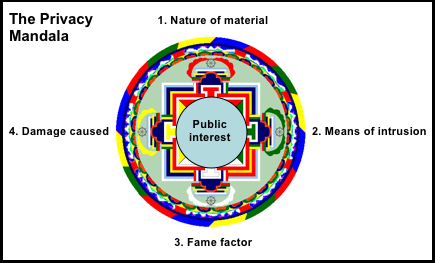
2 Comments

Filed under Uncategorized

Pressures on the media in a Western democracy #RSF #pressfreedom #censorship

By MARK PEARSON

Each year I file a report on key incidents and developments in the areas of media law and censorship as Australia’s correspondent for Reporters Without Borders.

This data, when combined with submissions from several journalism and academic colleagues in Australia and throughout the world, feeds into RSF’s annual World Press Freedom Index where most nations’ levels of media censorship are compared in a league table format.

I have just filed my 2011 report with the assistance of research assistant Kiri ten Dolle and share some of the highlights with you here, in reverse chronological order.

November 2011:

By far the most important threat to media freedoms in Australia came in the form of at least five government inquiries into media regulation conducted throughout the year, which I have blogged on previously. Between them they raised the prospects of tougher regulation regimes for print, broadcast and online media; a new tort of privacy; tough new classification systems across media; and the conversion of some self-regulatory bodies to regulatory status.  RSF was particularly concerned by suggestions at the hearings of the Independent Media Inquiry that journalists should be licensed or that the Australian Press Council should be given powers to fine media organizations for ethical breaches. See their release on the matter.

The trial of Victorian police officer Simon Artz for alleged leaks to The Australian newspaper about a counter-terrorism operation raised several media freedom issues, with Crikey senior journalist Andrew Crook allegedly breaching a suppression order by revealing the name of a former member of Victoria’s Special Intelligence Group involved in the hearing; warnings over Crikey journalist Margaret Simons live tweeting from the hearing; and The Australian’s Cameron Stewart being ordered to reveal his sources to the hearing.

In a separate matter Victorian Police were investigating an alleged hacking of an ALP electoral database by four journalists at The Age, including editor-in-chief Paul Ramage. The Age claims they received access to the private information of high-profile individuals through ‘appropriate journalistic methods’ and authorisation by a whistleblower.

October 2011

Leaks to the media were also central to a report by the Office of Police Integrity (OPI) found advisers to the Victorian police minister conspired to bring down the former police commissioner Simon Overland. Weston had allegedly leaked information to the media about Overland’s fallout with his former deputy, Ken Jones.

Government control over media access to detention centres prompted condemnation from the journalists’ union. Department of Immigration and Citizenship (DIAC) announced editorial control would be handed over to representatives of the immigration department under new guidelines introduced by DIAC that restrict reporting of and access to detention centres. Journalists and media organisations are required to sign a Deed of Agreement in accordance with the new policy which ultimately prohibits photography, film or interviews with individual detainees and rules that all footage must be submitted to department officials for approval before publication.

Defamation actions, even spurious ones, were alive and well despite uniform defamation laws introduced throughout Australia in 2005. Convicted killer Michael McGrane sought $30 million in damages from the Seven Network claiming he was defamed in a television show called “The Suspects: True Australian Thrillers”. A Queensland Supreme Court justice struck out the claim but gave McGrane leave to replead under a technical provision of the reformed laws.

The extent to which free expression should be trumped by hate speech laws was the subject of wide debate after a Federal Court judge ruled Herald Sun columnist Andrew Bolt breached the Racial Discrimination Act when he wrote that some fair-skinned people used their indigenous identity to further their careers.

September 2011

Fairfax Media group general counsel Gail Hambly and the editor-in-chief and publisher of The Sydney Morning Herald Peter Fray were summonsed by the Police Integrity Commission to produce documents on September 23 in relation to articles by the Herald journalists Linton Besser and Dylan Welch about the NSW Crime Commission. The inspector sought information about sources of information.

Fairfax Radio broadcaster Michael Smith’s contract was suspended in September when he tried to air an interview a former union official who claimed alleged fraudulent conduct by a former boyfriend of Prime Minister Julia Gillard. Smith took Fairfax Radio to court, contesting his ‘planned dismissal’ under the Fair Work Act and alleging he was victimised over his political beliefs.

August 2011

Two Brisbane journalists and a producer were dismissed by the Nine Network for faking live crosses to the Daniel Morcombe search site and ‘unfair dismissal’ litigation was foreshadowed.

July 2011

Cancer-stricken Hinch was sentenced to home detention in July after being found guilty of breaching four suppression orders by naming two sex offenders on his website and at a crime rally in 2008.

June 2011

Fairfax Media announced it would outsource the sub-editing of news, sport and business content to Pagemasters, a subsidiary of the Australian Associate Press (AAP), with a loss 44 jobs at The Sydney Morning Herald and 38 at The Age, despite calls from the NSW Upper Tribunal to abandon the decision.

May 2011

The Australian Broadcasting Corporation used a programming exemption to FOI laws to deny The Weekend Australian and Herald Sun access to its audience data and employee salaries.

Fairfax’s deputy technology editor Ben Grubb, 20, was arrested after reporting on a conference presenter’s alleged hacking at the AUSCert IT security conference. During the week, Grubb had published a story explaining a demonstration shown at the conference of acquiring private photos from a Facebook user without being a ‘friend’. Police seized his iPad but released Grubb after questioning him.

Sixty Minutes reporter Liam Bartlett and his crew’s attempt to enter the main detention centre at Christmas Island led to a police investigation. Bartlett and refugee advocate Kate Gauthier were denied access to the centre after it was alleged Gauthier’s baby, who was with them, was fitted with a recording device.

March-April 2011

Fairfax Media, publisher of the Sydney Morning Herald, and two of its senior journalists Linton Besser and Dylan Welch were issued with subpoenas by the NSW Crime Commission demanding them to surrender mobile phone records, sim cards and other communication related to an investigation of organised crime and corruption in NSW. The Crime Commission dropped the subpoenas in April.

February 2011

The NSW Supreme Court considered forcing three journalists from The Age to reveal their sources in a defamation trial centred around a story about former businesswoman Helen Liu and former defence minister Joel Fitzgibbon.

The Australian Communications and Media Authority found there had been no breach of privacy when Channel Seven’s coverage of NSW Transport Minister David Campbell’s resignation included footage of him leaving a gay club. While the ACMA acknowledged the privacy rights of Campbell, they ruled public interest outweighed his personal privacy because he was a public figure.

 ———–

Have we missed some? Please email me at journlaw@gmail.com if you think there are other important threats to free expression in Australia during 2011 and I’ll add them to our brief for RSF.

© Mark Pearson 2011

Disclaimer: While I write about media law and ethics, nothing here should be construed as legal advice. I am an academic, not a lawyer. My only advice is that you consult a lawyer before taking any legal risks.
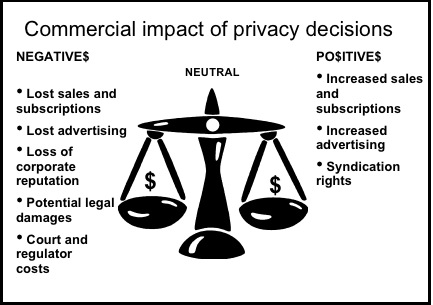
Leave a comment

Filed under Uncategorized