Category Archives: Media freedom

New Australian Press Council standards start August 1

Guest report from JASMINE LINCOLN, Griffith University media freedom intern

THE Australian Press Council (APC) has released its new Statement of General Principles as part of its Standards Project where it is reviewing its Standards of Practice and creating new ones.

It applies to all print and online news material from August 1, 2014.

Mark Pearson ( ) recently had the chance to interview Australian Press Council chair Professor Julian Disney on the role and direction of the Council.

In this interview he discussed the recent reforms to the Council, the move to improve its editorial standards, and the future for media ‘self-regulation’ as broadcast, print, online and social media formats continue to converge.

(12 mins, recorded 17 March 2014). Apologies for some audio sync issues!

The Council states on its site:

The revised Statement of General Principles does not seek to change substantially the general approach which has been taken previously by the Council. The main purposes are to ensure that the Principles accurately reflect that approach, are as clear as possible and are succinct.

Amongst other things, the new Statement of General Principles clarifies

• the principle that reasonable steps must be taken to ensure that factual material is accurate and not misleading applies to material of that kind in all types of article;

• the principle of reasonable fairness and balance applies to presentation of facts (including presentation of other people’s opinions) but not to writers’ expressions of their own opinion.

The Principles focus on four sets of key values:

• accuracy and clarity;

• fairness and balance;

• privacy and avoidance of harm;

• integrity and transparency.

The first phase of the Council’s ongoing changes has involved a review of the General Principles and the development of Specific Standards.

The next phase of the project includes a number of developments, including reviews of Privacy Principles and new Specific Standards on technological media outlets.

Also amongst these developments is a “systemic monitoring of compliance” (Australian Press Council, 2014) regarding the practice of the new standards.

This will directly affect the work of journalists because they will have their articles examined by the APC.

According to Press Council chair Professor Julian Disney, there are two main reasons for this Standards Project: so that the Standards of Practice are clearer and so they appropriately reflect the modern media context.

As a result of this project, the APC hopes that the new standards “will deal more effectively” with numerous complaints that they receive each year.

Sources:

Australian Press Council (2014). The Standards Project. Retrieved from: http://www.presscouncil.org.au/the-standards-project/

Robin, M (July 2014). Higher standards for opinion writing as Press Council refocuses for digital age. Retrieved from: http://www.crikey.com.au/2014/07/22/higher-standards-for-opinion-writing-as-press-council-refocuses-for-digital-age/

© Jasmine Lincoln 2014

Disclaimer: While this blog is about media law and ethics, nothing here should be construed as legal advice. I am an academic, not a lawyer. My only advice is that you consult a lawyer before taking any legal risks.
Leave a comment

Filed under free expression, journalism, media ethics, Media freedom, Media regulation, Press freedom, Uncategorized

Maintain the rage: support for Greste heartening, but needs to be escalated. Sign up. #FreeAJStaff

By MARK PEARSON

Additional research by journalism student MELANIE WHITING

AS Australian journalist Peter Greste languishes in an Egyptian jail just three weeks into his seven year sentence for simply doing his job reporting for Al Jazeera, it was heartening to see friends and colleagues rally in his support in Melbourne yesterday (July 14).

Clearly, the problem faced by all such political prisoners is that pressure for their release can diminish after their initial sentence disappears from the news agenda.

Almost 11,000 people have now signed the Canadian Journalists for Free Expression (CJFE) petition for the release of Greste and his colleagues, which will be sent tomorrow (July 16). Please go to http://www.thepetitionsite.com/583/945/591/fr/ and sign it.

In the days following the verdict political leaders including US Secretary of State John Kerry and Australian Prime Minister Tony Abbott expressed shock and condemnation over the Egyptian court’s decision on June 23.

Labor foreign affairs spokesperson Tanya Plibersek has been supportive and Greens leader Christine Milne has called upon the Abbott Government to escalate its diplomatic efforts on Greste’s behalf.

Media companies, unions and free expression groups have been united in their push for the release of Greste and his Al Jazeera colleagues.

Representatives of News Corp Australia and Fairfax Media told AdNews they saw the  sentence as a threat to press freedom.

The Media Entertainment and Arts Alliance (MEAA) issued a statement on their website condemning the verdict and maintained that Greste had acted as an ethical and responsible journalist.

A group of top international journalists united to send a letter to the Egyptian President asking for Greste and his colleagues to be released.

Petitions are important, so please sign any or all of these:

Go ahead – please sign them all NOW!

[The MEAA petition at http://www.alliance.org.au/peter-greste-petition has now closed.]

© Mark Pearson 2014

Disclaimer: While I write about media law and ethics, nothing here should be construed as legal advice. I am an academic, not a lawyer. My only advice is that you consult a lawyer before taking any legal risks.

Leave a comment

Filed under free expression, journalism, Media freedom, Media regulation, national security, Press freedom, suppression, terrorism, Uncategorized

Australian Press Council Chair Julian Disney with @journlaw

By MARK PEARSON

I recently had the chance to interview Australian Press Council chair Professor Julian Disney on the role and direction of the Council.

In this interview he discusses the recent reforms to the Council, the move to improve its editorial standards, and the future for media ‘self-regulation’ as broadcast, print, online and social media formats continue to converge.

(12 mins, recorded 17 March 2014). Apologies for some audio sync issues!

© Mark Pearson 2014

Disclaimer: While I write about media law and ethics, nothing here should be construed as legal advice. I am an academic, not a lawyer. My only advice is that you consult a lawyer before taking any legal risks.
Leave a comment

Filed under free expression, journalism, media ethics, Media freedom, Media regulation, Press freedom, Uncategorized

Barrister and co-author Mark Polden chats with @journlaw on #defamation defences: #MLGriff

By MARK PEARSON

Defamation laws can be intimidating for journalists, bloggers and other professional communicators. The key, according to barrister Mark Polden, is in researching and writing to the basic defences.

Mark Polden was in-house counsel at Fairfax Media for many years before going to the Bar, and is my co-author of The Journalist’s Guide to Media Law (Allen & Unwin).

In this 11 minute interview with @journlaw, he outlines in simple terms the three ‘bread and butter’ defences used by writers and publishers – truth, fair report and honest opinion (fair comment).

———–

Disclaimer: While I write about media law and ethics, nothing here should be construed as legal advice. I am an academic, not a lawyer. My only advice is that you consult a lawyer before taking any legal risks.

© Mark Pearson 2014

Leave a comment

Filed under blogging, contempt of court, courts, free expression, media ethics, Media freedom, media law, Press freedom, sub judice, suppression, Uncategorized

On Skype with @journlaw – barrister and co-author Mark Polden on #defamation basics: #MLGriff

By MARK PEARSON

Exactly what is defamation and how does it apply to your average journalist or blogger?

That’s what I asked barrister Mark Polden in this short interview on defamation basics. Mark Polden was in-house counsel at Fairfax Media for many years before going to the Bar, and is my co-author of The Journalist’s Guide to Media Law (Allen & Unwin).

Here he offers a lay definition of defamation and gives some examples of how journalists, bloggers and other professional communicators might write to minimise the threat of legal action.

———–

Disclaimer: While I write about media law and ethics, nothing here should be construed as legal advice. I am an academic, not a lawyer. My only advice is that you consult a lawyer before taking any legal risks.

© Mark Pearson 2014

Leave a comment

Filed under blogging, contempt of court, courts, free expression, media ethics, Media freedom, media law, Press freedom, sub judice, suppression, Uncategorized

15 mins with @journlaw – Peter Gregory on the art of court reporting #MLGriff #medialaw

By MARK PEARSON

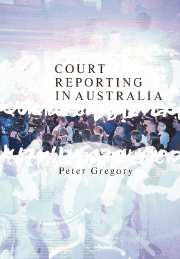
What is the secret to good court reporting? Highly experienced court reporter and academic Peter Gregory [@petergregory17] – author of Court Reporting in Australia (Cambridge University Press, 2005) – tells @journlaw the essential techniques needed by a journalist wanting to cover the court reporting round.

CourtReportinginAustraliacoverGregory explains how he recently returned to duty when he filled in to cover the sentencing of Adrian Bayley for the murder of Jill Meagher – in a marathon 12 hour shift!

He discusses the court reporter’s difficulties in writing fair and accurate reports of trials, particularly when they might be unfolding in different courtrooms at the same time.

He also gives tips on how a journalist might stand up in court to oppose a suppression order being imposed by a judge or magistrate.

Useful viewing for journalism and law students – and for anyone wanting an insight into the work of the court reporter.

———–

Disclaimer: While I write about media law and ethics, nothing here should be construed as legal advice. I am an academic, not a lawyer. My only advice is that you consult a lawyer before taking any legal risks.

© Mark Pearson 2014

1 Comment

Filed under blogging, contempt of court, courts, free expression, media ethics, Media freedom, media law, Press freedom, sub judice, suppression, Uncategorized

15 mins with @journlaw – Peter Gregory on ‘contempt and the court reporter’ #MLGriff #medialaw

By MARK PEARSON

We hear about the many types of contempt affecting the role of the court reporter – but how does a journalist manage this in practice?

That is exactly the issue I raised with veteran court reporter (now academic) Peter Gregory [@petergregory17] in this interview covering the main types of contempt of court affecting court reporting – contempt in the face of the court, disobedience contempt, sub judice (prejudicial reporting) and interference with the deliberations of jurors.

Gregory – author of Court Reporting in Australia (Cambridge University Press, 2005) – explains how court reporters might be affected by such forms of contempt, offers examples from his own career, and suggests how journalists might adjust their own practice to minimise risk.

CourtReportinginAustraliacoverHe looks at the impact of new technologies – particularly social media – in the courtroom. Finally, he assesses the dynamics of social media and traditional media at play in the major Victorian trial of the murderer of Irishwoman Jill Meagher (Adrian Bayley) which resulted in the jailing of blogger Derryn Hinch on a contempt charge after disobeying a suppression order.

———–

Disclaimer: While I write about media law and ethics, nothing here should be construed as legal advice. I am an academic, not a lawyer. My only advice is that you consult a lawyer before taking any legal risks.

© Mark Pearson 2014

Leave a comment

Filed under blogging, contempt of court, courts, free expression, media ethics, Media freedom, media law, Press freedom, sub judice, suppression, Uncategorized

Threatening letters from officialdom chill free expression – @journlaw blog #MLGriff

By MARK PEARSON Follow @Journlaw

[With research assistance from RSF interns Toni Mackey and Eve Soliman]

Intimidating letters sent by two of Australia’s most senior public servants in recent weeks sound alarm bells for free expression and a free media.

The first – from the secretary for the Department of Immigration and Border Protection Martin Bowles – was directed to freelance journalist Asher Wolf following her co-written article for the Guardian Australia on February  19, 2014 titled ‘Immigration Department data lapse reveals asylum seekers’ personal details‘.

The database Wolf had sourced via the Department’s own public website contained personal details of one third of all asylum seekers held in Australia – almost 10,000 adults and children.

The department secretary’s letter implied Wolf had obtained the material on which the article was based by ‘dishonest or unfair means’. She says the data was simply sitting on the department’s website. Bowles demanded Wolf agree not to publish the contents and ‘return all hard and soft copies of the information’ including any her storage devices.

You can view the letter here: WolfDIBP to The Guardian – A Wolf.

And in this 11 minute interview Wolf explains the episode in her own words:

On advice from her lawyers she wrote back, refusing to provide the department with anything and cited her ethical obligation as a journalist to protect her sources. To date there has been no further word from the department since that February 26 reply.

Wolf explained to @journlaw: “The response from the Government was to reframe the issue rather than sort of saying ‘whoops we made a mistake, sorry, let’s fix it up’. It was to frame it as though it had been illicitly accessed, that the confidential information had to be given back, that the files had to be given back.”

The second intimidating letter was to a politician rather than a journalist, but is no less alarming for its potential chilling effect on free expression – and all the more alarming because it involved a military chief writing direct to a senator-elect.

Chief of the Australian Defence Force General David Hurley wrote to Palmer United Party senator-elect Jacqui Lambie on March 7, following the Tasmanian politician’s claims in a media release that sexual abuse in the military was ‘an intractable problem’.

His letter stated he was disappointed she issued a media release before raising her concerns with him and encouraged her to first provide him an opportunity to reply to any such claims in the future. See the letter here: HurleyToLambieLetter

In her response (LambieReply to Australia’s Chief of Defence’s letter of complaint), Lambie – a former soldier – described General Hurley’s letter as disrespectful, condescending and improper.

“For you as the head of our defence force to take the unprecedented and extraordinary step of trying to influence an elected member of parliament by sending a letter with such a patronizing and condescending tone is a disgrace,” she wrote.

She raised the possibility of the letter constituting a contempt of parliament as an improper interference “with the free performance by a senator of the senator’s duties as a senator”.

Of course, that might be too long a stretch, but it is certainly of concern when top military and immigration officials start writing direct to journalists and politicians chiding them for their public statements and implying some wrongdoing on their part.

It is spin and ‘media management’ gone way too far – and is symptomatic of nations far lower down Reporters Without Borders’ World Press Freedom Index than Australia’s.

Both Immigration Secretary Bowles and General Hurley undoubtedly have a host of excuses for penning those letters. Bowles was clearly trying to limit the damage from the privacy leak, and indeed has obligations under the Privacy Act to demonstrate his department has done what it can to retrieve leaked information and minimise any damage caused. Hurley was clearly frustrated by a politician’s insistence on making unspecified claims of abuse when there were inquiries and other avenues for complaints to be made.

But many other strategies were available to them to deal with these issues short of writing stern reprimands from their own desks, directly to a journalist and a politician. The democratic doctrine of ‘separation of powers’ is somewhat blurry in Australia, and it is made all the more so when senior members of the executive engage in public spats with the media and politicians.

I cannot imagine that such high level officials would not realise, or be advised, that their intimidating letters would not reach the public domain. If they thought they would remain secret, then we must ask important questions about how frequently this technique is being used. If they understood their letters would likely go public, then the threat to free expression is all the more chilling.

Disclaimer: While I write about media law and ethics, nothing here should be construed as legal advice. I am an academic, not a lawyer. My only advice is that you consult a lawyer before taking any legal risks.

© Mark Pearson 2014

Leave a comment

Filed under free expression, Media freedom, Media regulation, Uncategorized

Ten minutes with @journlaw – Anne Stanford from @SCVSupremeCourt talks open justice #MLGriff

By MARK PEARSON

In this week’s interview (actually 14 minutes!) I chat with the Strategic Communication Manager at the Supreme Court of Victoria, Anne Stanford, about open justice, suppression orders and general court reporting guidelines.

Listen to Supreme Court of Victoria Strategic Communication Manager Anne Stanford on open justice.

Listen to Supreme Court of Victoria Strategic Communication Manager Anne Stanford on open justice.

———–

Disclaimer: While I write about media law and ethics, nothing here should be construed as legal advice. I am an academic, not a lawyer. My only advice is that you consult a lawyer before taking any legal risks.

© Mark Pearson 2014

Leave a comment

Filed under blogging, contempt of court, courts, free expression, media ethics, Media freedom, media law, Press freedom, sub judice, suppression, Uncategorized

#Hinch (@HumanHeadline), #Morcombe and open justice – lessons in media law

By MARK PEARSON

It is timely that in the space of a week we should see the Human Headline (@HumanHeadline) Derryn Hinch released from jail for a publication offence and a serial offender receive a life sentence for the sex murder of teenager Daniel Morcombe.

CatchingTheDevil(Morcombefrontpage14-3-14)C-M

Courier Mail front page 14-3-14

We learned yesterday after Brett Peter Cowan was convicted of that 2003 crime that he had served time twice earlier for similar offences.

He is exactly the kind of individual that Hinch wants placed on a public sex offender register for exactly the reason most talkback callers and social media commenters are asking this question: How can we release such individuals anonymously into our communities when we cannot be sure they will not strike again?

Hinch asked it again this morning:

Hinch became the first Australian journalist jailed this millennium for a publishing offence when he was jailed for 50 days refusing to pay a $100,000 fine for breaching a suppression order on the prior convictions of Adrian Ernest Bayley – the accused sex murderer of ABC worker Jill Meagher in Melbourne in 2012.

In 2011 he was sentenced to five months of home detention for publicly naming two sex offenders at a rally and on his website in defiance of such anonymity orders.

In 1987 he was jailed on a contempt of court charge after broadcasting the criminal record of a former priest Michael Glennon accused of child sex offences and implying his guilt in his high rating Melbourne radio program.

It was only by a 4-3 majority that the High Court later stopped short of overturning Glennon’s conviction on those sex charges on the grounds of Hinch prejudicing his fair trial. (Glennon died in jail this year.)

Journalists and media law students have much to learn from the events of the past week.

While the crimes themselves left a trail of human destruction, the Hinch and Morcombe stories make for ideal case studies in a media law module covering open justice, contempt of court and court reporting – the exact module my students will be starting next week.

They will get to research and debate these kinds of important questions that arise from the week’s events:

  • What public policy issues are at play that see a journalist jailed for reporting the past convictions of an individual convicted of a high profile crime?
  • What does such a penalty say about Australia’s standard of media freedom?
  • Why is Australia’s approach to this level of suppression different from that applying in the United States?
  • Why should the mainstream media be prevented from reporting such material when social media platforms and certain websites are full of it?
  • Why would Hinch’s blog and Twitter feed where he breached the suppression orders over Bayley not represent a ‘real risk of prejudice’ to the trial, when mainstream media coverage might do so?
  • How can juries be quarantined from such information and – if they can’t – why shouldn’t the media be allowed to publish it?
  • Do other methods of dealing with juries – judges’ instructions, training, sequestering etc – mean we no longer need to suppress such material?
  • Are the past offences of such criminals matters of such overwhelming social importance and public concern that suppression of the details should be considered contrary to the public interest?
  • Should the Courier-Mail’s front page heading of February 21, 2014 – ‘Daniel’s Killer’ – have forced the trial to be aborted? Should it be grounds for a sub judice contempt charge? Should it be grounds for Cowan’s appeal?
  • How can a journalist report upon such proceedings in an interesting and timely way while navigating the various restrictions that apply?
  • How ‘open’ should ‘open justice’ be in such high profile trials? Should cameras and smartphone recordings be allowed in court? Should tweeting and other social media usage be allowed in court?
  • Is it appropriate in the modern era of communication that a major television network has to rely on a presenter standing outside a courthouse relaying sentencing information to the audience from a court reporter on the inside via telephone?
  • How much social media commentary should be tolerated about such cases while an accused is facing trial?

I’m sure many other questions arise too – and would be keen for other educators, journalists, lawyers and students to use the Comments section here to pose them so my students can take them up in lecture and tutorial discussions.

———–

Disclaimer: While I write about media law and ethics, nothing here should be construed as legal advice. I am an academic, not a lawyer. My only advice is that you consult a lawyer before taking any legal risks.

© Mark Pearson 2014

Leave a comment

Filed under blogging, contempt of court, courts, free expression, media ethics, Media freedom, media law, Press freedom, sub judice, suppression, Uncategorized