Tag Archives: courts

National security and anti-terror laws continue to threaten journalism

By MARK PEARSON

* This article was first published as ‘Terror on the books’ in the Walkley Magazine on May 29, 2014.
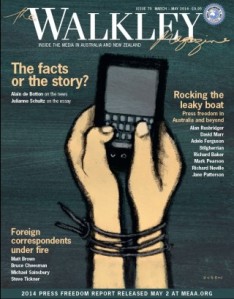
Walkley

More than 50 anti-terror laws have been introduced by the Australian government since the September 11 attacks in the US in 2001, and they continue to impact on our coverage of national security issues and place journalists and their sources at risk.

No Australian journalist would want to see lives lost in a terrorist attack, but there is evidence that existing laws give police, security agencies and the courts too much power in monitoring media activities and suppressing reports that are in the public interest. Two major reports now confirm some of these existing laws are over-reaching.

The long overdue Council of Australian Governments (COAG) Review of Counter-Terrorism Legislation was released in 2013.

As well as recommending changes to basic definitions of terrorist threats and harm, it proposes there be more opportunity for judicial reviews of the agencies’ search and seizure powers, and introducing some safeguards to the control order system (a control order restricts where a person goes and who they can meet).

The committee suggested that the communications restrictions be eased to allow a person subject to a control order access to a mobile phone, a landline phone and a computer with internet access.

Most importantly for journalists, the review recommended the repeal of Section 102.8 of the Criminal Code dealing with “associating with terrorist organisations”. This reform would put beyond any doubt the likelihood of a journalist being convicted of this serious offence by just undertaking normal reporting duties.

Another major report came in November 2013 from Bret Walker SC, the Independent National Security Legislation Monitor (INSLM). It was his third report since being appointed to the review role in 2011.Walker repeated his earlier recommendation that ASIO’s questioning and detention warrants should be abolished and suggested improvements to the definition of a “terrorist act”.

He called for a simpler system of listing terrorist organisations and inserting an exception to the “associating with terrorist organisations” provisions for humanitarian groups such as the Red Cross.

While both reports focused on issues of natural justice and human rights, neither the COAG review nor the INSLM addressed the stifling of journalism in the anti-terror laws.

Sadly, there was little in the way of media lobbying to do so either. The COAG counterterror review received 30 submissions which it posted to its website, none of which were from media-related companies or journalism or free expression organisations.

The ripples of international security operations were also felt in Australia. In 2013 the Media, Entertainment & Arts Alliance wrote to Prime Minister Tony Abbott asking for a review of the extent of metadata surveillance conducted by governments in the wake of former US National Security Agency (NSA) contractor Edward Snowden’s revelations.

There was good reason to be concerned. At least three cases in recent years have shown how the confidentiality of journalists’ sources can be compromised by surveillance by security agencies or anti-terror operations.

The retrial of “Jihad” Jack Thomas on terrorism charges in 2008 was based partly on interview materials gathered by Sally Neighbour from Four Corners and The Age’s Ian Munro and subpoenaed by the prosecution.

It emerged in the trial that up to 20 telephone calls between Neighbour and Thomas had been monitored by an ASIO agent.

The issue of confidentiality of whistleblowers’ identities also arose in the aftermath of the convictions of the Holsworthy Barracks bomb plot conspirators in 2011. The Australian had published an exclusive account on the raids in the hours before they occurred. (The three convicted plotters lost their appeals against their 18-year jail sentences last year.)

The Australian’s Victoria Police source, Simon Artz, paid for his leaks to the newspaper in the Victorian County Court with a four-month suspended sentence for unauthorised disclosure of information.

It was not a good year for whistleblowers internationally. WikiLeaks founder Julian Assange is holed up indefinitely in Ecuador’s embassy in London as he avoids extradition to Sweden on sex charges (and feared extradition to the US over security leaks). His US Army source – Private Chelsea (formerly Bradley) Manning – was sentenced by a military court to 35 years in jail for leaking classified documents. Meanwhile, Edward Snowden had fled to Russia to avoid prosecution over his leaks.

The whistleblower’s revelations about the extent of government surveillance continue to cause embarrassment, including in Australia where Prime Minister Tony Abbott reacted by attacking the ABC over its reportage. In an interview in early 2014, Abbott voiced his disapproval that the ABC had run stories about security services eavesdropping on Indonesian leaders’ phone conversations, a fact revealed by Snowden’s leaks.

The ABC then faced an “efficiency study”. It seems the Abbott government’s approach is to put the budgetary microscope on the ABC’s operations rather than wind back national security laws in the interests of media freedom.

The suppression of reporting on terrorism-related trials or evidence tendered in national security cases is an ongoing issue. The use of a closed court – combined with government media management – was central to the misplaced prosecution of Gold Coast Hospital registrar Dr Mohamed Haneef in 2007.

More than 30 suppression orders under anti-terror powers were imposed during the Benbrika trials in 2008 and 2009. In that case, Abdul Benbrika and 11 other Muslim men from Melbourne were charged with intentionally being members of a terrorist organisation. Their arrests in 2005 followed Operation Pendennis, a 16-month surveillance operation by Victoria Police, the Australian Federal Police and ASIO.

While by 2014 legislation covering suppression and non-publication orders had been introduced into only the Commonwealth, New South Wales, Victorian and South Australian jurisdictions, it appears that other states and territories are following suit to harmonise the laws.

© Mark Pearson 2014

Disclaimer: While I write about media law and ethics, nothing here should be construed as legal advice. I am an academic, not a lawyer. My only advice is that you consult a lawyer before taking any legal risks.
Leave a comment

Filed under national security, terrorism, Uncategorized

Journalists revert to age-old methods to protect sources, says @camstewarttheoz

By MARK PEARSON

National security reporter and associate editor at The Australian Cameron Stewart (@camstewarttheoz) says investigative journalists have to leave their smartphones back at their office when they are meeting confidential sources.

Stewart said the surveillance powers of national security agencies under anti-terror laws, combined with the geo-navigational features of Web 2.0 technologies, meant investigative reporters were reverting to 1970s techniques like those of Watergate reporters Carl Bernstein and Bob Woodward used when they met their famous source ‘Deep Throat’ in an underground car park.

“That is actually still the best way to get your information,” Stewart told me in the interview below.

“The thing I’ve got to my ear now [a smartphone] is your biggest enemy in every single sense as the Snowden revelations have shown.

“The ability of authorities to track movements of journalists is really of great concern as far as protecting sources goes.

“What they’re doing is quietly authorising metadata searches and things like that. What that does is give them every phone call you’ve made and I think they can piece together through your iPhone for example what your movements are over time.

“It’s not rocket science to work out what your movements are over a certain period of time and who you’ve been speaking to and who sources might be.”

Here Cameron Stewart talks with Professor Mark Pearson of Griffith University (@journlaw) about the impact of anti-terror laws on the reporting of national security issues. Stewart shares some of the methods he uses as a reporter when dealing with off the record information provided by whistleblowers  [15 minutes, recorded 1-5-14]

© Mark Pearson 2014

Disclaimer: While I write about media law and ethics, nothing here should be construed as legal advice. I am an academic, not a lawyer. My only advice is that you consult a lawyer before taking any legal risks.
4 Comments

Filed under Uncategorized

Meet Miles Heffernan (@Mileshef) – shield law campaigner and @journlaw guest

By MARK PEARSON

Miles Heffernan (@mileshef) is a journalist and features/opinion editor with the Star Observer.

When he was a freelancer he ran a campaign on change.org calling on mining magnate Gina Rinehart to withdraw her demands for two journalists to reveal their sources. See ‘http://www.change.org/en-AU/petitions/gina-rinehart-withdraw-your-subpoenas-against-adele-ferguson-and-steve-pennells-pressfreedom‘. See also my blog from 2013 on this.

It achieved close to 40,000 signatures.

Here Miles talks with Professor Mark Pearson of Griffith University (@journlaw) about that campaign and the battle for shield laws to protect journalists from having to reveal their sources in court. See more at journlaw.com. [12 minutes, recorded 16-4-14]

© Mark Pearson 2014

Disclaimer: While I write about media law and ethics, nothing here should be construed as legal advice. I am an academic, not a lawyer. My only advice is that you consult a lawyer before taking any legal risks.
Leave a comment

Filed under Uncategorized

Barrister and co-author Mark Polden chats with @journlaw on #defamation defences: #MLGriff

By MARK PEARSON

Defamation laws can be intimidating for journalists, bloggers and other professional communicators. The key, according to barrister Mark Polden, is in researching and writing to the basic defences.

Mark Polden was in-house counsel at Fairfax Media for many years before going to the Bar, and is my co-author of The Journalist’s Guide to Media Law (Allen & Unwin).

In this 11 minute interview with @journlaw, he outlines in simple terms the three ‘bread and butter’ defences used by writers and publishers – truth, fair report and honest opinion (fair comment).

———–

Disclaimer: While I write about media law and ethics, nothing here should be construed as legal advice. I am an academic, not a lawyer. My only advice is that you consult a lawyer before taking any legal risks.

© Mark Pearson 2014

Leave a comment

Filed under blogging, contempt of court, courts, free expression, media ethics, Media freedom, media law, Press freedom, sub judice, suppression, Uncategorized

On Skype with @journlaw – barrister and co-author Mark Polden on #defamation basics: #MLGriff

By MARK PEARSON

Exactly what is defamation and how does it apply to your average journalist or blogger?

That’s what I asked barrister Mark Polden in this short interview on defamation basics. Mark Polden was in-house counsel at Fairfax Media for many years before going to the Bar, and is my co-author of The Journalist’s Guide to Media Law (Allen & Unwin).

Here he offers a lay definition of defamation and gives some examples of how journalists, bloggers and other professional communicators might write to minimise the threat of legal action.

———–

Disclaimer: While I write about media law and ethics, nothing here should be construed as legal advice. I am an academic, not a lawyer. My only advice is that you consult a lawyer before taking any legal risks.

© Mark Pearson 2014

Leave a comment

Filed under blogging, contempt of court, courts, free expression, media ethics, Media freedom, media law, Press freedom, sub judice, suppression, Uncategorized

15 mins with @journlaw – Peter Gregory on the art of court reporting #MLGriff #medialaw

By MARK PEARSON

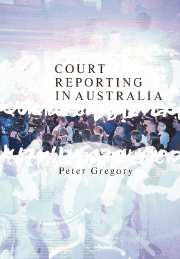
What is the secret to good court reporting? Highly experienced court reporter and academic Peter Gregory [@petergregory17] – author of Court Reporting in Australia (Cambridge University Press, 2005) – tells @journlaw the essential techniques needed by a journalist wanting to cover the court reporting round.

CourtReportinginAustraliacoverGregory explains how he recently returned to duty when he filled in to cover the sentencing of Adrian Bayley for the murder of Jill Meagher – in a marathon 12 hour shift!

He discusses the court reporter’s difficulties in writing fair and accurate reports of trials, particularly when they might be unfolding in different courtrooms at the same time.

He also gives tips on how a journalist might stand up in court to oppose a suppression order being imposed by a judge or magistrate.

Useful viewing for journalism and law students – and for anyone wanting an insight into the work of the court reporter.

———–

Disclaimer: While I write about media law and ethics, nothing here should be construed as legal advice. I am an academic, not a lawyer. My only advice is that you consult a lawyer before taking any legal risks.

© Mark Pearson 2014

1 Comment

Filed under blogging, contempt of court, courts, free expression, media ethics, Media freedom, media law, Press freedom, sub judice, suppression, Uncategorized

15 mins with @journlaw – Peter Gregory on ‘contempt and the court reporter’ #MLGriff #medialaw

By MARK PEARSON

We hear about the many types of contempt affecting the role of the court reporter – but how does a journalist manage this in practice?

That is exactly the issue I raised with veteran court reporter (now academic) Peter Gregory [@petergregory17] in this interview covering the main types of contempt of court affecting court reporting – contempt in the face of the court, disobedience contempt, sub judice (prejudicial reporting) and interference with the deliberations of jurors.

Gregory – author of Court Reporting in Australia (Cambridge University Press, 2005) – explains how court reporters might be affected by such forms of contempt, offers examples from his own career, and suggests how journalists might adjust their own practice to minimise risk.

CourtReportinginAustraliacoverHe looks at the impact of new technologies – particularly social media – in the courtroom. Finally, he assesses the dynamics of social media and traditional media at play in the major Victorian trial of the murderer of Irishwoman Jill Meagher (Adrian Bayley) which resulted in the jailing of blogger Derryn Hinch on a contempt charge after disobeying a suppression order.

———–

Disclaimer: While I write about media law and ethics, nothing here should be construed as legal advice. I am an academic, not a lawyer. My only advice is that you consult a lawyer before taking any legal risks.

© Mark Pearson 2014

Leave a comment

Filed under blogging, contempt of court, courts, free expression, media ethics, Media freedom, media law, Press freedom, sub judice, suppression, Uncategorized

Ten minutes with @journlaw – Anne Stanford from @SCVSupremeCourt talks open justice #MLGriff

By MARK PEARSON

In this week’s interview (actually 14 minutes!) I chat with the Strategic Communication Manager at the Supreme Court of Victoria, Anne Stanford, about open justice, suppression orders and general court reporting guidelines.

Listen to Supreme Court of Victoria Strategic Communication Manager Anne Stanford on open justice.

Listen to Supreme Court of Victoria Strategic Communication Manager Anne Stanford on open justice.

———–

Disclaimer: While I write about media law and ethics, nothing here should be construed as legal advice. I am an academic, not a lawyer. My only advice is that you consult a lawyer before taking any legal risks.

© Mark Pearson 2014

Leave a comment

Filed under blogging, contempt of court, courts, free expression, media ethics, Media freedom, media law, Press freedom, sub judice, suppression, Uncategorized

If #cyberbullying is up, why is youth #suicide down?

By MARK PEARSON

[Extracted from my public lecture ‘Social Media – Risks and Rewards’]

Administrators and parents are indeed concerned about social media – partly because the little they know about it has been informed via the lens of the news media and war stories like those I have related above. Their perceptions are also skewed by the new industry of cyber-safety – everything from net nanny systems for your IT system through to speakers and consultants ready to advise on the evils of trolls and cyber-predators. I am not suggesting such inputs are unnecessary, but I wonder about their impact on policy at a time when parents and administrators are already approaching Web 2.0 with trepidation.

With all these resources committed to it, one might be excused for believing cyberbullying had driven young people to the depths of depression and anxiety and were consequently taking their own lives at an alarming rate. The fact is that in the decade 2000-2010 – a period during which both Internet and social media usage grew rapidly – youth suicide in Australia actually declined. It declined across the whole 15-24 year age group, with suicides among males in that age group decreasing by 34 per cent. That is not to say, however, that the rate of youth suicide is not alarming. The number of suicides is still far too high and like all stats this figure can have a range of explanations – better counselling, changes in media coverage, the efforts of campaigns like Beyond Blue and RU OK? (partly on social media),  and improved medicines for psychiatric conditions. …While it is tragic for any young person to take their life for such a reason, there seems to be no hard data that Internet and social media usage is driving more young people to this level of despair (ABS, 2012).

After all, social media is in many ways just a microcosm of our broader lives, and problems like bullying have always existed. These platforms present new channels for the demonstration of such behaviours, replacing or supplementing replacing the schoolyard taunts, the prank calls, the practical jokes and the toilet graffiti.

See the full lecture at: https://journlaw.com/2013/08/29/social-media-risks-and-rewards-journlaws-public-lecture/

© Mark Pearson 2013

Disclaimer: While I write about media law and ethics, nothing here should be construed as legal advice. I am an academic, not a lawyer. My only advice is that you consult a lawyer before taking any legal risks.

2 Comments

Filed under courts, media law, Media regulation, social media

Social media risk and literacy in the new Australian civics curriculum

By MARK PEARSON

[Extracted from my public lecture ‘Social Media – Risks and Rewards’]

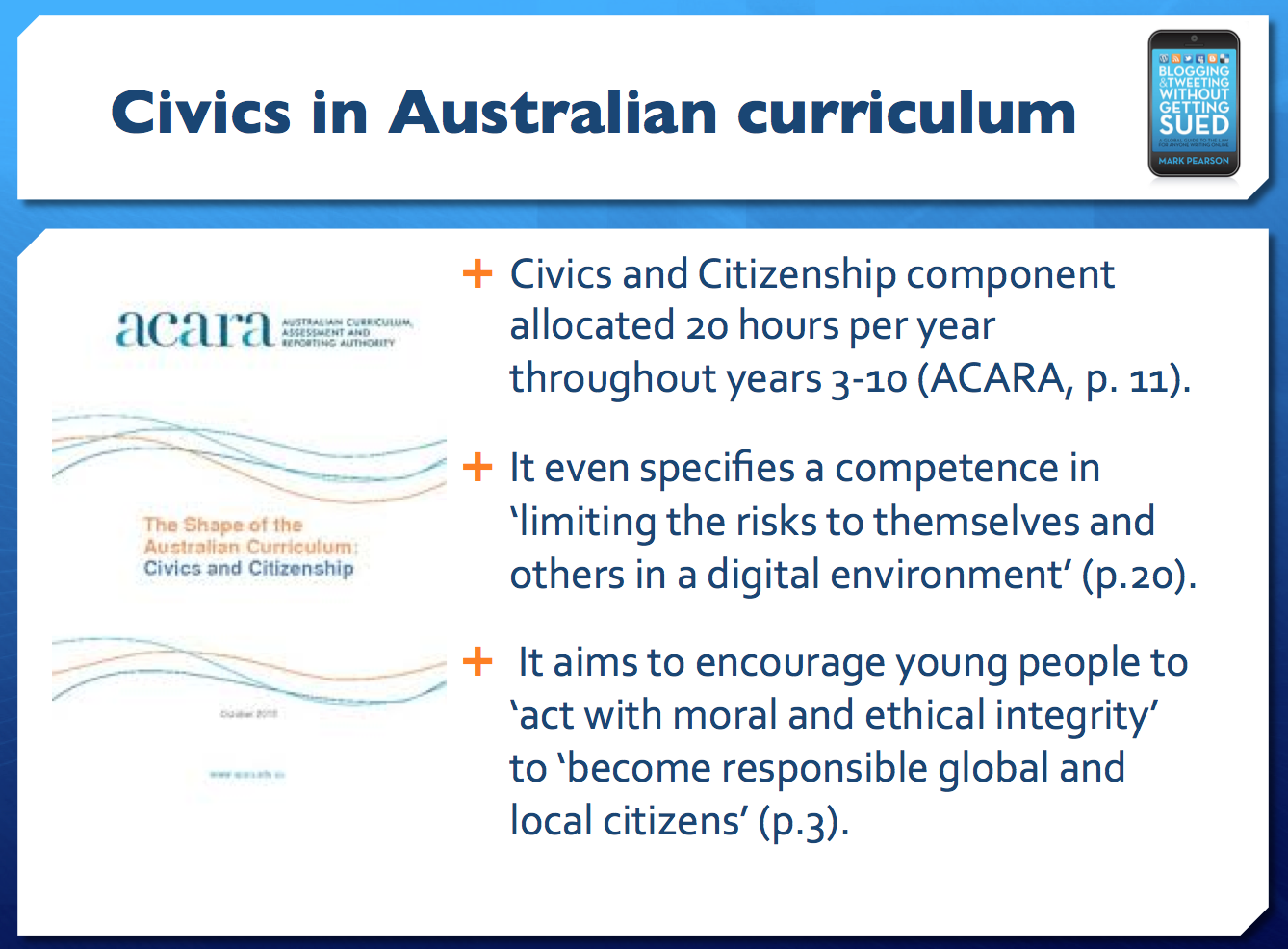
Screen Shot 2013-08-28 at 9.21.21 AMAt the very least an important foundational literacy one must have to empower one to assess social media risk – especially the legal risks involved – is an education in civics that explains the rights and responsibilities of individuals, the legal consequences of actions, and the systems in which these operate. Australia has lacked a consistent approach to civics education but fortunately the new Australian curriculum has a Civics and Citizenship component covering these kinds of issues at an allocated 20 hours per year throughout years 3-10 (ACARA, p. 11). It even specifies a competence in ‘limiting the risks to themselves and others in a digital environment’ (p.20). It aims to encourage young people to ‘act with moral and ethical integrity’ to ‘become responsible global and local citizens’ (p.3).

Frankly, this is where I believe the best approach lies. If we are going to reap the potential of new technologies we cannot become so risk averse that we ‘lock and block’ the opportunities as we try to minimise the dangers. The Gold Coast private school that recently banned its students from using social media on its grounds continues to allow its students to engage in contact sports with far greater potential risks to their minds and bodies than any Internet platform might present. They do so because they perceive the ongoing social and educational benefits of team sports as outweighing the very real risk of physical injuries. They invest in the expert staff to coach, they qualify them with first aid training, and they teach the children the code of behavior expected on a sporting field. And I would not for a moment suggest they should not. Yet they choose to ‘lock and block’ some of the most valuable communication tools developed in the history of human invention.

I suggest the answer is not in deprivation and censorship, but in sensible social media guidelines and foreshadowed consequences for misuse, accompanied by a foundation in moral and ethics education of citizenship presented in the new Australian curriculum. The educational theory of ‘reflective practice’ coined by Donald Schön two decades ago invokes a mindful approach to learning where professionals ‘reflect-in-action’ upon their learning as they face technical and ethical decisions in their working careers. There is no reason why a properly invoked civics and citizenship curriculum should not do the same for our pupils as they engage with new media as a laboratory for the greater challenges that real life presents.

See the full lecture at: https://journlaw.com/2013/08/29/social-media-risks-and-rewards-journlaws-public-lecture/

© Mark Pearson 2013

Disclaimer: While I write about media law and ethics, nothing here should be construed as legal advice. I am an academic, not a lawyer. My only advice is that you consult a lawyer before taking any legal risks.

Leave a comment

Filed under courts, media law, Media regulation, social media