Tag Archives: free expression

Justice Open and Shut – Suppression Orders and Open Justice – live blog #openshut

By MARK PEARSON

I’m at the Australian Centre for Independent Journalism’s ‘Justice Open and Shut’ Symposium at UTS Sydney today and will be writing this live blog of highlights from today’s speakers as the day unfolds. Drop in if you’re in the neighbourhood to Mary Anne House, Level 3, 645 Harris St, Ultimo, Sydney.

Testing the law in NSW with the ‘Keeper of Secrets’ Miiko Kumar

The open justice system incorporates open reasons for decisions as well, says media law barrister and academic Miiko Kumar.
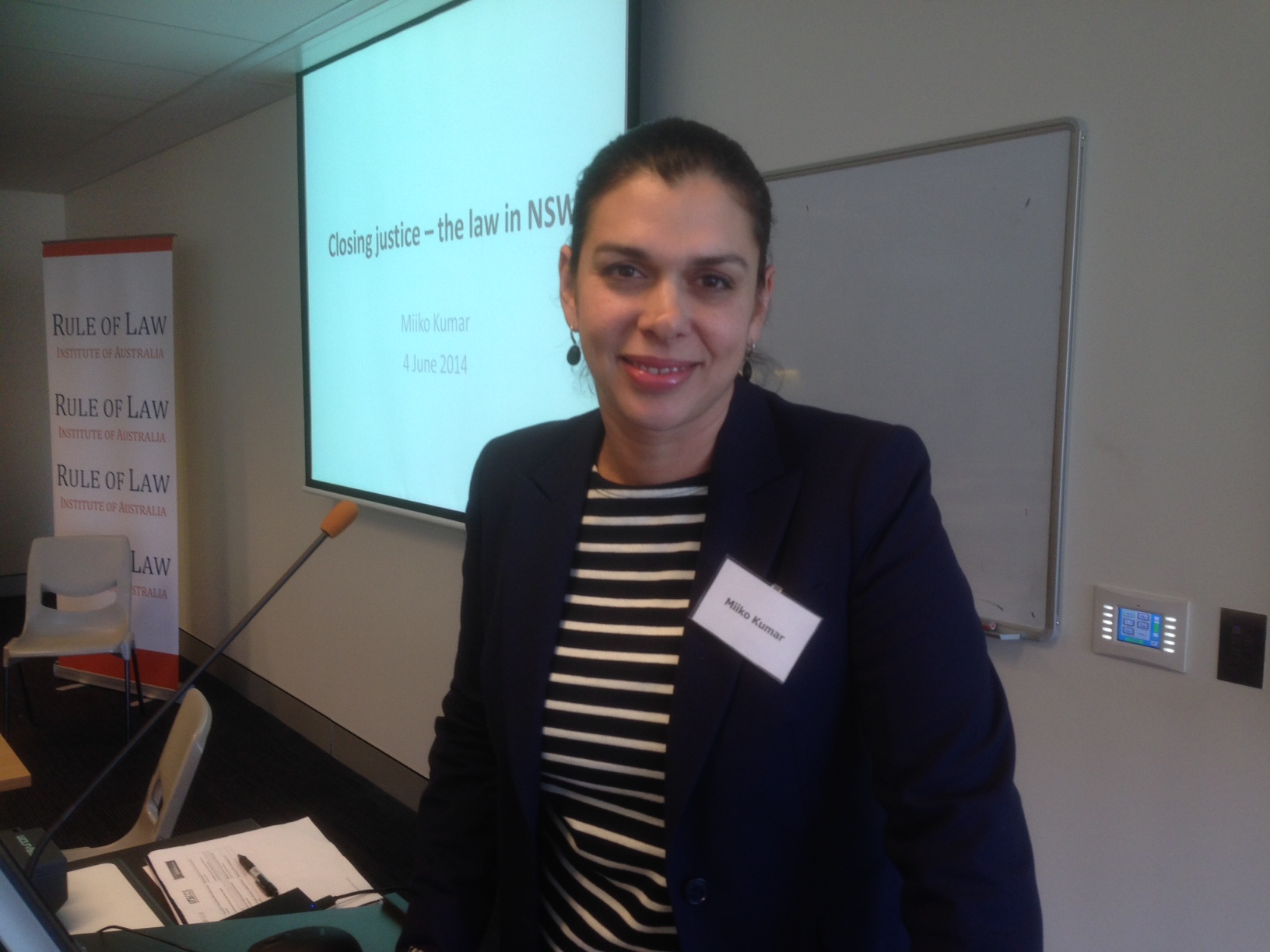
Media law barrister Miiko Kumar

Media law barrister Miiko Kumar

Open justice ensures justice is imparted fairly and openly, the senior lecturer in law at the University of Sydney told the Justice Open and Shut conference at UTS.

Kumar said justice can be closed by excluding the public, restricting access to confidential information, non-publication orders, pseudonym orders, witnesses giving evidence via CCTV or from behind screens, and through the use of secret evidence.

Secret evidence is where a party tenders evidence that the other parties do not see, but that is rare.

Both the common law and key statutes give courts their power to suppress in NSW, including Court Suppression and Non-Publication Act 2010 and the Civil Procedure Act. Of course, other legislation exists for specific types of witnesses, such as the Children (Criminal Proceedings) Act 1987.

She said the common law test for the issue of a suppression order was a ‘test of necessity’, not a balancing test.

“It does not mean it is just convenient or to save someone embarrassment – that is not enough,” she said.

A wide section of people have standing to apply for a suppression order in NSW, and it can be made at any time during a trial.

The NSW legislation was tested in the recent Gina Rinehart case when she applied for a stay of proceedings along with a suppression order on the grounds that the confidentiality of the proceedings would be breached.

The court was open but there was a non-publication order over the proceedings.

[ Welker & Ors v. Rinehart [2011] NSWSC 1094 (Brereton J) 13/9/11 … Appeal: Rinehart v. Welker & Ors [2011] NSW CA (Tobias AJA) 31/10/11 … Appeal: Rinehart v. Welker [2011] NSWA 403 (Bathurst CJ and MColl JA; Young JA) 19/12/11].

Suppression order was lifted in that final appeal.

“The decision shows us that the court takes the administration of justice seriously,” she said.

“The media was the one who objected to the order. It is important for the media to know when the orders are made because they are usually the ones who will object.

“The parties are more concerned about their case so they are focussed on that.”

Kumar also explained public interest immunity where a court determines a claim by having the document that is the subject of a claim and considering it in closed session.

https://twitter.com/NatashaKrnjaic/status/474044254977683458

Victoria – the state of suppression

A study of non publication orders over a five year period in Victoria found that more than 1500 had been imposed across the state’s court system , according to the deputy director of the Centre for Media and Communications Law at the Melbourne Law School, Jason Bosland.
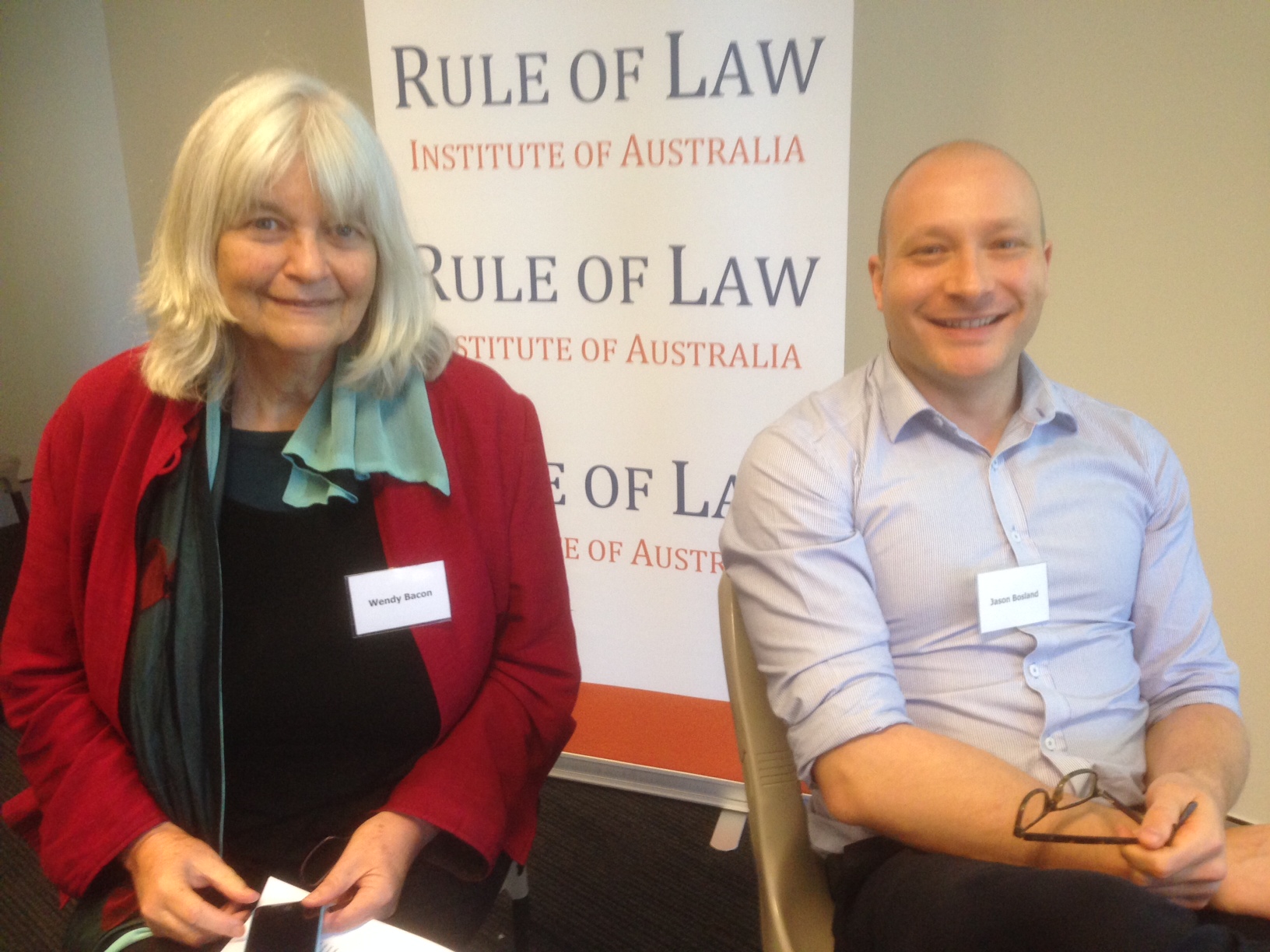
UTS professor Wendy Bacon and Melbourne Law School's Jason Bosland

UTS professorial fellow Wendy Bacon and Melbourne Law School’s Jason Bosland

Mr Bosland reported to the  ‘Justice Open and Shut’ Symposium at UTS Sydney on his team’s research on the breakdown of legislative or common law powers under which the various courts imposed suppression orders.

Some orders were made under the provisions of an act of parliament that did not even give the courts power to issue orders.

About 70 per cent of all orders made by Victorian courts did not contain an end date or any other temporal limitation to bring them to an end. The Magistrates Court made 398 orders without a specified end date over the period. Only 128 orders revoked 202 suppression orders over the period.

More than half of the suppression orders were ‘blanket orders’ – banning the whole of proceedings from publication – including about 80 per cent of non-publication orders in the state’s County Court.

“There were real problems with ambiguity and breadth,” Mr Bosland told the conference.

Many of the orders related to the revelation of the identity of a victim in circumstances where other legislation might already prohibit this publication.

Mr Bosland has also been researching the suppression of judicial reasons. He found that in Western Australia 47 judgments of the Supreme Court and 17 of the Court of Appeal had been withheld from publication, with nine across the Supreme, appeal and district courts in NSW, and about 20 in Victoria.

He further found a simple search of the terms “Judgment Suppressed” and “Judgment Restricted” into the database Austlii generated several pages of search results.

—-

The UK situation: Translucent justice? Digital and physical access to UK courts

The physical doors to UK courts are ‘open’, but virtual legal information is not, says UK researcher Judith Townend from City University London.
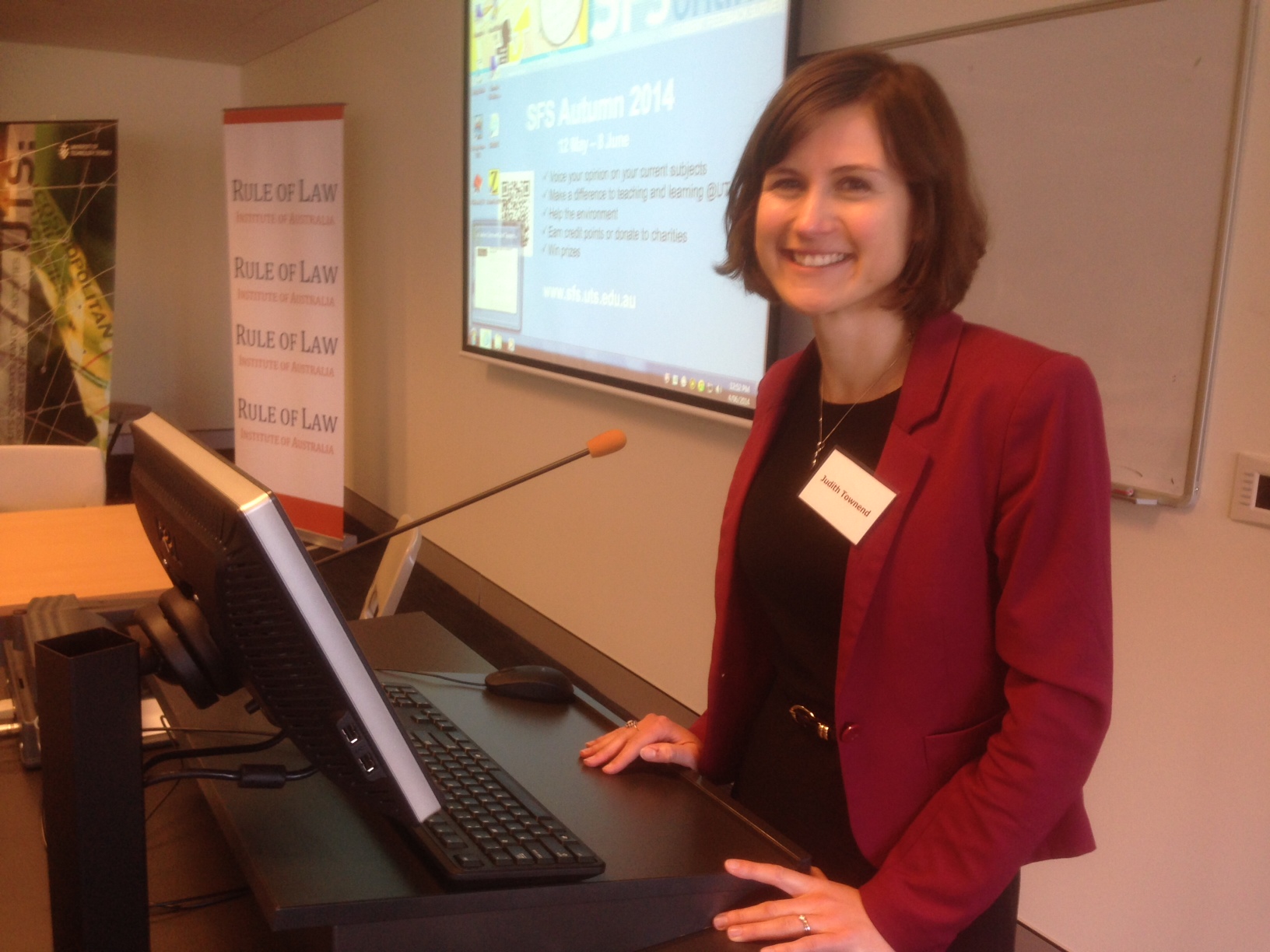
jude

Judith Townend, City University London

The notion of open justice seems to stall at the online level. Very little can be systematically documented about what is happening in the courts, she said.

For example, there is no systematic recording of data on the outcome of defamation claims.

“It’s a given that we do want to have open access to the courts but there are particular challenges that need to be considered,” she said.

She cited the recent development of a ‘right to be forgotten’ as an emerging issue standing in the way of open justice online, along with copyright, defamation, spent convictions and the tort of misuse of private information.

She explained the proliferation of so-called ‘super injunctions’ in the UK from 2009-2011.

“Particularly worrying were the sorts of injunction where the fact that they existed could not even be reported – and these were the so-called ‘super injunctions’, Townend told the  ‘Justice Open and Shut’ Symposium at UTS Sydney.

“It is not known how many existed, but it is thought there was a small number of the truly ‘super’ kind.”

Her research has been investigating the fate of a reporting restrictions database proposed in England and Wales in 2007. Despite a freedom of information request, she was unable to find out why it had not been implemented despite an effective simple operating in the Scottish jurisdiction.

The Law Commission had found a simple system similar to the Scottish online list of orders in force would cost a government department no more than three to four hours of labour per month. It recommended such a system should be introduced, also specifying the details of the order.

However, there was a “lack of momentum to carry the proposal forward”.

She said the proposal raised questions of who should be able to access such a database, what it would cost for users, and longer term issues over the liability for breach of the orders on such a list (particularly if an order was left off the list).

Townend drew parallels with proposals in Australia for a restricted access with full details of suppression orders.

“The focus is very much on the media … but there is a broader question we need to make about public access,” she said.

“What if you are an ordinary member of the public? Should courts be obliged to share details of restrictions with the wider public?”

There are strong arguments for better data collation, she said.

“Systematic recording of injunctions would allow media and academic scrutiny of orders in different courts – types, reasons and frequency,” Townend explained.

“There would be practical benefits for reporters to help avoid inadvertent contempt and it would help inform legal policy development around contempt.”

Keynote address ‘Open Courts: Who Guards the Guardians?’ – former justice Philip Cummins

Suppression orders should only be made as a last resort, not as a first resort, former Supreme Court justice and Victorian Law Reform Commission chair Philip Cummins told the  ‘Justice Open and Shut’ Symposium at UTS Sydney today.

cummins

Justice Philip Cummins

Quoting Kafka, Bentham and several higher court judgements, Justice Cummins said in his keynote address ‘Open Courts: Who Guards the Guardians?’ that it was the essence of the judicial process that it was public.

“The two functions of transparency of the justice system are that abuses may flourish undetected without it and it maintains the integrity of the courts. They are splendid principles often enunciated by the courts,” Justice Cummins said.

“The courts, rightly, have traditionally resisted pressure to function in private. Sometimes that pressure is from high motives, sometimes base… but it is ever present and must be resisted.

“It’s plain that courts cannot be open in every case. There are plainly justifications for courts to be closed.”

He cited sexual matters, terrorism trials and others involving safety of witnesses.

“Those categories are justifiable … in individual cases the orders are not justified even though the category has been made out,” he said.

“They need to be looked at on a case by case basis. The critical thing is that suppression orders should only be made as a last resort, not as a first resort.”

He labelled the path of reasoning required of judges under legislation when called upon to grant a suppression order was ‘erroneous reasoning’.

“It introduces a balancing of interests that should not be balanced – they are not equal,” he said.

He said instead there were key questions judges should consider:

  • orders shouldn’t be made if they were already covered by other legislation;
  • if the principle of sub judice applies. it would be erroneous if the principle of sub judice was replaced by suppression orders: “Sub judice needs to be protected by all of us. It would be a very profound error for suppression orders to take over the function of sub judice.”;
  • orders should not be made on therapeutic or prophylactic or prudential grounds instead of essential; and
  • there was a lack of understanding of the integrity of the jury system.

“We know that juries are robust. We know that they are living entities and that they see various things in the course of a trial,” he said.

“I have great confidence juries are robust and I think it is a profound mistake for judges to underestimate the robustness and integrity of juries.”

He said the gangland trials were over, but the question arises: “Has the culture changed?”

In some ways there was a judicial culture that worked against open justice. He said judges were usually supportive of open justice in principle – but sometimes until it came to the case at hand.

“If the culture of the courts is erroneous then the appeal system is not the solution. My tipstaff once said to me ‘whoever discovered water, it wasn’t a fish’,” he said.

But he rejected a suggestion by media lawyer Peter Bartlett that judges saw the media as a ‘nuisance’. Rather, Justice Cummins said, it was a question of priorities because their main goal was to ensure a fair trial.

“I do think that the judiciary is concerted in applying itself to these sorts of issues. In my 22 years on the bench not once was I let down by the media,” he said.

“Parliament has a significant role to play in advancing open justice,” he said.

On the question of court public information officers, he said they had been very valuable and had not proven to be ‘second guessing’ the court as some naysayers had predicted before the role was introduced two decades ago.

“I think a media officer can perform a very valuable function,” he said.

Justice Cummins agreed a ‘two speed’ system of coverage of major criminal trials had developed with the mainstream media more shackled because of its broader coverage.

“With a lot of the technology that a lot of us have spoken about it is morphing into a new set of issues we have to be astute to,” he said.

Media lawyer Peter Bartlett said that issue was not necessarily a new one.

“Traditionally we have found that print media has been sued more often than radio or television,” he said.

“I think there is a two speed [system developing] in that mainstream media is sued far more often. There is an increasing number of actions against online sites or blogs but their level of circulation is restricted so their level of damage is restricted.”

—————-

The media and suppression orders in Victoria: reporters’ experiences

The increase in suppression orders during the gangland trials in Victoria had not diminished since the trials finished, Digital News Editor at the Herald-Sun Elissa Hunt told the  ‘Justice Open and Shut’ Symposium at UTS Sydney today.
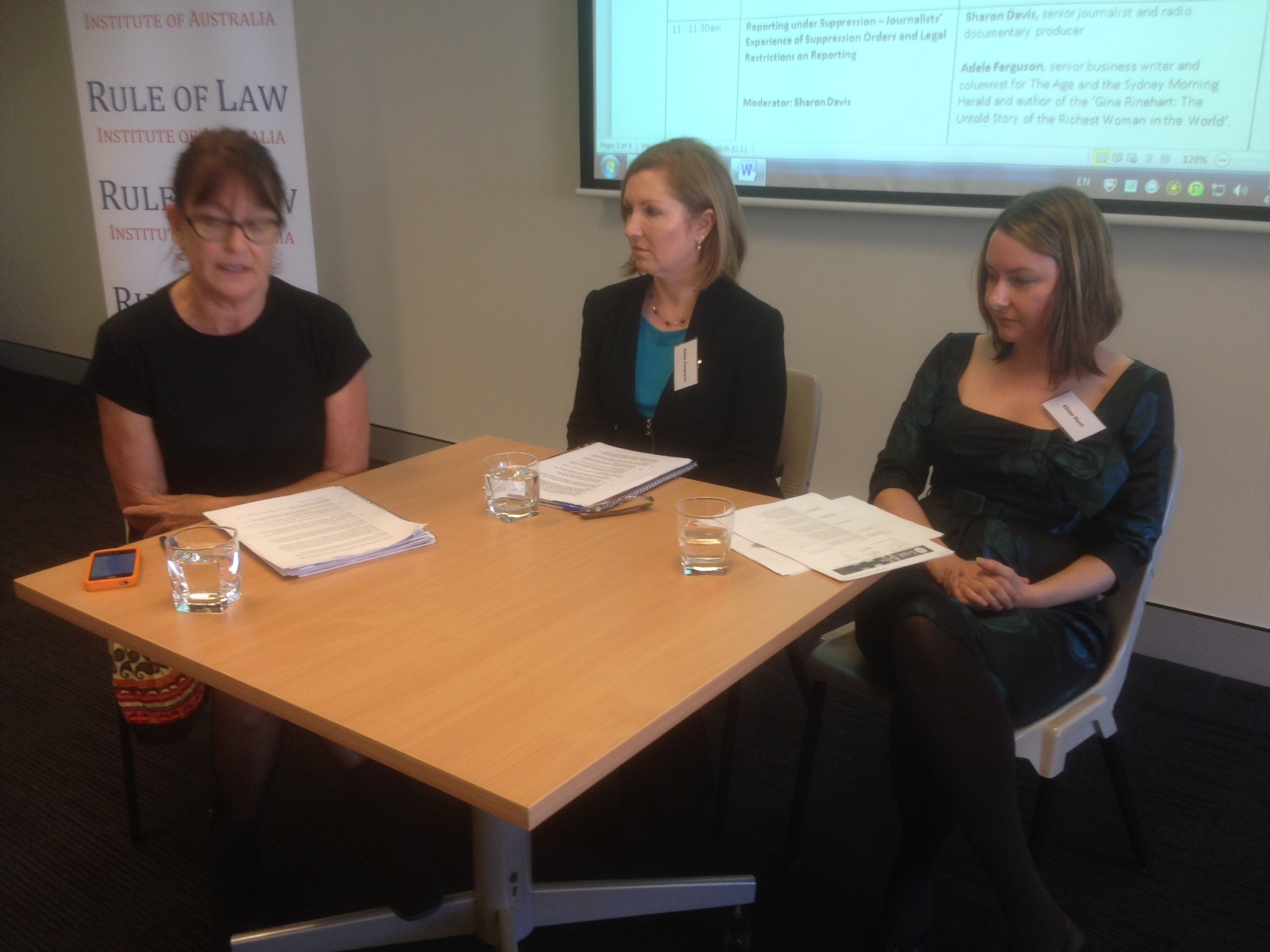
fergusonShe was joined on a panel by Gina Rinehart biographer and Fairfax senior business writer Adele Ferguson (centre) who shared  her courtroom experiences on reporting under suppression – and senior journalist and documentary producer Sharon Davis (left).

“We do write in different ways as journalists now and have to think on our feet all the time and update for the web,” Hunt said.

“There’s not time to sit down with a lawyer and negotiate whether we can get away with this or that.

“You just had to know what you could or couldn’t say.

“Yesterday I did a dump of the suppression orders logged on our system this year and I counted 144. We’re on track for maybe 300 suppression orders this year.

“I’m not seeing a decrease in the number of orders.”

Ferguson said suppression orders take many forms. She cited the spent convictions provisions under the Crimes Act as an example of material that could not be published about a corporate regulation executive who had been in a partnership with a criminal history.

She mentioned the Gina Rinehart subpoena order against her demanding her sources last year where Steve Pennells from the West Australian was also served. Rinehart eventually backed down. She had two other subpoenas year as well.

Hunt explained the phenomenon of the ‘silent listing’ where courts would not reveal where a trial was being held, leaving reporters unable to engage lawyers to challenge the suppression.

When she queried such a silent listing she was told it was a security issue. She showed the symposium a form where people could apply to have their listings made silent under a practice direction from the Victorian Chief Magistrate.

Their outdated computer system meant courts could not use a pseudonym so the only way to keep their name off the list was the only mechanism to protect a witness.

Photos of victims that had been published many times were also suppressed by Victorian courts, Hunt said. In one case such a suppression was applied to a photo of a baby who was a high profile crime victim so juries were not prejudiced.

“I think it’s a worry we have so many judges who think the jury system is this fragile thing … our own judges don’t trust the system enough to let the jury do what they are meant to do,” she said.

Ferguson agreed with Davis  individuals are using the law more creatively to take advantage of the diminished resources of the major groups to challenge orders.

“It’s really time consuming and it’s costly and I think without doubt you are seeing more subpoenas issued and more defamation,” she said.

Hunt said: “The reality is that the only ones fighting a suppression order are the media. Unless they are doing it nobody else will be. We just can’t be there for all of them.”

She explained the complicated process involved in extracting material from the digital world once a suppression order or take down order has been issued.

—-

Media can’t afford to oppose as many suppression orders, says top media lawyer

Dwindling media resources have impacted on free expression because news organisations do not have the resources to oppose as many suppression orders as they did previously, Minter Ellison Lawyers partner Peter Bartlett told the  ‘Justice Open and Shut’ Symposium at UTS Sydney today.

Screen Shot 2014-06-04 at 10.14.48 AM

“It does not happen as much as it used to because the rivers of gold have evaporated,” he said.

Because the media is not there to oppose applications for suppression orders there was a risk more and more will be issued that go further than they should go.

Mr Bartlett is speaking on ‘Suppression Orders: A Fine Balance”, where he is examining topical case studies including The Rolf Harris trial, ‘Lawyer X’, Julian Assange and Oscar Pistorius.

Judges will say open justice is an important principle ‘but’ … and that ‘but’ is the problem, he said.

“The trouble is you get judges who quite rightly are focused on prepartion for the trial … that they do not spend enough time on whether an application for a suppression order should be granted and just go ahead and approve that order.

It is a difficult task for the judge in balancing the right to a fair trial and the right to free expression.

“There is no doubt that where there is a clash the right to a fair trial should take precedence.

“A proper instruction to a jury reduces the need for a suppression order in many cases.”

He commended recent Victorian legislation giving the media a right to appear to oppose suppression orders and making it clear there should be an end date to suppression orders. Previously it was difficult getting older suppression orders lifted because all the parties had to be found and brought to court. However, some recent suppression orders had been issued without the recommended end dates, he said.

He said there were at least four or five suppression orders issued each day in Victoria.

He was receiving many applications to take down historical articles because of their potential effect on a trial.

He noted the seeking of urgent injunctions by high profile wealthy individuals and linked this to the ‘reasonableness’ test for defamation defences which requires defendants to have sought a reply from the plaintiff prior to publication.

Three times in the past 18 months he had experienced injunctions being sought after an approach by a journalist to get a comment from a high profile individual about allegations against them.

This had sometimes led to long delays, including one example of a judge ordering a story be held from December until the next May so the matter could be tried.

He criticised the assumption of some judges that any media coverage would lead to an unfair trial.

He suggested the orders made against the Underbelly program in Victoria were futile because people found other means of access.

The Rolf Harris trial raised interesting issues where Australian newspapers could cover the trial which was suppressed in the UK but not put it on their websites. Fairfax newspapers included a warning to others not to publish the material online. The stories ran without a byline to avoid difficulties for the reporter sitting in the London court covering the trial.

https://twitter.com/JTownend/status/473991814706245634

Media law experts line up in Sydney for open justice seminar

It’s a stellar line-up of Australian media law experts with the welcome guest presentation from Judith Townend from the Centre for Law, Justice and Journalism at City University, London, on ‘Transluscent justice? Digital and physical access to UK courts’.

Keynote speaker is the Hon. Philip Cummins, former Supreme Court judge and Chair of the Victorian Law Reform Commission, Chair of the Victoria Law Foundation and Chair of the Protecting Victoria’s Vulnerable Children Inquiry.

Dr Tom Morton and I are speaking about progress with our research project on a forensic mental health patient we called ‘The Man Without A Name” because of restrictions on identifying people involved in NSW Mental Health Tribunal proceedings. Section 162 Mental Health Act (NSW) bans ID of anyone involved in either tribunal or forensic proceedings, with further requirements under the Mental Health (Forensic Provisions) Act. A breach can incur a fine of $5500 or a 12 month jail term. See my earlier blog on this and Tom’s Background Briefing piece by the same name for Radio National.

———–

Conference program:

Justice Open and Shut: Suppression orders and open justice in Australia and the UK

“There is one hell of a fight going on in Australia to preserve our free press. We are increasingly seeing the rich and powerful resort to litigation to pursue journalists’ sources or lodge defamation writs purely to stop the publication of stories and scare off the rest of the media.”

Nick McKenzie, Fairfax Media, 2014 Press Freedom Australia Address

The increasing use of suppression orders undermines fair and accurate reporting of the courts and the fundamental principle of open justice.  This workshop will explore the operations and impact of suppression orders on reporting in Australia and the UK.

A workshop for journalists, lawyers, academics and anyone with an interest in open justice, the media and freedom of the press.

The  conference schedule is now available.

Keynote address: ‘Open Courts: Who Guards the Guardians?’

Keynote speaker: Hon. Philip Cummins – former Supreme court judge and Chair of the Victorian Law Reform Commission, Chair of the Victoria Law Foundation and Chair of the Protecting Victoria’s Vulnerable Children Inquiry.

Other speakers:

  • Peter Bartlett: Partner Minter Ellison, Chair of the Advisory Board at the Centre for Advanced Journalism ast Melbourne University. Author of the law precis for MEAA State of Pres Freedom in Australia. Bartlett has represented Fairfax media and others in relation to suppression orders. He will speak on the use of suppression orders and its impact on the media and journalism, the operation of take down laws and trends observed since the introduction of the new Acts.
  • Miiko Kumar: Barrister, Jack Shand Chambers and Senior Lecturer, Faculty of Law, University of Sydney. Kumar appears regularly in applications for suppression orders on behalf of government agencies. She will provide an overview of the law relating to different forms of suppression orders, as well as recent cases involving Gina Rinehart and her attempted use of suppression orders in relation to court proceedings.
  • Judith Townend: Centre for Law, Justice and Journalism, City University, London. Townend will speak on ‘Transluscent justice? Digital and physical access to UK courts’.
  • Academics and journalists Mark Pearson (Griffith) and Tom Morton (University of Technology, Sydney): Open justice, investigative journalism and forensic patients.
  • Elissa Hunt: has been a court and legal affairs reporter with the Herald-Sun in Victoria for more than 13 years.  Her work has been recognized through numerous awards from the Victorian Law Foundation, including the 2014 Law Foundation’s Reporter of the year on Legal Issues. Elissa has recently been appointed as the Digital News Editor.
  • Adele Ferguson: a multi-award winning senior business writer and columnist for the Age and the Sydney Morning Herald and author of the best selling unauthorised biography Gina Rinehart: The Untold Story of the Richest Woman in the World. Prior to joining the Age and the SMH, Adele was a senior commentator with the Australian. She has also worked at BRW Magazine as deputy editor and chief business commentator, leading many major investigations into the corporate sector.
  • Jason Bosland: Deputy Director of the Centre for Media and Communications Law at Melbourne Law School where he teaches communications and intellectual property law. He holds degrees from Melbourne and the London School of Economics. His primary research interests lie in media law, including defamation and privacy, open justice and the media, contempt of court and freedom of speech.

This workshop is hosted by the Rule of Law Institute of Australia and the Australian Centre for Independent Journalism and is supported by the Centre for Cosmopolitan Civil Societies, University of Technology, Sydney.

Media Enquiries:

Tom Morton tom.morton@uts.edu.au

Kate Burns kate@ruleoflaw.org.au

When

4 June 2014
10:00 am – 4:30 pm

Where

Venue: Mary Anne House, Level 3, 645 Harris St, Ultimo, Sydney.

—————

Disclaimer: While I write about media law and ethics, nothing here should be construed as legal advice. I am an academic, not a lawyer. My only advice is that you consult a lawyer before taking any legal risks.

© Mark Pearson 2014

Leave a comment

Filed under blogging, Buddhism, citizen journalism, Eightfold Path, free expression, media ethics, mental health, social media, Uncategorized

Justice Open and Shut – and the man without a name revisited

By MARK PEARSON

I’m looking forward to presenting with colleague Associate Professor Tom Morton from UTS (pictured) at the Australian Centre for Independent Journalism’s ‘Justice Open and Shut’ Symposium this week.

MORTON

Dr Tom Morton

Below is the full program for the conference from the ACIJ website.

It’s a stellar line-up of Australian media law experts with the welcome guest presentation from Judith Townend from the Centre for Law, Justice and Journalism at City University, London, on ‘Transluscent justice? Digital and physical access to UK courts’.

Keynote speaker is the Hon. Philip Cummins, former Supreme Court judge and Chair of the Victorian Law Reform Commission, Chair of the Victoria Law Foundation and Chair of the Protecting Victoria’s Vulnerable Children Inquiry.

Dr Morton and I are speaking about progress with our research project on a forensic mental health patient we called ‘The Man Without A Name” because of restrictions on identifying people involved in NSW Mental Health Tribunal proceedings. Section 162 Mental Health Act (NSW) bans ID of anyone involved in either tribunal or forensic proceedings, with further requirements under the Mental Health (Forensic Provisions) Act. A breach can incur a fine of $5500 or a 12 month jail term.

See my earlier blog on this and Tom’s Background Briefing piece by the same name for Radio National.

We have won permission to name him in our academic writing – including on this blog – but I will hold back on that for today so I do not spoil the presentation for those attending on Wednesday.

I have previously compared the complex array of mental health reporting restrictions in Australia and New Zealand. (See here.)

In 2012 I compared three cases in WA, Victoria and the UK involving the identification of mental health patients. The case of Patient A has strong parallels with the Albert Lazlo Haines [pdf] case in the UK where a patient won an appeal to be named in reportage of his review proceedings.

This Australian case adds to that body of literature and is interesting from that media law perspective. It also interests us as an ethical case study, and we will be using it as the focus for an exploration of the application of the principles of ‘mindful journalism’ I have described previously.

———–


Conference program:

Justice Open and Shut: Suppression orders and open justice in Australia and the UK

“There is one hell of a fight going on in Australia to preserve our free press. We are increasingly seeing the rich and powerful resort to litigation to pursue journalists’ sources or lodge defamation writs purely to stop the publication of stories and scare off the rest of the media.”

Nick McKenzie, Fairfax Media, 2014 Press Freedom Australia Address

The increasing use of suppression orders undermines fair and accurate reporting of the courts and the fundamental principle of open justice.  This workshop will explore the operations and impact of suppression orders on reporting in Australia and the UK.

A workshop for journalists, lawyers, academics and anyone with an interest in open justice, the media and freedom of the press.

The  conference schedule is now available.

Keynote address: ‘Open Courts: Who Guards the Guardians?’

Keynote speaker: Hon. Philip Cummins – former Supreme court judge and Chair of the Victorian Law Reform Commission, Chair of the Victoria Law Foundation and Chair of the Protecting Victoria’s Vulnerable Children Inquiry.

Other speakers:

  • Peter Bartlett: Partner Minter Ellison, Chair of the Advisory Board at the Centre for Advanced Journalism ast Melbourne University. Author of the law precis for MEAA State of Pres Freedom in Australia. Bartlett has represented Fairfax media and others in relation to suppression orders. He will speak on the use of suppression orders and its impact on the media and journalism, the operation of take down laws and trends observed since the introduction of the new Acts.
  • Miiko Kumar: Barrister, Jack Shand Chambers and Senior Lecturer, Faculty of Law, University of Sydney. Kumar appears regularly in applications for suppression orders on behalf of government agencies. She will provide an overview of the law relating to different forms of suppression orders, as well as recent cases involving Gina Rinehart and her attempted use of suppression orders in relation to court proceedings.
  • Judith Townend: Centre for Law, Justice and Journalism, City University, London. Townend will speak on ‘Transluscent justice? Digital and physical access to UK courts’.
  • Academics and journalists Mark Pearson (Griffith) and Tom Morton (University of Technology, Sydney): Open justice, investigative journalism and forensic patients.
  • Elissa Hunt: has been a court and legal affairs reporter with the Herald-Sun in Victoria for more than 13 years.  Her work has been recognized through numerous awards from the Victorian Law Foundation, including the 2014 Law Foundation’s Reporter of the year on Legal Issues. Elissa has recently been appointed as the Digital News Editor.
  • Adele Ferguson: a multi-award winning senior business writer and columnist for the Age and the Sydney Morning Herald and author of the best selling unauthorised biography Gina Rinehart: The Untold Story of the Richest Woman in the World. Prior to joining the Age and the SMH, Adele was a senior commentator with the Australian. She has also worked at BRW Magazine as deputy editor and chief business commentator, leading many major investigations into the corporate sector.
  • Jason Bosland: Deputy Director of the Centre for Media and Communications Law at Melbourne Law School where he teaches communications and intellectual property law. He holds degrees from Melbourne and the London School of Economics. His primary research interests lie in media law, including defamation and privacy, open justice and the media, contempt of court and freedom of speech.

This workshop is hosted by the Rule of Law Institute of Australia and the Australian Centre for Independent Journalism and is supported by the Centre for Cosmopolitan Civil Societies, University of Technology, Sydney.

Media Enquiries:

Tom Morton tom.morton@uts.edu.au

Kate Burns kate@ruleoflaw.org.au

When

4 June 2014
10:00 am – 4:30 pm

Where

Venue: Mary Anne House, Level 3, 645 Harris St, Ultimo, Sydney.

—————

Disclaimer: While I write about media law and ethics, nothing here should be construed as legal advice. I am an academic, not a lawyer. My only advice is that you consult a lawyer before taking any legal risks.

© Mark Pearson 2014

Leave a comment

Filed under blogging, Buddhism, citizen journalism, Eightfold Path, free expression, media ethics, mental health, social media, Uncategorized

Budget cuts to FOI body could prompt delays

By guest blogger EVE SOLIMAN – press freedom intern

Australian journalists face the possibility of extra delays in their freedom of information appeals with Australian federal budget cuts doing away with the Office of the Australian Information Commissioner (OAIC) by January 2015.

The cut is meant to save $10.2 million a year, but dissolving  the OAIC will mean the duties that the agency carried out will have to be shifted into four other bodies.

The privacy functions that are carried out by the Privacy Commissioner will continue as an independent legislative position within the Human Rights Commission.

The external examination of Freedom of Information (FOI) will be adopted by the Administrative Affairs Tribunal.

The Commonwealth Ombudsman will take the responsibility of filing and treatment of FOI complaints.

The last function will be divided into the Attorney General’s Department, whose responsibility will include the administering of “FOI guidelines, collecting statistics and providing explanatory material on the operation of the Freedom of Information Act 1982” (Office of the Information Commissioner disbanded as part of budget reforms, Ashurst Australia).

The budget cuts aimed at saving $10.2 million annually but will only save $3.3 million in direct financing this year and the cost of financing the continued duties, once carried out by the federal budget will be passed onto the four separate departments that it absorbed into.

The Attorney General’s Office will be funding $500,000 this year and $900,000 annually in the following years, the Human Rights Commission will contribute $2.7 million in 2015 and around $5.5 million annually the following years and the Administrative Appeals Tribunal will pay $300,000 this year and half a million dollars annually in the following years.

The reasons behind the budget cut can only be speculated, but could have a negative impact on the freedom of information and ways that the functions can be met.

A major critique by the government, agencies and other commentators on the OAIC, is that it has been inefficient in delivering information and reviewing FOI applications.

But despite claims of the OAIC’s efficiency, or viewing the institution as unnecessary there is copious amounts of evidence on the accomplishments and progress of OAIC to counter the arguments.

The completion of cases per day has increased from .37 cases in the first year and a half of its establishment, to 4.7 cases per day, the completion and cessation of FOI requests and privacy complaints also increased substantially.

The OAIC was formed in 2010 as an independent bureau within the Attorney General’s Department that’s purpose involved several elements of information dispersal and management: privacy, FOI and policy.

Predating the formation of the OAIC, the Privacy Commissioner belonged to the Human Rights Commission. The OAIC has 76 staff.

The OAIC has accomplished many things within the spectrum of privacy, freedom of information and information policy.

The agency had conducted an audit of the information management policies belonging to 191 Australian government agencies.

OAIC also resolved a total of 1,191 appeal applications and requests for information and published the reasoning for 186 of those cases, handled 4521 phone enquiries and 1891 written enquiries involving freedom of information and closed 394 FOI complaints.

In 2011, the OAIC hosted a National Information Policy Conference, that was attended by hundreds of people and created and dispersed the Principles on open public sector information which the government utilises and relies on.

References:

http://www.oaic.gov.au/news-and-events/statements/australian-governments-budget-decision-to-disband-oaic/australian-government-s-budget-decision-to-disband-oaic

file:///C:/Users/Eve/Downloads/Privacy%20Update%20-%2014%20May%202014.pdf

http://www.smh.com.au/it-pro/government-it/abbott-government-uncomfortable-with-freedom-of-information-laws-opposition-20140514-zrc1r.html

http://www.abc.net.au/pm/content/2014/s4005459.htm

http://www.zdnet.com/budget-2014-oaic-disbanded-as-privacy-foi-oversight-redistributed-7000029426/

© Eve Soliman 2014

Leave a comment

Filed under Uncategorized

How the ABC cuts will damage media freedom in the region

By MARK PEARSON Follow @Journlaw

[Thanks to press freedom intern Eve Soliman for her research assistance here.]

One of the saddest aspects of Tuesday’s budget cuts to the ABC and SBS and the axing of the $220 million Australia Network contract is the impact on media freedom in the Asia-Pacific region.

Screen Shot 2014-05-16 at 11.13.07 AMAmong the Australian values the Australia Network has advocated to neighbouring countries has been the effective operation of a genuinely independent national broadcaster – funded by the government yet producing high quality Fourth Estate journalism exposing corruption and questioning policy in the public interest.

Its current affairs schedule has included top shelf news and current affairs programs like 7.30, Dateline, Lateline, Foreign Correspondent, Q&A, The World This Week and of course ABC News Breakfast. Add to that the online curation via the Australian News Network website and you have a showcase of the media playing a watchdog role in a functioning democracy.

Many of the countries receiving the Australia Network fare much worse than Australia’s 28th position on Reporters Without Borders (RSF) World Press Freedom Index, including Vietnam (174th), Singapore (150th) and Malaysia (147th).

These are nations where ‘public broadcasting’ means something quite different and journalists are subjected to licensing regimes and even jail, with 232 imprisoned in Vietnam in 2012 and, according to the Committee to Protect Journalists, more this month.

Our quality public broadcasting content has operated as an exemplar of how journalism can work in a properly functioning democracy.

The Australia Network commitment was one of the few budgetary investments in media freedom made by this country – and now it is gone.

So too will many journalism jobs if ABC management is unable to find further cuts in its tight administrative budget – which is unlikely according to managing director Mark Scott.

The Budget announcement that the ABC was suffering only a 1 per cent cut over four years might not sound much, but this needs to be combined with inflation of around 3 per cent increasing operating costs.

Anyone familiar with compound interest would understand that this 4 per cent annual deterioration represents an escalating erosion of the ABC’s budget over that period – down to 96% of its current budget in the first year, 92% in the second, 88% in its third, and 84.5% in the fourth.

You can see how – when combined with inflation – the 1 per cent haircut actually becomes a 15% decrease over those four years.

That means either fewer staff, fewer programs, or low cost junior personnel replacing experienced colleagues at the public broadcasters in coming years.

Australia Network viewers seem less likely to have the opportunity to view some of the Walkley Award winning reportage brought to them through its programming in recent years.

Our Asian and Pacific neighbours have been witness – via the Australia Network – to corruption being exposed in all quarters by leading Australian journalists whose media organizations are now under threat.

The network also relayed other news stemming from the work of Kate McClymont of the Sydney Morning Herald which led to many of the recent revelations by the Independent Commission Against Corruption (ICAC).

They have also heard news of the Royal Commission into Child Abuse – also triggered by top notch investigative reporting by the Newcastle Herald’s Joanne McCarthy.

But recent Fairfax redundancies and pressures on other news organizations combines with this Budget decision to send a somber message to the region  – the quality and quantity of news and current affairs in this Western democracy is on the decline.

It will be interesting to see how this development feeds into Australia’s ranking in the 2015 RSF World Press Freedom Index.

Disclaimer: While I write about media law and ethics, nothing here should be construed as legal advice. I am an academic, not a lawyer. My only advice is that you consult a lawyer before taking any legal risks.

© Mark Pearson 2014

2 Comments

Filed under Uncategorized

Why Australians should care about World Press Freedom Day: My blog for No Fibs

By MARK PEARSON Follow @Journlaw

CITIZEN journalism site No Fibs has just posted my latest blog on today’s international marking of World Press Freedom Day.

It got a nice nod from Paul Barry of ABC’s Media Watch. Cheers Paul!

You can view the full piece here, but here is a taste:

—-

Readers of the NoFibs site reap the rewards of citizen journalists expressing their news and views with a high level of free expression by world standards.

So why should Australians care about media freedom on World Press Freedom Day 2014?

Quite simply, because it is a ‘fragile freedom’ – continually under threat and only noticed by most people once they have lost it.

Just ask any of the refugees who have fled to Australia over the past century from regimes that have robbed them of their human rights. One of their first responses is typically that they love their new home country because it is ‘free’ and they can express themselves freely here.

Screen Shot 2014-05-05 at 4.50.16 PMWhen you look at international indices of media freedom like that of Reporters Without Borders, Australia (ranked 28th) sits in stark contrast to the censorship and intimidation of journalists in many other countries like Vietnam (174th), China (175th) and Somalia (176th).

Journalists are not usually jailed in this country (although Melbourne broadcaster and blogger Derryn Hinch was a recent exception) – and they are certainly not tortured or murdered for exercising their right to free expression here.

At least in Hinch’s case he was duly tried and convicted (for breach of a suppression order) in a legal system that is open, just and in accordance with the rule of law.

The same cannot be said of another jailed Australian journalist, Peter Greste, who remains in jail in Egypt after 130 days along with five of his Al Jazeera media colleagues (and 14 others) on trumped up charges of defaming the country and of consorting with the Muslim Brotherhood.

While Greste’s plight has been highlighted here because of his nationality, he is just one of 168 journalists jailed throughout the world this year for just doing their job. The expression ‘shoot the messenger’ takes on a chilling reality when you also consider the 25 journalists, bloggers and citizen journalists killed already in 2014.

Australia’s relatively good performance in these press freedom rankings belies the fact that there are ongoing and emerging threats to free expression.

… and that’s just half of it. Read the full blog at No Fibs.

Disclaimer: While I write about media law and ethics, nothing here should be construed as legal advice. I am an academic, not a lawyer. My only advice is that you consult a lawyer before taking any legal risks.

© Mark Pearson 2014

Leave a comment

Filed under Uncategorized

#Hinch (@HumanHeadline), #Morcombe and open justice – lessons in media law

By MARK PEARSON

It is timely that in the space of a week we should see the Human Headline (@HumanHeadline) Derryn Hinch released from jail for a publication offence and a serial offender receive a life sentence for the sex murder of teenager Daniel Morcombe.

CatchingTheDevil(Morcombefrontpage14-3-14)C-M

Courier Mail front page 14-3-14

We learned yesterday after Brett Peter Cowan was convicted of that 2003 crime that he had served time twice earlier for similar offences.

He is exactly the kind of individual that Hinch wants placed on a public sex offender register for exactly the reason most talkback callers and social media commenters are asking this question: How can we release such individuals anonymously into our communities when we cannot be sure they will not strike again?

Hinch asked it again this morning:

Hinch became the first Australian journalist jailed this millennium for a publishing offence when he was jailed for 50 days refusing to pay a $100,000 fine for breaching a suppression order on the prior convictions of Adrian Ernest Bayley – the accused sex murderer of ABC worker Jill Meagher in Melbourne in 2012.

In 2011 he was sentenced to five months of home detention for publicly naming two sex offenders at a rally and on his website in defiance of such anonymity orders.

In 1987 he was jailed on a contempt of court charge after broadcasting the criminal record of a former priest Michael Glennon accused of child sex offences and implying his guilt in his high rating Melbourne radio program.

It was only by a 4-3 majority that the High Court later stopped short of overturning Glennon’s conviction on those sex charges on the grounds of Hinch prejudicing his fair trial. (Glennon died in jail this year.)

Journalists and media law students have much to learn from the events of the past week.

While the crimes themselves left a trail of human destruction, the Hinch and Morcombe stories make for ideal case studies in a media law module covering open justice, contempt of court and court reporting – the exact module my students will be starting next week.

They will get to research and debate these kinds of important questions that arise from the week’s events:

  • What public policy issues are at play that see a journalist jailed for reporting the past convictions of an individual convicted of a high profile crime?
  • What does such a penalty say about Australia’s standard of media freedom?
  • Why is Australia’s approach to this level of suppression different from that applying in the United States?
  • Why should the mainstream media be prevented from reporting such material when social media platforms and certain websites are full of it?
  • Why would Hinch’s blog and Twitter feed where he breached the suppression orders over Bayley not represent a ‘real risk of prejudice’ to the trial, when mainstream media coverage might do so?
  • How can juries be quarantined from such information and – if they can’t – why shouldn’t the media be allowed to publish it?
  • Do other methods of dealing with juries – judges’ instructions, training, sequestering etc – mean we no longer need to suppress such material?
  • Are the past offences of such criminals matters of such overwhelming social importance and public concern that suppression of the details should be considered contrary to the public interest?
  • Should the Courier-Mail’s front page heading of February 21, 2014 – ‘Daniel’s Killer’ – have forced the trial to be aborted? Should it be grounds for a sub judice contempt charge? Should it be grounds for Cowan’s appeal?
  • How can a journalist report upon such proceedings in an interesting and timely way while navigating the various restrictions that apply?
  • How ‘open’ should ‘open justice’ be in such high profile trials? Should cameras and smartphone recordings be allowed in court? Should tweeting and other social media usage be allowed in court?
  • Is it appropriate in the modern era of communication that a major television network has to rely on a presenter standing outside a courthouse relaying sentencing information to the audience from a court reporter on the inside via telephone?
  • How much social media commentary should be tolerated about such cases while an accused is facing trial?

I’m sure many other questions arise too – and would be keen for other educators, journalists, lawyers and students to use the Comments section here to pose them so my students can take them up in lecture and tutorial discussions.

———–

Disclaimer: While I write about media law and ethics, nothing here should be construed as legal advice. I am an academic, not a lawyer. My only advice is that you consult a lawyer before taking any legal risks.

© Mark Pearson 2014
Leave a comment

Filed under blogging, contempt of court, courts, free expression, media ethics, Media freedom, media law, Press freedom, sub judice, suppression, Uncategorized

The Human Headline legacy – the jailed Hinch, suppression and free expression

By MARK PEARSON

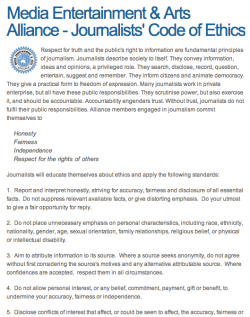
Broadcaster, tweeter, blogger and veteran journalist Derryn Hinch – the self-proclaimed ‘Human Headline’ – has been released from jail after serving a 50 day sentence for breaching a suppression order. 

Derryn Hinch's 'Human Headline' blog - Countdown to Freedom

Derryn Hinch’s ‘Human Headline’ blog – Countdown to Freedom

Hinch had refused to pay a $100,000 fine over his blog and Twitter comments including suppressed background material on Adrian Ernest Bayley, accused of the Melbourne murder of Irish woman Jill Meagher.

Hinch has been jailed twice, fined and sentenced to home detention for his contemptuous reportage and commentary about sex offenders over more than a quarter of a century.

While much of the coverage of his prosecutions and trials has focused on his cavalier and principled stance in the vein of his ‘Human Headline’ moniker, he has also been responsible for a body of case law covering sub judice contempt, the naming of a child sexual assault victim and the defiance of suppression orders – in his television and talkback radio programs, blogs and Twitter feeds.

I am preparing a paper for the ANZCA conference in Melbourne in July, reporting on a legal and textual analysis of eight key Victorian and High Court cases involving Hinch as a party in 1986, 1987, 1996, 2011 and 2013.

It reviews these key cases involving Hinch as a defendant and an appellant since 1986 – including Magistrates, Supreme Court, Court of Appeal and two High Court judgments – and identifies the key media law principles shaped in the process.

It concludes that the Hinch legacy is far more significant than his shallow ‘Human Headline’ title suggests – and ventures into important human rights questions arising in the complex legal and moral terrain where free expression, the ‘public interest’ and the ‘public right to know’ compete with an accused’s right to a fair trial, an ex-prisoner’s right to rehabilitation and a child’s right to protection from sexual predators.

For example, Hinch’s appeal to the High Court over his contempt conviction in 1987 was unsuccessful but resulted in a broadening of the public interest defence to sub judice contempt.

His latest case offers an excellent summary of the relevant factors considered in deciding whether there is a real risk of prejudice to a trial, because Hinch was acquitted on a second contempt charge that his blog ‘had a tendency, or was calculated, to interfere with the due administration of justice in the trial of Bayley’.

Victorian Supreme Court Justice Stephen Kaye ruled that three factors combined to reduce the tendency of Hinch’s blogging to prejudice potential jurors: the small readership of the article, the period of delay between the publication of the article and the likely trial date of Bayley, and other prejudicial material about Bayley circulating in the media and social media at the time (para 114). While ‘highly prejudicial’, Justice Kaye had a ‘reasonable doubt’ in light of those three factors that the article would have prevented Bayley getting a fair trial.

I will post updates on this paper as the research and writing unfolds. Meanwhile, no matter what you think of Hinch’s bravado in his naming and shaming of sex offenders, at least this week we should be able to celebrate the release of an Australian journalist from jail.

———–

Disclaimer: While I write about media law and ethics, nothing here should be construed as legal advice. I am an academic, not a lawyer. My only advice is that you consult a lawyer before taking any legal risks.

© Mark Pearson 2014
3 Comments

Filed under blogging, contempt of court, courts, free expression, media ethics, Media freedom, media law, Press freedom, sub judice, suppression, Uncategorized

The man without a name to get one – a small victory for open justice

By MARK PEARSON

We have won a small victory for open justice by persuading the NSW Mental Health Tribunal to allow the Australian Broadcasting Corporation to use the name of a forensic patient in a Background Briefing program on Radio National next year.

**Update: Tom Morton’s radio documentary ‘The man without a name’ was aired on Radio National Background Briefing on April 20, 2014 and can be heard (and transcript read) here.

We later applied to the Mental Health Review Tribunal for permission to name the patient in our scholarly publications, including this research blog. The Tribunal granted that permission on May 9, 2014 after a hearing to consider our application on 20 March 2014.

We can now reveal that the patient is Mr Saeed Sayaf Dezfouli.

This publication is conditional upon this publication carrying this notice:

“Notice: It is an offence under the Mental Health Act 2007 (NSW) section 162 to publish or broadcast the name of any person to whom a matter before the Mental Health Review Tribunal relates or who appears as a witness before the Tribunal in any proceedings or who is mentioned or otherwise involved in any proceedings under the Mental Health Act 2007 or the Mental Health (Forensic Provisions) Act 1990, unless consent has first been obtained from the Tribunal. The author has obtained such consent to publish Mr Dezfouli’s name.”

MORTON

Dr Tom Morton

[Earlier blog continued … ] Colleague Associate Professor Tom Morton from the University of Technology Sydney and I have been conducting an applied research project about publicity of mental health proceedings – centred upon the case of a Sydney patient who wishes to be identified in reportage on his situation.

We are presenting a progress report on our study at the Journalism Education Association of Australia annual conference in Mooloolaba, Queensland today (December 4, 2013).

Dr Morton is an accomplished radio journalist and has started work on the documentary to be aired in coming months. We are collaborating on the academic side of the project – using my research into mental health reporting and logging our ethical decision-making to create a documented mindful reflection on the project.

Dr Morton briefed ABC lawyer Hugh Bennett who presented our case for the identification of Patient A when we appeared before the Mental Health Tribunal in September.

Section 162 Mental Health Act (NSW) bans ID of anyone involved in either tribunal or forensic proceedings, with further requirements under the Mental Health (Forensic Provisions) Act. A breach can incur a fine of $5500 or a 12 month jail term.

A Supreme Court application for the identification of Patient A had failed in 2012 on technical grounds (A v Mental Health Review Tribunal (2012) NSWSC293).

The Tribunal’s consent to the identification of Patient A appears to be limited to the broadcast, so I am not naming him here.

Patient A is an Iranian refugee who until 2002 was employed at a government office in Sydney.

In 2002 he set fire to that building and a co-worker died of smoke inhalation.

In 2003 the Supreme Court of NSW found that Patient A was unfit to be tried for murder, and a jury subsequently found him not guilty of manslaughter by reason of mental illness. He is thus deemed a ‘forensic patient’ – a person whose health condition has led them to commit, or be suspected of, a criminal offence’ (AIHW, 2010, p. 140).

I have previously published compared the complex array of mental health reporting restrictions in Australia and New Zealand. (See here.)

Last year I compared three cases in WA, Victoria and the UK involving the identification of mental health patients. The case of Patient A has strong parallels with the Albert Lazlo Haines [pdf] case in the UK where a patient won an appeal to be named in reportage of his review proceedings.

This Australian case adds to that body of literature and is interesting from that media law perspective. It also interests us from an ethical perspective, and we will be using it as the focus for an exploration of the application of the principles of ‘mindful journalism’ I have described previously.

We plan to write an academic article on this process to date (the events leading to this Tribunal decision), followed by a research journalism output including an exegesis on mindful journalism ethics after Dr Morton’s Background Briefing documentary has been broadcast. Stay tuned.

———–

Disclaimer: While I write about media law and ethics, nothing here should be construed as legal advice. I am an academic, not a lawyer. My only advice is that you consult a lawyer before taking any legal risks.

© Mark Pearson 2013

3 Comments

Filed under blogging, Buddhism, citizen journalism, Eightfold Path, free expression, media ethics, mental health, social media, Uncategorized

The MEAA Code of Ethics: all spin and no stick

By MARK PEARSON

The go-to document for journalists refusing to ‘fess up their sources or taking the high ethical ground is the MEAA Journalists’ Code of Ethics – but the irony is that the journalists’ union uses notoriously ineffective and opaque processes to police this high profile code.

Screen Shot 2013-11-26 at 12.40.47 PMUnlike the Australian Press Council, the ethics panel of the Media, Entertainment and Arts Alliance (MEAA) has actual disciplinary powers at its disposal for use against individual journalists who breach its Code of Ethics – but it has rarely used them. Its powers extend to any journalists who are members of the Alliance. However, these days large numbers of journalists throughout the industry are not members.

In 1999, the alliance updated the code to a twelve-item document, requiring honesty, fairness, independence and respect for the rights of others. The alliance’s ethical complaints procedures are outlined in Section 8 of the Rules of the  MEAA (2009), summarised on the union’s website. Complaints must be in writing stating the name of the journalist, the unethical act and the points of the Code that have been breached. The judiciary committee (made up of experienced journalists elected every two years by state branch members) then meets to consider the complaint. They can dismiss or uphold the complaint without hearing further evidence, call for further evidence and hold hearings. Hearings involve the committee, the complainant and the journalist and follow the rules of natural justice. Lawyers are excluded. Penalties available to the committee include a censure or rebuke for the journalist, a fine of up to $1000 for each offence, and expulsion from the union. Both parties have 28 days to appeal to an appeals committee of three senior journalists in each state elected every four years and then to a national appeals committee of five journalists.

Because of the secrecy surrounding the cases and their outcomes there are few ethics panel case studies to work with. In 2003 Chris Warren provided me with the judgment of a 2002 case involving a complaint against a Sydney cartoonist who, the complainant alleged, portrayed the then opposition leader Kim Beazley as a person with a ‘physical and intellectual disability’, in breach of clause 2 of the code. The complaint also suggested the depiction was ‘inaccurate, unfair and dishonest’ and denied Mr Beazley a ‘right of reply’, in breach of clause 1. He also complained of a ‘continuing and malicious campaign of denigration of Labor leaders by this cartoonist’. The cartoonist’s defence was that all cartoonists regularly breached the letter of several clauses every time they did their work, but that this was the nature of artistic expression and satire. The complaint of unethical behaviour was dismissed on the basis that there was no ‘malicious bias’ and that any inaccuracy ‘was consistent with the satirical traditions of newspaper cartoons’.

Under Rule 67(h), the decisions and recommendations of the ethics panel shall be published in accordance with any guidelines that may be issued by the National Journalists’ Section Committee. When I interviewed MEAA federal secretary Chris Warren in 2003, he said the issue of publication of adjudications was a difficult one because of potential defamation action by participants. This makes it difficult to get information about MEAA ethics panel cases. Muller (2005: 185) wrote: ‘The practical result of this is that no one other than the parties, the panel and the MEAA executive ever hear about the complaints that are lodged, or what happens to them. This not only severely circumscribes the effectiveness of the procedure as a mechanism of accountability, but it offends against the principles of free expression, openness and transparency, and leaves the profession open to accusations of hypocrisy.’

While the MEAA’s website outlines the complaints procedures, it does not feature any records of complaints against journalists. Thus, both its journalist members and the general public remain ignorant of the nature and progress of any complaints against its members. In 2003 Chris Warren confirmed that the organisation received very few complaints each year, and that most were referred to the Australian Press Council. The Walkley Magazine in 2006 noted that the committee received only 67 original complaints and held five appeals between 2000 and January 2006, but could not deal with 34 of the complaints because they were to do with journalists who were not MEAA members. This meant only 33 complaints were handled in five years, an average of just over six per year. A separate tally of complaints to the Victorian branch of the MEAA by Muller (2005: 183) found that over the ten years 1993–2002 inclusive, just 23 complaints were received by the ethics panel of the Victorian branch. He provided a summary of each of them (Muller 2005: 187-8).

MEAA National Secretary Chris Warren told the Independent Media Inquiry last year that since the revised code was adopted in 1999 only three members had been censured or rebuked and that no member had been expelled for almost four decades (Finkelstein, 2012, p. 195). The reality is that with membership voluntary, the MEAA needs someone else to discipline its members when they act unethically. Its return to Press Council membership in 2005 opened the way for the MEAA to refer most complaints to that body or to the ACMA rather than having its own ethics panel deal with them at the risk of an embarrassing finding and the potential loss of a member.

There are scores of ethical codes of practice and guidance documents across the various media industry platforms – far too many for a single journalist to reflect upon while encountering a particular ethical dilemma. The irony is that the MEAA ‘Code of Ethics’ is the best known and most highly regarded ethical statement for the profession but there is a remarkably ineffective mechanism for its enforcement.

———–

Disclaimer: While I write about media law and ethics, nothing here should be construed as legal advice. I am an academic, not a lawyer. My only advice is that you consult a lawyer before taking any legal risks.

© Mark Pearson 2013

2 Comments

Filed under Media freedom, Media regulation, Press freedom

Whither media reform under Abbott?

By MARK PEARSON

Where will the new Liberal-National Coalition government led by Prime Minister Tony Abbott head with the reform of media regulation? Communications Minister Malcolm Turnbull and Attorney-General George Brandis were vocal opponents of the former Gillard Government’s proposals to merge press self-regulation with broadcast co-regulation into a new framework.

TurnbullCommons

Communications Minister Malcolm Turnbull … can he concoct the magic media self-regulation formula? [Image: commons.wikimedia.org]

Recent inquiries into media regulation in the UK (Leveson, 2012), Australia (Finkelstein, 2012) and New Zealand (Law Commission, 2013) have recommended major changes to the regulation of media corporations and the ethical practices of journalists. Their motivation for doing so stemmed from public angst – and subsequent political pressure – over a litany of unethical breaches of citizens’ privacy over several years culminating in the News of the World scandal in the UK and the subsequent revelations at the Leveson Inquiry (2012) with an undoubted ripple effect in the former colonies.

Many contextual factors have informed the move for reform, including some less serious ethical breaches by the media in both Australia and New Zealand, evidence of mainstream media owners using their powerful interests for political and commercial expediency, and the important public policy challenge facing regulators in an era of multi-platform convergence and citizen-generated content.  Minister Turnbull is an expert on the latter element and it is hard to imagine him not proposing some new, perhaps ‘light-touch’, unified regulatory system during this term in office.

By way of background, two major inquiries into the Australian news media in 2011 and 2012 prompted a necessary debate over the extent to which rapidly converging and globalised news businesses and platforms require statutory regulation at a national level.  Four regulatory models emerged – a News Media Council backed by recourse to the contempt powers of courts; a super self-regulatory body with legislative incentives to join; a strengthened Australian Press Council policing both print and online media; and a government-appointed  ‘Public Interest Media Advocate’.

The $2.7 million Convergence Review, announced in late 2010, was meant to map out the future of media regulation in the digital era (Conroy, 2010). However, revelations of the UK phone hacking scandal and Labor and Green disaffection with Rupert Murdoch’s News Limited in Australia, prompted the announcement in September 2011 of a subsidiary inquiry – the $1.2 million Independent Media Inquiry – specifically briefed to deal with the self-regulation of print media ethics. Its architects – former Federal Court judge Ray Finkelstein assisted by University of Canberra journalism professor Matthew Ricketson – argued they could not decouple print news self-regulation from broadcast ‘co-regulation’ in the digital era, so devised a statutory model including both in their report of February 28, 2012, two months prior to the release of the report of its parent Convergence Review (Finkelstein, 2012).

The Independent Media Inquiry (Finkelstein) report was an impressive distillation of legal, philosophical and media scholarship. Among many sensible proposals, it called for simpler codes of practice and more sensitivity to the needs of the vulnerable. But its core recommendation for the ‘enforced self-regulation’ of ethical standards prompted fierce debate. It proposed a News Media Council to take over from the existing self-regulatory Australian Press Council and co-regulatory Australian Communications and Media Authority to set journalistic standards with a streamlined complaints system with teeth (Finkelstein, 2012, pp. 8-9) The body would cover print, online, radio and television standards and complaints. It would have a full-time independent chair (a retired judge or ‘eminent lawyer’) and 20 part-time members evenly representing the media and the general citizenry, appointed by an independent committee (Finkelstein, 2012, pp. 290-291). The government’s role would be limited to securing the body’s funding and ensuring its decisions were enforced, but “the establishment of a council is not about increasing the power of government or about imposing some form of censorship” (Finkelstein, 2012, p. 9).

The report stressed the model would be ‘enforced self-regulation’ rather than ‘full government regulation’;

…an independent system of regulation that allows the regulated parties to participate in the setting and enforcement of standards (as is presently the case), but with participation being required, rather than voluntary (Finkelstein, 2012, p. 287).

Nevertheless, refusal to obey an order to correct or apologise would see a media outlet referred to a court which could issue an order to comply with further refusal – triggering a contempt charge and fines or jail terms for recalcitrant publishers. (Finkelstein, 2012, p. 298). Such a court would be charged with the relatively straightforward task of determining whether the publisher had disobeyed an order of the statutory News Media Council. Only then might publishers get the opportunity for an appeal – again by a judge in court.

The ‘Finkelstein inquiry’ was only ever meant to be an advisory to its parent Convergence Review, chaired by former IBM Australia managing director Glen Boreham, which released its final report in April, 2012 (Convergence Review, 2012).  News media regulation represented a much smaller element of the Convergence Review’s overall brief, particularly after this topic had been hived off to the Finkelstein inquiry, so this matter constituted a relatively small part of its report. While the Convergence Review report shared Finkelstein’s concerns about shortcomings with existing regulatory systems, it proposed that ‘direct statutory mechanisms … be considered only after the industry has been given the full opportunity to develop and enforce an effective, cross-platform self-regulatory scheme’. In other words, it was offering the media industry ‘drinks at the last chance saloon’ for a three year period under its model (Convergence Review, 2012, p. 53). Its mechanism centred upon the establishment of a ‘news standards body’ operating across all media platforms – reinforcing the overall review’s preference for ‘platform neutrality’ (Convergence Review, 2012, p.51). The news standards body ‘would administer a self-regulatory media code aimed at promoting standards, adjudicating complaints, and providing timely remedies’ (Convergence Review, 2012, p. 153).

Unlike Finkelstein, the Convergence Review decided not to be prescriptive about the constitution or operational requirements for such a body, beyond some broad requirements. The largest news media providers – those it deemed ‘content service providers’ – would be required by legislation to become members of a standards body. Most funding for the new body should come from industry, while taxpayer funds might be drawn upon to meet shortfalls or special projects (Convergence Review, 2012, p. xiv). It would feature:

–       a board of directors, with a majority independent from the members;

–       establishment of standards for news and commentary, with specific requirements for fairness and accuracy;

–       implementation and maintenance of an ‘efficient and effective’ complaints handling system;

–       a range of remedies and sanctions, including the requirement that findings be published on the respective platform. (Convergence Review, 2012, p. 51)

The review’s definition of ‘content service enterprises’ (control over their content, a large number of Australian users, and a high level of revenue drawn from Australia) would catch about 15 media operators in its net. Others might be encouraged to join the body with a threat to remove their current news media exemptions to privacy laws and consumer law ‘misleading and deceptive conduct’ provisions (Convergence Review, 2012).

Both inquiries acknowledged – and rejected – the notion of a revamped Australian Press Council proposed in various submissions and appearances by its chair, Professor Julian Disney. (The Press Council was established in 1976 as a newspaper industry ‘self-regulatory’ body – a purely voluntary entity with no powers under law.) Nevertheless, during and after the reports, and with new support from most of its members, the Press Council moved quickly to ramp up its purview and powers to address many of its documented shortcomings such as the refusal of some member newspapers to publish its findings and the threat of withdrawal of funding from others (Simpson, 2012). It locked its members into four year commitments and established an independent panel to advise on its review of its content standards. Those standards are due to be announced soon.

In 2013 the Gillard Labor Government introduced a ‘News Media (Self-regulation) Bill’ to establish a new role of ‘Public Interest Media Advocate’ with the power to deregister bodies, like the Australian Press Council, if they failed to police effectively the ethical standards of their newspaper and online members. Ultimately, the proposal might leave media outlets without their current exemptions from compliance with the Privacy Act in their newsgathering operations. The Labor government later withdrew the proposal when it could not garner enough support in the Parliament – in the face of strong opposition from the mainstream media and the Coalition (now government) with Turnbull and Brandis as the lead naysayers.

The big question now centres upon not if, but when, they choose to propose some new regulatory system where serious media ethical breaches across all media platforms are channelled through a single – self-regulatory? – body. And the further – and crucial issue – will be whether they can do this without ultimate recourse to criminal sanctions for recalcitrant journalists and media groups. It is vital that they do so, given that Australia is rare among Western democracies in that free expression is not enshrined in our Constitution.

Australia’s global free press standing depends upon them devising the magic formula the earlier inquiries failed to concoct.    

References

Conroy, S. (2010, December 14). Convergence Review. Terms of Reference (media release). Available: http://www.minister.dbcde.gov.au/media/media_releases/2010/115

Convergence Review (2012). Convergence Review. Final Report. Department of Broadband, Communications and the Digital Economy: Canberra. Available: http://www.dbcde.gov.au/__data/assets/pdf_file/0007/147733/Convergence_Review_Final_Report.pdf

Convergence Review (2012). Convergence Review. Final Report. Department of Broadband, Communications and the Digital Economy: Canberra. Available: http://www.dbcde.gov.au/__data/assets/pdf_file/0007/147733/Convergence_Review_Final_Report.pdf

Day, M. (2012, April 9.) A shame Seven West should quit Press Council. The Australian. Available: http://www.theaustralian.com.au/business/opinion/a-shame-seven-west-should-quit-press-council/story-e6frg9tf-1226321637864

Finkelstein, R. (2012). Report of the Independent Inquiry Into the Media and Media Regulation. Department of Broadband, Communications and the Digital Economy: Canberra Available: http://www.dbcde.gov.au/__data/assets/pdf_file/0006/146994/Report-of-the-Independent-Inquiry-into-the-Media-and-Media-Regulation-web.pdf

Law Commission (NZ) (2013). The news media meets ‘new media’: rights, responsibilities and
 regulation in the digital age. 
(Law Commission report 128). Law Commission: Wellington.

Leveson, B. (2012). Report of An Inquiry into the Culture, Practice and Ethics of the Press (The Stationery Office, 2012) [Leveson Report].

Simpson, K. (2012, July 20). Journalism standards set for an updating. smh.com.au Available: http://www.smh.com.au/business/journalism-standards-set-for-an-updating-20120719-22czm.html

———–

Disclaimer: While I write about media law and ethics, nothing here should be construed as legal advice. I am an academic, not a lawyer. My only advice is that you consult a lawyer before taking any legal risks.

© Mark Pearson 2013

2 Comments

Filed under Media freedom, Media regulation, Press freedom