Tag Archives: mindful journalism

Towards a mindful approach to media law and ethics

By MARK PEARSON

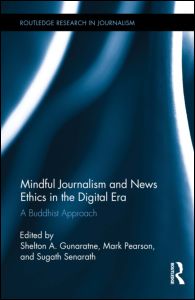
Our book Mindful Journalism and News Ethics in the Digital Era: A Buddhist Approach (Shelton Gunaratne, Mark Pearson and Sugath Senarath eds; Routledge, NY, 2015)  explored the possibilities of applying mindfulness techniques to journalism practice.

How might we begin to apply Buddhist ethical systems to the analysis of media law and ethics?

I explore this question in an article just published online and to appear in a forthcoming print edition of the International Communication Gazette.

It is titled ‘Enlightening communication analysis in Asia-Pacific: Media studies, ethics and law using a Buddhist perspective’. Its abstract and link to the full article is available here.

Screen Shot 2015-05-29 at 3.08.59 pmThe article backgrounds important critiques of the Western approach to communication  studies, and considers how globalized communication and media studies has become, before exemplifying how a secular Buddhist perspective might offer 2,500 year-old analytical tools that can assist with media analysis, law and ethics.

The article proposes the Buddha’s Four Noble Truths and their associated Noble Eightfold Path (magga) can be fruitful tools for informing communication theory and analysis, and media law and ethics.

The article begins by assessing the extent to which communication and media studies in Asia and the Pacific has shifted to accommodate non-Western approaches.

In media analysis, it suggests the Buddha’s teachings on Right Speech (samma vaca) offer key understandings to assist with the deconstruction of media texts. In media law and ethics, it extends the application of Right Speech principles to comparing defences to libel (defamation) as they have developed in four Western jurisdictions.

Here is a brief extract on that aspect:

In this globalised, multi-cultural and multi-jurisdictional Web 2.0 era there should be no reason why the Judeo-Christian lens should have a monopoly on our examination of communication law. A mindful reading of defamation law benefits from a consideration of both Right Speech principles and concepts of necessary truth-telling. While it is far-fetched to expect judges and legislators in the West would turn to Buddhism for the reform of defamation law, an effort to abide by truth-telling and Right Speech principles could operate effectively when professional communicators are attempting to avoid libel litigation when pursuing their stories. Further, they present excellent tools for an alternative analysis.

Analysis of the development of defamation defences in Canada, the UK, Australia and the U.S. benefit from a Buddhist reading. In Grant v. Torstar Corp., 2009 SCC 61, [2009] 3 S.C.R. 640, the Supreme Court of Canada developed a ‘responsible communication’ defence to defamation for matters which might not have been able to be proven absolutely as true, but were still diligently reported and were clearly in the public interest to be aired within the spirit of the Canadian Charter of Rights and Freedoms protection of free expression. ..

It is possible to implement a Buddhist approach using the Right Speech teachings from the Noble Eightfold Path to conduct an analysis in this area of communication law. The author proposes to do this more thoroughly in future work. However, for the purposes of this argument we might return to the Abhaya Sutta cited earlier and contrast these defences as they have been developed in these jurisdictions (Thanissaro, 1997). Crucial to the Canadian ‘responsible communication’ defence and its qualified privilege cousins in the UK and Australia is the extent to which reporters and publishers honestly believe in the truth of the defamatory material published, even though they might not have the firm evidence to prove this in court. They would pass the Buddhist (mindful journalism) test if they had an honest belief the material was “factual, true, beneficial” while perhaps being “unendearing and disagreeable to others”, as long as they had chosen the “proper time” for reporting it (Thanissaro, 1997). However, the U.S. defences driven by the First Amendment takes this liberty a step too far under this schema, because it allows unbeneficial, unendearing and disagreeable material to be published about public figures as long as it has not been done with malice. It also allows for untruthful gossip-mongering, as identified earlier in the Saleyyaka Sutta (Nanamoli, 1994) as ethically problematic. Such analysis shows promise in the field of media law analysis, reform and policy development because it provides a working ethical framework to apply to legislation and the fact scenarios of particular cases.

The article applies the ‘Right Speech’ principles of Buddhist ethics to analysis of the Royal family prank call episode which resulted in a High Court appeal in Australia and to a racial discrimination case heard in Australia’s Federal Court over comments on a West Australian news website.

———–

Disclaimer: While I write about media law and ethics, nothing here should be construed as legal advice. I am an academic, not a lawyer. My only advice is that you consult a lawyer before taking any legal risks.

© Mark Pearson 2015

2 Comments

Filed under blogging, Buddhism, citizen journalism, Eightfold Path, free expression, media ethics, mental health, social media, Uncategorized

Lessons in ‘Right Speech’ and mindful communication in Queensland defamation case

By MARK PEARSON

THE comedians on the Ten network’s ‘The Project’ had some fun with defamation last Friday when they used a fairly sobering Queensland case as the reason to interview me on the basics of that law.

First up, a clarification. Near the end of the segment they seemed to imply quite incorrectly that I am a lawyer which, of course, I am not!

Mark Pearson (@journlaw) interviewed on The Project about defamation 24.4.15 [At 33 mins 15 secs]

Mark Pearson (@journlaw) interviewed on The Project about defamation 24.4.15 [At 33 mins 15 secs]

There is a serious side to this. The Queensland case they used as the segue to my very rudimentary explanation of defamation law was Sierocki & Anor v Klerck & Ors (No 2) [2015] QSC 092 where Justice Flanagan had ordered a total of $260,000 in damages be awarded to the plaintiff and his company over various Internet slurs against them by his former business partner and others.

The defendants had earlier failed in their attempt to prove the truth of the imputations that the plaintiff was fraudulent; was a conman; had committed adultery; had used illegal drugs; was evil; was a thief; was a liar; and preyed on the innocent and that his company’s services were disreputable; unprofessional and encouraged threatening behaviour. Quite a slur indeed.

33671_GAZThe Courier Mail reported earlier that the plaintiff was also suing Google for $2.6 million over its search results linking him to the sites containing those imputations.

The case is interesting for media law students for a range of reasons – the large award of damages, the fact that they were Internet publications, and for the proposed action against Google.

But I find the most instructive lesson is the extent to which a dispute between business partners can escalate so far out of control that one should take to the Internet to cast these kinds of aspersions against the other.

Justice Flanagan noted in the judgment that the cause of the original dispute was unknown, but the result has been enormous financial and emotional cost to all parties.

Our new book Mindful Journalism and News Ethics in the Digital Era: A Buddhist Approach (Shelton Gunaratne, Mark Pearson and Sugath Senarath eds; Routledge, NY) examined some of the causes of such disputes and the damage that language can cause to reputations and relationships.

I take this further in a forthcoming article in a special issue of the academic journal International Communication Gazette, edited by my Mindful Journalism lead editor Shelton Gunaratne.

In that article I examine the religious origins of defamation law and proceed to link it to the Buddhist concept of “Right Speech”, writing:

In this globalised, multi-cultural and multi-jurisdictional Web 2.0 era there should be no reason why the Judeo-Christian lens should have a monopoly on our examination of communication law. A mindful reading of defamation law benefits from a consideration of both Right Speech principles and concepts of necessary truth-telling. While it is far-fetched to expect judges and legislators in the West would turn to Buddhism for the reform of defamation law, an effort to abide by truth-telling and Right Speech principles could operate effectively when professional communicators are attempting to avoid libel litigation when pursuing their stories. Further, they present excellent tools for an alternative analysis.

The basic premise of Right Speech in Buddhism is that words should not be spoken (or written or published) if they are not factual or true, or if they are unbeneficial, unendearing or disagreeable to others. All of these elements seemed to apply in this case, or at least that was the tenor of the judgment. Of course, sometimes hard truths do need to be told, but we need to ensure they are provable as true or that we can operate under some other defence excusing their publication.

The Internet offers inordinate opportunities to those seeking to defame others. This is the latest in a series of judgments demonstrating that even when one side wins a record damages payout for defamation, nobody is really a winner when reputations are damaged for no defensible reason.

We need to look to our moral compass when speaking or writing ill of others and ask whether we have an ethical foundation for doing so.

———–

Disclaimer: While I write about media law and ethics, nothing here should be construed as legal advice. I am an academic, not a lawyer. My only advice is that you consult a lawyer before taking any legal risks.

© Mark Pearson 2015

1 Comment

Filed under blogging, Buddhism, citizen journalism, Eightfold Path, free expression, media ethics, mental health, social media, Uncategorized

‘Mindful Journalism’ out Feb 24: excerpt and review copy request form here

By MARK PEARSON

We are excited that our book Mindful Journalism and News Ethics in the Digital Era: A Buddhist Approach (Shelton Gunaratne, Mark Pearson and Sugath Senarath eds; Routledge, NY) will be available from February 24.

Review copies are available from Routledge by filling out this request form. Please see the publisher’s synopsis.

MindfulJournalismCoverThe term ‘mindful journalism’ is a concept I introduced more than a year ago in the inaugural UNESCO World Press Freedom address at AUT University Auckland, drawing upon the earlier substantive work by my esteemed colleague (and lead editor of our book), Emeritus Professor Shelton Gunaratne, who has been working for decades on the intersection between Buddhism and journalism.

I developed my application of this in a paper to the International Association for Media and Communication Research (IAMCR) conference in Dublin in July 2014, which was revised for publication as an article in Ethical Space published in December 2014.

It is being published as part of the Routledge New York Research in Journalism series. My key point was that one does not have to be a Buddhist to incorporate the key principles of mindful journalism into one’s work. In fact, most of these very moral principles are evident in the teachings of all the world’s great religions. However, for those who lack a moral framework for their ethical decision-making, a secular application of these non-theistic principles can offer a moral compass. They offer a series of normative or aspirational goals we can strive for, but rarely reach. They also provide a schema for the analysis of ethical decision-making by journalists.

To give you a taste of mindful journalism, I offer this short extract from my chapter on ‘The Journalist and Mental Cultivation’ in Mindful Journalism where I explore the possibilities of Buddhism’s ‘Right Mindfulness’ (meditation) for journalism:

A journalist could find value in several elements of this process – from the pausing to think about the duration of a single breath for calming purposes, followed by a self-assessment of thoughts, perspectives and feelings about the story or matter at hand, including breaths to acknowledge the changing nature of things, the separation of the journalist’s ego from the story, and breaths devoted to the implications of the story for those it might impact upon, from the individual who might suffer through their actions being exposed through to others who might benefit by learning from that person’s experience. Thinking about those thoughts might bring clarity to decisions related to the story – suitable priorities, whom to interview, what to check, questions to be asked, and how the facts might best be presented. Recording those thoughts – in a note or audio form – might offer a retrospective justification for the journalist’s actions if they are later called to account. Such metacognition can even become evidence in some court proceedings resulting from a story to demonstrate a journalist has acted in good faith in making “reasonable inquiries,” even if the publisher cannot prove the truth of the reputation-damaging material, as is the case with criteria for the qualified privilege defence in some jurisdictions.

Interested? You can read further extracts from the book using the “Look Inside” interface at Amazon. Enjoy.

———–

Disclaimer: While I write about media law and ethics, nothing here should be construed as legal advice. I am an academic, not a lawyer. My only advice is that you consult a lawyer before taking any legal risks.

© Mark Pearson 2015

Leave a comment

Filed under blogging, Buddhism, citizen journalism, Eightfold Path, free expression, media ethics, mental health, social media, Uncategorized

Mindful Journalism in a nutshell: @journlaw keynote to JEANZ

By MARK PEARSON

EARLIER this month I had the honour of delivering the keynote address to the Journalism Education Association of New Zealand annual conference in Christchurch.

MindfulJournalismCoverThe topic was “Mindful Journalism: towards a new ethics of compassion”, and I offer the summary here (pdf: JEANZMindfulJsm2014) in the form of my Powerpoint slides presented at that conference.

The term ‘mindful journalism’ is a concept I introduced more than a year ago in the inaugural UNESCO World Press Freedom address at AUT University Auckland, drawing upon the earlier substantive work by esteemed colleague, Emeritus Professor Shelton Gunaratne, who has been working for decades on the intersection between Buddhism and journalism.

I developed my application of this in a paper to the International Association for Media and Communication Research (IAMCR) conference in Dublin in July 2014, which was revised for publication as a forthcoming article in Ethical Space due to be published this month (December).

Professor Gunaratne and I refined our thoughts further in a book co-edited with Sri Lankan colleague Dr Sugath Senarath [pdf file] from the University of Colombo, with Professor Gunaratne as lead editor and contributions from a range of other scholars.

Routledge New York accepted our proposal for hard cover publication in March 2015 as part of its Research in Journalism series.

Our book is titled Mindful Journalism and News Ethics in the Digital Era: A Buddhist Approach and it features chapters by several scholars from Asia, North America, Australia and Europe. Please see the publisher’s synopsis.

My address to journalism education colleagues in Christchurch this month picked up on some of the key themes of Mindful Journalism, particularly those linked to the Eightfold Path.

My key point was that one does not have to be a Buddhist to incorporate the key principles of mindful journalism into one’s work. In fact, most of these same moral principles are evident in the teachings of all the world’s great religions. However, for those who lack a moral framework for their ethical decision-making, a secular application of these non-theistic principles can offer a moral compass to those who feel they lack one because they offer a series of normative or aspirational goals we can strive for, but rarely reach. They also provide a schema for the analysis of ethical decision-making by journalists.

———–

Disclaimer: While I write about media law and ethics, nothing here should be construed as legal advice. I am an academic, not a lawyer. My only advice is that you consult a lawyer before taking any legal risks.

© Mark Pearson 2014

1 Comment

Filed under blogging, Buddhism, citizen journalism, Eightfold Path, free expression, media ethics, mental health, social media, Uncategorized

International studies point to best practice for reporting Islam and stories involving Muslims

By MARK PEARSON

Three key international studies counsel journalists to reflect carefully on their practice when they are reporting news and issues involving Islam and people who follow it.

Griffith University colleague Dr Jacqui Ewart and I have been funded to explore the best practice in reporting upon the Islamic religion and Muslim people with a view to developing educational resources and training materials.

The project has involved a literature review of the field, the identification of case studies in the Australian media highlighting different approaches to such coverage, and the analysis of extended interviews we are conducting with journalists, educators, students, media relations personnel and other experts the topic.

An important part of the literature review has been to identify similar studies conducted internationally on the topic – ably conducted by one of our research assistants, experienced journalist Guy Healy.

We have identified these three reports as offering excellent guidance to journalists and educators working in this space and we would appreciate hearing from those of you willing to engage in dialogue on the topic.


Screen Shot 2014-11-13 at 6.36.02 PMRupar, Verica (2012). Getting the facts right: Reporting ethnicity and religion. A study of media coverage of ethnicity and religion in Denmark, France, Germany, Greece, Hungary, Italy, Lithuania, Slovakia and the United Kingdom.[Project Report]. Brussels: International Federation of Journalists. Available at: http://ethicaljournalisminitiative.org/en/contents/eji-study-2012

This report from Associate Professor Dr Verica Rupar of Cardiff University (now with AUT University, Auckland) aims to improve “…the media’s ability to accurately and fairly report on people, events and issues that touch upon ethnicity and religion.” It draws upon interviews with 117 journalists in nine EU countries and the analysis of almost 200 news stories.

While its scope goes well beyond the reporting of Islam and Muslims, many of its examples and recommendations apply to this religion and its followers.

The study highlights immigration as a topic conflated with Muslims and Islam.

The report suggests the main obstacles to good reporting are the poor financial state of the media, overloading of reporters, lack of time, lack of knowledge, and lack of in-house training.

Overall, it identifies the media’s tasks as:

* Reporting factually and accurately on acts of racism and intolerance

* Being sensitive when writing about tensions between communities

* Avoiding derogatory stereotypical depiction of members of religious groups

* Challenging the assumptions underlying intolerant remarks made by speakers in the course of interviews, reports, and discussion programs.

It calls upon journalists to become more familiar with with anti-discrimination legislation, use broader networks of expert sources, ensure facts are put in context, avoid negative labels, portray people as human beings instead of members of an ethnic or religious group, organize in-house training and adopt internal editorial guidelines.


Screen Shot 2014-11-13 at 6.39.00 PMGreater London Authority (2007). The Search for Common Ground: Muslims, non-Muslims and the UK media. A report commissioned by the Mayor of London. London: Greater London Authority. Available at: http://www.insted.co.uk/search-for-common-ground.pdf

This major study on British media coverage of Islam and Muslims was commissioned by the Greater London Authority in the wake of the London bombings and perceived polarisation of coverage in the media.

It involved opinion poll reviews, studies of recent books and stories, a randomised survey of one week’s news stories, examination of stories about political correctness, interviews with Muslim journalists, and analysis of a television documentary. The researchers were commissioned to inquire into whether the media stimulated informed debate about building a multicultural society, or oversimplified and provided insufficient background that pandered to reader anxieties and prejudices. Other key questions focused on whether stories fostered anxiety, fear and hostility between non-Muslims and Muslims, and whether reportage increased or decreased a sense of common ground, shared belonging and civic responsibility.

Its principal recommendations included (at p. 133):

  • News organisations should review their coverage of issues and events involving Muslims and Islam.
  • They should consider drawing up codes of professional conduct and style guides about use of terminology.
  • News organisations should recruit more journalists of Muslim heritage.

Screen Shot 2014-11-13 at 6.40.35 PMPintak, Lawrence and Franklin, Stephen (eds) (2013). Islam for Journalists; A Primer on Covering Muslim Communities in America. [Digital newsbook]. US Social Science Research Council; Edward R Murrow College of Communication, Washington State University. Available at: http://www.rjionline.org/newsbooks/islam-for-journalists

This 343-page e-book was released in 2011 and has since been updated. It contains chapters by several journalists and educators and is presented as an online course in covering stories related to Islam and Muslims. It features a useful glossary of Arabic terms and an extended list of resources.

In his afterward, titled ‘Islam on Main Street’ Lawrence Pintak states that the coverage of Islam is in many ways no different than the coverage of other topics, except that it is potentially inflammatory.

He suggests:

* carefully assess the bona fides of so-called experts, and make sure the audience is provided with the information they need to weigh the credibility of speakers.

* provide background and context when quoting non-academic “experts” and be transparent about their sponsorships and allegiances.

* turn to academics for guidance because many will offer a more researched and balanced perspective on the topic.


We look forward to hearing from others working in this space.

———–

Disclaimer: While I write about media law and ethics, nothing here should be construed as legal advice. I am an academic, not a lawyer. My only advice is that you consult a lawyer before taking any legal risks.

© Mark Pearson 2014

1 Comment

Filed under blogging, citizen journalism, free expression, Islam, journalism, journalism education, media ethics, Media regulation, Muslim, Press freedom, social media, Uncategorized

Presenting the best of @Griffith_Uni student news blogs

By MARK PEARSON

THE greatest reward for a teacher at any level of education is in celebrating your students’ successes. Colleague Mic Smith and I did this today as we announced the winners of various awards to our students in the course Online News Production, where students were assigned to create multimedia news content and post them to their own news blogs.

I hope you agree as you browse the winners’ work that there are some outstanding examples of multimedia journalism and social media engagement here across a host of topics.

Congratulations students on aiming for excellence … and achieving it!

Cheers,

Mark (@journlaw)

NathanWinners2014

Brisbane students of Griffith University celebrate their Online News Production Golden Mouse Awards for excellence in news blogs. Photo: Jimmy Wall

GCwinners2014-2

Gold Coast Griffith University students proudly display their Golden Mouse awards for excellence in news blogging. Photo: Kirsty Schmitt

Golden Mouse Awards 2014 – Brisbane 

Golden Mouse Award for Best Overall Blog

Screen Shot 2014-10-29 at 1.37.11 PMErin Maclean

Lady Game Bug

http://ladygamebug.wordpress.com/


Golden Mouse Award for Best Multimedia News Story

Screen Shot 2014-10-29 at 1.38.37 PMNatasha Hoppner

‘Police say vested interests will prevent power abuse’

B4G20 blog

http://b4g20.wordpress.com/2014/09/24/84/


Golden Mouse Awards – Gold Coast

Golden Mouse Award for Best Overall Blog

Screen Shot 2014-10-29 at 1.42.41 PMPaul Eyers, James Laidler and Tom Mann

Waterways News Gold Coast

http://waterwaysnewsgoldcoast.wordpress.com/about/


Golden Mouse Award for Best Multimedia News Story

Screen Shot 2014-10-29 at 1.44.21 PMDanielle Laing

‘Food safety, fraud and what it means for organic farming in China’

Organic in China blog

http://organicinchina.tumblr.com/post/98375795557/food-safety-fraud-and-what-it-means-for-organic


Other category finalists and winners (Brisbane)

Best education or arts blog finalists

A Reel Film Focus http://areelfilmfocus.wordpress.com/

Jordan Towning, Jane Orme, Joshua Wells, Riley Jackson

Best education or arts blog winner

 Art Student Q : artstudentq.wordpress.com

Tara Ingham

Best human rights / international blog

Tamara Sydenham and Gabrielle Smith

Brisbane Universities Amnesty International Clubs

http://brisuniamnesty.wordpress.com/

Best community blog

Emma McCluney

Ambush the Airwaves

http://communityradiocompanion.wordpress.com/

Most mindful blog on social issues finalist

Jimmy Wall

Fork: Privacy and Cryptography News http://fork.dokterw.me/

 Most mindful blog on social issues winner

Christopher Da Silva and Tim Noyes (NA)

Hard Core Truth Australia

http://hardcoretruthaustralia.wordpress.com/

 Best multicultural or indigenous issues blog

Audrey Courty

Indigenous Pulse
http://
indigenouspulse.wordpress.com

Best mental health blog finalist

Daniel Conaghan: A Different Perspective

http://dcmentalhealth.wordpress.com/

Best mental health blog winner

Talkin‘ About Mental Health 

http://talkinaboutmentalhealth.wordpress.com/

Krystal Gordon and Rachel Harding

Best sports blog

Nickolas Feldon and Jonathan Najarro

Round 13

www.13thround.wordpress.com

Best nature, science or environment blog finalist

Amy Mitchell-Whittington: Fishes for Thought

fishesforthought.wordpress.com

Best nature, science or environment blog winner

Simon Graham: Returning Cuckoo

http://returningcuckoo.wordpress.com/


Finalists and winners (Gold Coast)

Best education or arts blog finalists

Lydia Collins Donlon – Chasing Swell – http://chasingswell.wordpress.com/

Phil Kimmins Ubud Letters – ubudletters.com

 Kirsty Schmitt – Educating Alice- http://educatingalice.wordpress.com

 Best education or arts blog winner

 Janis Hanley

Digital storytelling for learning

https://digitalstorytellingforlearning.wordpress.com

Best human rights / international blog finalists

Gold Coast Refugee Australia

 http://goldcoastrefugee.wordpress.com

Pratsiri Setthapong

Best human rights / international blog winner

Africa: The Real Picture

Ruth Goodwin, Uduakobong Etukudo, Ohimai Longe

http://africatherealpicture.wordpress.com/

Best community blog finalist

Sophie Wood 

Do Good Brisbane

dogoodbrisbane.wordpress.com

Best community blog winners

Gabrielle Quinn and Jayde Austin

The Hidden Wonders

thehiddenwonders.squarespace.com/home

Most mindful blog on social issues finalists

Maleika Halpin: appleadayblog.com

Courtney Kelly  and Daphne Maresca: http://boundbyculture.wordpress.com/

Most mindful blog on social issues winner

Samuel Turner:

What are the Odds: Gambling in Australia

http://gamblinginaustralia.wordpress.com/

Best multicultural or indigenous issues finalists

Courtney Kelly – Bound By Culture –  http://boundbyculture.wordpress.com/

Best multicultural or indigenous issues blog winner

Kaylene Lawson

Street Culture

www.stculture.com

Best health, nutrition and fitness blog

Jessica O’Donnell

Healthy Mind and Body

http://healthymindandbodyblog.com/

Best mental health blog finalists

Sarra Davis – Sincerely Sarra http://www.sincerelysarra.wix.com/sincerelysarra  

Crystal-Rose Fleming- Youthful Health – http://youthfulhealth.wordpress.com/

Best mental health blog winners

Jo-Anne Wormald and Emma Lasker (GC)

Golden Oldies News

www.goldenoldienews.wordpress.com

Best sports blog finalists

Brooke Dalton and Alexandra Purser

SEQ Sports Report

http://seqsportsreport.wordpress.com 

Best sports blog winner

Mathilda Andersson

The Sunny Side of Hockey

http://www.thesunnysideofhockey.wordpress.com

Best nature, science or environment blog finalists

Bjorg Hildrum Saltveit and Tone Skredderbakken

UniUniverse

http://uniuniverse.wordpress.com 

Best nature, science or environment blog winner

Kelly Campbell

Plastic For Fence Sitters
http://kellyanncampbellwp.wordpress.com/

Best fashion or lifestyle finalist

Gabriella Ruiz

Brisbane Fashion Bloom

http://brisbanefashionbloom.wordpress.com/

Best fashion or lifestyle winner

Casey Brown

The Fashion Connection 2014

http://thefashionconnection2014.wordpress.com/

———–

Disclaimer: While I write about media law and ethics, nothing here should be construed as legal advice. I am an academic, not a lawyer. My only advice is that you consult a lawyer before taking any legal risks.

© Mark Pearson 2014

1 Comment

Filed under blogging, citizen journalism, journalism, journalism education, media ethics, social media, Uncategorized

‘Mindful Journalism’ – the topic of our forthcoming book with Routledge

By MARK PEARSON

THE term ‘mindful journalism’ is a concept I introduced more than a year ago in the inaugural UNESCO World Press Freedom address at AUT University Auckland.

I fleshed it out further in a paper delivered to the International Association for Media and Communication Research (IAMCR) conference in Dublin in July 2014, which was revised for publication as a forthcoming article in Ethical Space to be published in December.

Screen Shot 2014-09-19 at 4.18.23 PM

Our book preview on the Routledge website

My esteemed colleague, Emeritus Professor Shelton Gunaratne has been working for decades on the intersection between of Buddhism and journalism, and I was honoured to be invited onto a book project he was developing with Sri Lankan colleague Dr Sugath Senarath [pdf file] from the University of Colombo.

We were delighted when Routledge New York accepted our proposal for hard cover publication in March 2015 as part of its Research in Journalism series.

Our book is titled Mindful Journalism and News Ethics in the Digital Era: A Buddhist Approach and it features chapters by several scholars from Asia, North America, Australia and Europe.

As outlined in the publisher’s synopsis:

“This book aims to be the first comprehensive exposition of “mindful journalism”—drawn from core Buddhist ethical principles—as a fresh approach to journalism ethics. It suggests that Buddhist mindfulness strategies can be applied purposively in journalism to add clarity, fairness and equity to news decision-making and to offer a moral compass to journalists facing ethical dilemmas in their work. It comes at a time when ethical values in the news media are in crisis from a range of technological, commercial and social factors, and when both Buddhism and mindfulness have gained considerable acceptance in Western societies. Further, it aims to set out foundational principles to assist journalists dealing with vulnerable sources and recovering from traumatic assignments.”

My chapter on ‘The Journalist and Mental Cultivation’ addresses the application to journalism of the final three steps of the Buddha’s Noble Eightfold Path – the mental cultivation (or concentration) dimension of the magga; namely Right Effort (samma vayama), Right Mindfulness (samma sati) and Right Concentration (samma samadhi).

The section on Right Effort calls for journalists to apply a steady, patient and purposeful path to the achievement of ethical practice. It suggests the need for an effort to find and implement sound perspectives and practices that one lacks and to shore up those that one already possesses.

The section on Right Mindfulness explains how journalists might take time out of a stressful situation to focus upon breathing; to pause to meditate upon the rationale for pursuing a story in a certain way, to weigh implications of reportage on stakeholders and to find peace for strategic planning and clarifying context for one’s role and career trajectory.

The section on Right Concentration compares the phenomenon the expression “grace under fire” that is required of consummate professionals in the midst of covering a major news event. It is at this time that top journalists actually enter “the zone” and are able to draw on core ethical values and ingrained professional skills to report within deadline.

The chapter offers several examples from journalism to illustrate the approach and suggests techniques that can be implemented in a secular way by journalists from a range of cultural and religious backgrounds to enhance their ethical practice and the public significance of their reportage.

We are excited at the potential for the project – particularly in a period when journalists and bloggers are accused of having lost their ‘moral compass’ – and we are on track to submit all chapters within the publisher’s October 1 deadline.

https://twitter.com/prbizdaily/status/512866457156194304

———–

Disclaimer: While I write about media law and ethics, nothing here should be construed as legal advice. I am an academic, not a lawyer. My only advice is that you consult a lawyer before taking any legal risks.

© Mark Pearson 2014

Leave a comment

Filed under blogging, Buddhism, citizen journalism, Eightfold Path, free expression, media ethics, mental health, social media, Uncategorized

Diary of a cyberbullying victim

By MARK PEARSON

My research and writing on social media law got all too personal last week when a cyberbully threatened to open a website claiming I am a rapist.

Some months ago I posted to my research blog journlaw.com a fair and accurate report of a Fair Work Commission (FWC) decision that this individual had been fairly dismissed from his workplace.

It was an interesting case in social media law because his termination resulted from his offensive Facebook remarks about his workplace, a client and a prospective colleague.

According to the judgment, he had previously been warned about using company time and resources to start a private website.

Tellingly, the Commission’s decision stated the individual had shown no apology or regret for his behaviour and had maintained he was entitled to do it, offering his employer and the Commission ‘little comfort that similar incidents would not occur in the future’.

Other legal and HR experts posted summaries of the decision to their blogs and websites, including some of Australia’s leading law firms.

A fortnight ago he wrote to several of us asking that we change some elements of our coverage detailing the Commission’s finding that he had written sexually harassing comments about a colleague. He also wrote to senior staff at my university about the matter.

I responded that I believed my report of the case constituted a fair and accurate report of material on the public record.

However, I explained that I understood the blogs might be causing him ongoing angst and that their appearance on search engines could have other implications for him. I had therefore replaced his name throughout my post with the initials of his name, although I had left his full name in the case citation.

I said I was keen to correct any inaccuracies and asked him to point out any errors in my reporting. I ended the note by suggesting he seek counselling if the episode had caused him undue distress and I provided the Beyond Blue and Lifeline toll free numbers.

A few days later this bombshell landed in my inbox:

“Your article makes it seem like I sexually harassed a work colleague and it appears that you do not understand the impact this can have.

“To help give you a little perspective I am currently registering markpearsonisarapist@wordpress

“If you have a change of heart please feel free to send me an email.”

Attached to the message was this graphic illustrating the availability of the website he was threatening to establish:

GraphicOfWordpressRapistPearsonThreatI have written books and articles citing scores of examples where cyberbullies have attacked other victims.

But you only appreciate the anxiety and powerlessness of cyber-victimhood when you are the direct target of such a threat and your own name and reputation are on the line.

My recent research and writing has been exploring ‘mindful’ approaches to journalism and social media law and ethics, so I did not want to engage in an email flame war with this individual or give a heated kneejerk response.

The official cyberbullying sites like the Australian Government’s cyber(smart) recommend a “talk, report, support” approach, advising a victim should talk about the threat to someone they trust, avoid retaliating or responding, block the bully and change privacy settings, report the abuse to the service, and collect the evidence.

I took some of this advice by discussing it with family and friends, screen capturing the correspondence, and advising the other bloggers who had reported the case that he had issued this serious threat against me.

However, given he had not yet registered the offensive site, I thought I would appraise him of the illegality of his threat and give him 24 hours to withdraw it and apologise.

I wrote explaining his email threat was likely in breach of several state and federal laws carrying the risk of substantial fines and jail terms, including blackmail, misuse of a carriage service, stalking and harassment and that I was prepared to press such charges against him.

Five hours later he responded:

“Your panic is not needed. I have not registered any accounts citing that you are a rapist, I simply exclaimed that I would to wonderfully illustrate my point about making damaging claims against others.

“Isn’t it a little funny how you’re happy to publish articles that insinuate that an individual is a sexual predator but once somebody propositions you with the same action you instantly threaten to contact the authorities?

“I understand that you have no intention of taking this matter any further, are probably just a little bored and like myself enjoy sticking to your principles and engaging in a good argument. I would have thought that you’d have something more important to be working on but I guess I was wrong, either way, I have a lot of time also. 😛

“Please advise when [my original blog post] has been removed entirely.”

So there it stands. It seems the threat has dissipated, but I’m unsure of what – if anything – I should do next.

A mindful approach involves reflecting upon the implications of one’s actions for all stakeholders and seeking counsel.

I thought it would be a useful learning experience for the 200 students in my Media Law course, so I put my dilemma to them in last week’s lecture. I also asked them to vote on which of three courses of action they recommended I should take.

Here are the options, with some of the students’ observations:

  1. Have him charged. About half the students in the lecture voted for this option. They felt that’s how you should deal with cyberbullies. The guy has ‘form’ and has clearly not learnt his lesson. He has escalated his tactics with this serious and intimidating threat. Next time his victim might be a much more vulnerable individual than a university professor who researches and publishes in the field. It might be someone in a fragile emotional state and there could be tragic consequences – just like we saw in the royal prank call episode.
  2. Do nothing and let it drop. About one quarter of students voted for this. I’ve made my point and he may well be terrified. While you cannot excuse his actions, you can certainly empathise with his despair at this digital archive of his transgressions available with a simple Google search of his name. Perhaps my response has been enough to make him stop his anti-social online behaviour. My original blog post on his dismissal remains live, so prospective employers are still on notice about him. Besides which, he himself might be vulnerable and further pressure might be detrimental to him. The research shows cyberbullies often have a mental illness, a personality disorder or engage during substance abuse. Worse still, it might prompt him to escalate the matter and perhaps retaliate by carrying out that threat or something worse.
  3. Blog about it. The remaining quarter of students thought this was the best course of action. It spreads the message to other potential bullies, educates the community about the problem, and it’s what I do best. It could be as little as writing a piece like this.

Of course, the other options are still available to me now I have posted this blog, and I can still proceed with pressing charges. I’d appreciate your advice if you’d care to comment below.

For information about cyberbullying go to cybersmart.gov.au or contact Lifeline on 13 11 14.

Thanks to these tweeps for your supportive comments:

https://twitter.com/gvandersee/status/465682966652260353

© Mark Pearson 2014

Disclaimer: While I write about media law and ethics, nothing here should be construed as legal advice. I am an academic, not a lawyer. My only advice is that you consult a lawyer before taking any legal risks.

9 Comments

Filed under Media regulation, mental health, social media, Uncategorized

‘Right speech’, media law and mindful journalism – a work in progress

By MARK PEARSON

Media law is much more than a set of edicts in the form of cases and legislation as presented in many texts and as taught in many courses.

Professional communicators and students can gain insights into the law as it stands – and into how it might be reformed – by tracing it to its origins, revisiting it in its modern context, and by applying fresh perspectives to its analysis. It can also inform their newsroom decision-making on legal and ethical matters.

Screen Shot 2014-02-08 at 10.44.34 AM

Gunaratne’s seminal text – The Dao of the Press. A Humanocentric Theory

Defamation is a good example. Historically, people’s reputations were seen as part of their spiritual beings. As such, defamation proceedings were often brought in the ecclesiastical courts of the Church of England before the Reformation (Rolph, 2008, pp. 39-48.

A stab at someone’s reputation was viewed as an attack on their soul – to be judged only by God’s earthly adjudicators, the clergy. From the 16th century, defamation actions were increasingly brought in the common law courts, with the courts developing a list of allegations with which they would deal, without needing proof of actual damage being caused by the defamation (Morison & Sappideen 1989, p. 173). Yet even today the Catechism of the Catholic Church lists ‘detraction’ (essentially gossip – or disclosing ‘another’s faults and failings to persons who did not know them’) as a sin – or an ‘offense against truth’.

Modern defences to defamation – like truth and qualified privilege – have been shaped by changing cultural, philosophical and political values, with truth as a defence heavily influenced by libertarians like Locke, Mill and Jefferson.

My recent work has involved the investigation of the ways Buddhist ethics might offer a useful framework for both journalism and media law. You can find an excerpt on my paper on ‘mindful journalism’ I presented to last year’s IAMCR convention in Dublin here.

I am not a Buddhist but I have seen the value of its application to modern phenomena and clinical situations like ‘Mindfulness Based Cognitive Therapy’ where meditation techniques have assisted with the treatment of anxiety and depression (Segal et. al, 2013).

Back in 2005 I attempted to use the Tibetan Buddhist mandala as a device to explain the complex competing interests involved when weighing up an issue involving privacy in the newsroom. (Pearson, 2005, see here.)

I have recently attempted to apply a Buddhist framework to the contexts of political blogging and election reportage. Colleague Tom Morton from UTS and I are using mindful journalism as a framework for examining a case study of an individual who wants a ban on his identity overturned by the Mental Health Review Tribunal in NSW.

My interest has come to the attention of a pioneer in the application of Buddhist systems theories to journalism – Professor Shelton Gunaratne – who wrote the seminal work in the field – The Dao of the Press – A Humanocentric Theory – in 2005.

He has compared his designated goals of Buddhist journalism with many of the traits of modern Western journalism in his insightful article in Javnost – The Public in 2009: ‘Buddhist goals of journalism and the news paradigm’.

Prof. Gunaratne has generously asked me to collaborate in a new project on mindful journalism also involving Dr Sugath Senarath from the University of Colombo.

Meanwhile, I will be attempting to articulate some of these principles – particularly the relationship between Buddhist notions of ‘right speech’ to defamation and celebrity journalism – in a paper I’ll be delivering to the Media Talk Symposium to be hosted by Associate Professor Jacqui Ewart in Brisbane on April 23-24 (schedule TBA).

That paper will be titled “Mindful media talk: exploring a Buddhist ‘right speech’ ethic in journalism and social media”. Its abstract reads:

Defamation and privacy laws – and journalism ethics codes – are problematic as guidance tools for news communication in the globalised, multi-cultural and multi-jurisdictional Web 2.0 era. This paper draws upon systems methodology (Gunaratne, 2005) to foreshadow an application of the Buddhist ethic of ‘right speech’ to journalistic and social media communication. The path of ‘right speech’ (samma vaca) was one step in Buddha’s Eightfold Path to enlightenment. However, taken at a secular level, it offers a useful theoretical framework by which to analyse media talk and guidance for those engaging in reportage and citizen journalism. Right speech invokes the avoidance of falsehood, divisive and abusive speech and gossip mongering. This paper explains its elements, distinguishes them from media laws and professional ethical codes, and uses examples to examine the extent to which it might accommodate ‘public interest’ / Fourth Estate journalism and celebrity news.

Watch this space for more posts on ‘mindful journalism’ as we explore its value as an analytical device and – perhaps more importantly – as a newsroom tool for ethical decision-making.

——————–

Key references

Gunaratne, S. A. (2005). The Dao of the Press: A humanocentric theory. Cresskill, NJ: Hampton Press.

Gunaratne, S. A. (2007). A Buddhist view of Journalism: Emphasis on mutual causality. Communication for Development and Social Change 1 (3): 17-38. (Paper originally presented at the University of Queensland on March 8, 2006.)

Gunaratne, S. A. (Feb. 15, 2009). Buddhist principles can revolutionize news and journalism. The Buddhist Channel.  Available at <http://www.buddhistchannel.tv/index.php?id=70,7781,0,0,1,0#.UuMttWTnb-k&gt;

Morison, W.L. & Sappideen, C. (1989) Torts: Commentary and Materials, 7th edn.

Sydney: Law Book Company.

Pearson, M. (2005) The privacy mandala: Towards a newsroom checklist for ethical decisions. Refereed paper presented to the Journalism Education Conference, Griffith University, Tuesday 29th November – Friday 2nd December, 2005, Gold Coast International Hotel, Surfers Paradise, QLD Australia. Available: http://epublications.bond.edu.au/cgi/viewcontent.cgi?article=1263&context=hss_pubs

Rolph, D. (2008). Reputation, Celebrity and Defamation Law. Ashgate: Aldershot. Available: http://books.google.com.au/books?id=d7YO44MvD8QC&source=gbs_navlinks_s

Segal, Z., Williams, M., Teasdale, J. and Kabat-Zinn, J. (2013). Mindfulness-Based Cognitive Therapy for Depression, Second Edition. Guilford Publications: NY.

———–

Disclaimer: While I write about media law and ethics, nothing here should be construed as legal advice. I am an academic, not a lawyer. My only advice is that you consult a lawyer before taking any legal risks.

© Mark Pearson 2014

3 Comments

Filed under blogging, Buddhism, citizen journalism, Eightfold Path, free expression, media ethics, mental health, social media, Uncategorized

‘Mindful journalism’ – introducing a new ethical framework for reporting

By MARK PEARSON

This is an abridged version of the conference paper I presented to the Media, Religion and Culture division of the International Association for Media and Communication Research Conference, Dublin City University, on Saturday, June 29, 2013.

—-

This paper explores the possibility of applying the fundamental precepts of one of the world’s major religions to the practice of truth-seeking and truth-telling in the modern era and asks whether that ethical framework is compatible with journalism as a Fourth Estate enterprise. It is not meant to be a theological exposition as I am neither a Buddhist nor an expert in Buddhist philosophy. That said, no academic paper topic like this arises in a vacuum, so I must first explain the personal and professional context from which this issue has arisen over four decades and has intensified in recent years. Most of my academic work has been in the field of media law – and its focus has been mainly upon the practical application of laws and regulations to the work of journalists. From time to time that ventures into media ethics and regulatory frameworks – the philosophical, self-regulatory and legislative frameworks that inform and relate to any examination of the actual laws impacting upon journalists.

Professional ethical codes are not religious treatises, and neither were holy scriptures spoken or written as codes of practice for any particular occupation. This paper attempts to do neither. Rather, it sets out to explore whether the foundational teachings of one religion focused upon living a purer life might inform journalism practice. At some junctures it becomes apparent that some elements of the libertarian model of journalism as we know it might not even be compatible with such principles – particularly if they are interpreted in their narrowest way. The teachings of other religions might also be applied in this way. When you look closely at Christianity (via the Bible), Islam (the Koran), Hinduism (the Bhagavad Gita), Judaism (the Torah) and throuth the Confucian canon you find common moral and ethical principles that we might reasonably expect journalists to follow in their work, including attributes of peace journalism identified by Lynch, (2010, p. 543): oriented towards peace, humanity, truth and solutions.  The Dalai Lama’s recent book – Beyond Religion – Ethics for a Whole World (2011) – explored his vision of how core ethical values might offer a sound moral framework for modern society while accommodating diverse religious views and cultural traditions. It is in that spirit that I explore the possibilities of applying some of Buddhism’s core principles to the secular phenomenon of journalism. It also must be accepted that Buddhist practices like ‘mindfulness’ and meditation have been adopted broadly in Western society in recent decades and have been accepted into the cognitive sciences, albeit in adapted therapeutic ways (Segal et. al, 2012).

We should educate journalists, serious bloggers and citizen journalists to adopt a mindful approach to their news and commentary which requires a reflection upon the implications of their truth-seeking and truth-telling as a routine part of the process. They would be prompted to pause and think carefully about the consequences of their reportage and commentary for the stakeholders involved, including their audiences. Truth-seeking and truth-telling would still be the primary goal, but only after gauging the social good that might come from doing so.  The recent inquiries triggered by poor journalism ethical practices have demonstrated that journalism within the libertarian model appears to have lost its moral compass and we need to explore new ways to recapture this.

The Noble Eightfold Path attributed to the Buddha – Siddhartha Gautama (563 BCE to 483 BCE) – has been chosen here because of the personal reasons listed above, its relative brevity, and the fact that its core elements can be read at a secular level to relate to behavioural – and not exclusively spiritual – guidelines. Gunaratne (2005, p. 35) offered this succinct positioning of the Noble Eightfold Path (or the ‘middle way’) in Buddhist philosophy:

The Buddhist dharma meant the doctrine based on the Four Noble Truths: That suffering exists; that the cause of suffering is thirst, craving, or desire; that a path exists to end suffering; that the Noble Eightfold Path is the path to end suffering. Described as the “middle way,” it specifies the commitment to sila (right speech, action and livelihood), samadhi (right effort, mindfulness, and concentration), and panna (right understanding and thoughts).

It is also fruitful to explore journalism as a practice amidst the first two Noble Truths related to suffering (dukka), and this is possible because they are accommodated within the first step of the Eightfold Path – ‘right views’. The Fourth Noble Truth is also integrative. It states that the Noble Eightfold Path is the means to end suffering. Here we consider its elements as a potential framework for the ethical practice of journalism in this new era.


Application of the Noble Eightfold Path to ethical journalism practice

Each of the constituent steps of the Noble Eightfold Path – understanding free of superstition, kindly and truthful speech, right conduct, doing no harm, perseverance, mindfulness and contemplation – has an application to the modern-day practice of truth-seeking and truth-telling – whether that be by a journalist working in a traditional media context, a citizen journalist or a serious blogger reporting and commenting upon news and current affairs. Smith and Novak (2003, p. 39) identified a preliminary step to the Buddha’s Noble Eightfold Path that he saw as a precondition to its pursuit – the practice of ‘right association’. This, they explained, acknowledged the “extent to which we are social animals, influenced at every turn by the ‘companioned example’ of our associates, whose attitudes and values affect us profoundly” (Smith & Novak, 2003, p. 40). For journalists this can apply at a number of levels. There is the selection of a suitable mentor, an ethical colleague who might be available to offer wise counsel in the midst of a workplace dilemma. There is also the need to acknowledge – and resist – the socialization of journalism recruits into the toxic culture of newsrooms with unethical practices (McDevitt et. al, 2002). Further, there is the imperative to reflect upon the potential for the ‘pack mentality’ of reportage that might allow for the combination of peer pressure, competition and poor leadership to influence the core morality of the newsgathering enterprise, as noted by Leveson (2012, p. 732) in his review of the ethical and legal transgressions by London newspaper personnel. Again, there is a great deal more that can be explored on this topic, but we will now concentrate on a journalistic reading of the steps of the Eightfold Path proper. Kalupahana (1976, p. 59) suggests its constituent eight factors represent a digest of “moral virtues together with the processes of concentration and the development of insight”.

1. Right views. Smith and Novak (2003, p. 42) explained that the very first step in the Eightfold Path involved an acceptance of the Four Noble Truths. Suffice it to say that much of what we call ‘news’ – particularly that impacting on audiences through its reportage of change, conflict and consequence – can sit with Smith and Novak’s (2003, p. 33) definition of dukka, namely “the pain that to some degree colors all of finite existence”. Their explanation of the First Noble Truth – that life is suffering – is evident when we view the front page of each morning’s newspaper and each evening’s television news bulletin:

The exact meaning of the First Noble Truth is this: Life (in the condition it has got itself into) is dislocated. Something has gone wrong. It is out of joint. As its pivot is not true, friction (interpersonal conflict) is excessive, movement (creativity) is blocked, and it hurts (Smith & Novak, 2003, p. 34).

This is at once an endorsement of accepted news values and a denial of the very concept of there being anything unusual about change. As Kalupahana (1976, p. 36) explains, a fundamental principle of Buddhism is that all things in the world are at once impermanent (anicca), unsatisfactory (dukkha) and nonsubstantial (anatta). News, too, is about the impermanent and the unsatisfactory. It is premised upon identifying to audiences what has changed most recently, focusing especially on the most unsatisfactory elements of that change. Yet given Buddhism’s premise that all things are subject to change at all times and that happiness is achieved through the acceptance of this, it might well erode the newsworthiness of the latest upsetting accounts of change in the world since we last looked. Yet in some ways this step supports the model of ‘deliberative journalism’ as explained by Romano (2010, p. 11), which encourages reports that are ‘incisive, comprehensive and balanced’, including the insights and contributions of all relevant stakeholders. Most importantly, as Romano suggests:

Journalists would also report on communities as they evaluate potential responses, and then investigate whether and how they have acted upon the resulting decisions (Romano, 2010, p. 11).

Thus, the notion of ‘right views’ can incorporate a contract between the news media and audiences that accepts a level of change at any time, and focuses intention upon deeper explanations of root causes, strategies for coping and potential solutions for those changes prompting the greatest suffering.

2. Right intent. The second ingredient relates to refining and acting upon that very ‘mission’, ‘calling’ or drive to ‘make a difference’ which is the very human motivation for selecting some occupations. For some, it is a religious calling where they feel spiritually drawn to a vocation as a priest, an imam, a rabbi or a monk. But for others it is a secular drive to aid humanity by helping change society in a positive way – a career motivation shared by many teachers, doctors and journalists. It becomes the backbone to one’s professional enterprise. Smith and Novak (2003, p. 42) describe it thus:

People who achieve greatness are almost invariably passionately invested in some one thing. They do a thousand things each day, but behind these stands the one thing they count supreme. When people seek liberation with single-mindedness of this order, they may expect their steps to turn from sliding sandbank scrambles into ground-gripping strides.

In journalism, this might necessitate a change in mindset from bringing news ‘first’ in a competitive sense but ‘best’ and most meaningfully to an audience in a qualitative sense. Of course, it would not be ‘news’ if were not delivered relatively soon after its occurrence, but in this era of instant communication this step reinforces the notion of ‘responsible truth-seeking and truth-telling’ – authoritative and credible news, obtained ethically, and delivered as soon as possible to retain its relevance and utility without losing its veracity.

3. Right speech. This step relates to both truthful and charitable expression and, interpreted narrowly, that second element of ‘charitable expression’ could present a fundamental challenge to the very concept of journalism as we know it. It certainly places serious questions about the celebrity gossip orientation of many news products today. The notion of telling the truth and being accurate lies at the heart of journalism practice and is foremost in most ethical codes internationally. It is an unquestionable truth that, while a single empirical fact might be subject to scientific measurement and verification, any conclusions drawn from the juxtaposition of two provable facts can only constitute what a scientist would call a ‘theory’ and the rest of us might call ‘opinion’. In defamation law, collections of provable facts can indeed create a meaning – known as an ‘imputation’ – that can indeed be damaging to someone’s reputation (Pearson & Polden, 2011, p.217). Thus, it becomes a question of which truths are selected to be told and the ultimate truth of their composite that becomes most relevant.

Smith and Novak (2003, p. 42) suggest falsities and uncharitable speech as indicative of other factors, most notably the ego of the communicator. In journalism, that ego might be fuelled in a host of ways that might encourage the selection of certain facts or the portrayal of an individual in a negative light: political agendas, feeding populist sentiment, peer pressure, and corporate reward. They state:

False witness, idle chatter, gossip, slander, and abuse are to be avoided, not only in their obvious forms, but also in their covert ones. The covert forms – subtle belittling, ‘accidental’ tactlessness, barbed wit – are often more vicious because their motives are veiled (Smith and Novak, 2003, p. 42).

This calls into question the very essence of celebrity journalism for all the obvious reasons. Gossip about the private lives of the rich and famous, titillating facts about their private lives, and barbed commentary in social columns all fail the test of ‘right speech’ and, in their own way, reveal a great deal about the individual purveying them and their employer, discussed further below under ‘right livelihood’. Taken to its extreme, however, much news might be considered ‘uncharitable’ and slanderous about an individual when it is in fact revealing their wrongdoing all calling into question their public actions. If the Eightfold Path ruled out this element of journalism we would have to conclude it was incompatible even with the best of investigative and Fourth Estate journalism. Indeed, many uncomfortable truths must be told even if one is engaging in a form of ‘deliberative journalism’ that might ultimately be for the betterment of society and disenfranchised people. For example, experts in ‘peace journalism’ include a ‘truth orientiation’ as a fundamental ingredient of that approach, and include a determination “to expose self-serving pronouncements and representations on all sides” (Lynch, 2010, p. 543).

4. Right conduct. The fourth step of ‘right conduct’ goes to the core of any moral or ethical code. In fact, it contains the fundamental directives of most religions with its Five Precepts which prohibit killing, theft, lying, being unchaste and intoxicants (Smith and Novak, 2003, p. 44). Many journalists would have problems with the final two, although the impact upon their work would of course vary with individual circumstances. And while many journalists might have joked that they would ‘kill’ for a story, murder is not a common or accepted journalistic tool. However, journalists have often had problems with the elements of theft and lying in their broad and narrow interpretations. The Leveson Report (2012) contains numerous examples of both, and the extension of the notion of ‘theft’ to practices like plagiarism and of ‘lying’ to deception in its many guises have fuelled many adverse adjudications by ethics committees and courts.

Importantly, as Smith and Novak (2003, p. 43) explain, the step of right conduct also involves ‘a call to understand one’s behavior more objectively before trying to improve it’ and ‘to reflect on actions with an eye to the motives that prompted them’. This clearly invokes the strategic approach developed by educationalist Donald Schön, whose research aimed to equip professionals with the ability to make crucial decisions in the midst of practice. Schön (1987, p. 26) coined the expression ‘reflection-in-action’ to describe the ability of the professional to reflect upon some problem in the midst of their daily work.  The approach was adapted to journalism by Sheridan Burns (2013) who advised student journalists:

You need a process for evaluating your decisions because a process, or system, lets you apply your values, loyalties and principles to every new set of circumstances or facts. In this way, your decision making will be fair in choosing the news (p. 76).

Even industry ethical codes can gain wider understanding and acceptance by appealing to fundamental human moral values and not just offering a proscriptive list of prohibited practices. A recent example is the Fairfax Media Code of Conduct (undated) which poses questions employees might ask themselves when faced with ethical dilemmas that might not be addressed specifically in the document, including:

  • Would I be proud of what I have done?
  • Do I think it’s the right thing to do?
  • What will the consequences be for my colleagues, Fairfax, other parties and me?
  • What would be the reaction of my family and friends if they were to find out?
  • What would happen if my conduct was reported in a rival publication?

While this specific approach seems to focus on the potential for shame for a transgressor, it offers an example of a media outlet attempting to encourage its employees to pause and reflect in the midst of an ethical dilemma – what Schön (1987, p. 26) called ‘reflection-in-action’. Such a technique might offer better guidance and might gain more traction if it were founded upon a socially and professionally acceptable moral or ethical scaffold, perhaps the kind of framework we are exploring here.

5. Right living. The Buddha identified certain livelihoods that were incompatible with a morally pure way of living, shaped of course by the cultural mores of his place and time. They included poison peddler, slave trader, prostitute, butcher, brewer, arms maker and tax collector (Smith and Novak, 2003, p. 45). Some of these occupations might remain on his list today – but one can justifiably ask whether journalism would make his list in the aftermath of the revelations of the Leveson Inquiry (2012). That report did, of course, acknowledge the important role journalism should play in a democratic society, so perhaps the Buddha might have just nominated particular sectors of the media for condemnation. For example, the business model based upon celebrity gossip might provide an avenue for escape and relaxation for some consumers, but one has to wonder at the overall public good coming from such an enterprise. Given the very word ‘occupation’ implies work that ‘does indeed occupy most of our waking attention’ (Smith and Novak, 2003, p. 44), we are left to wonder how the engagement in prying, intrusion and rumor-mongering for commercial purposes advances the enterprise of journalism or the personal integrity of an individual journalist who chooses to ply that trade. The same argument applies to the sections of larger media enterprises who might sometimes produce journalism of genuine social value, but on other occasions take a step too far with intrusion or gossip without any public benefit. This is where journalists working in such organisations might apply a mindful approach to individual stories and specific work practices to apply a moral gauge to the actual tasks they are performing in their work and in assessing whether they constitute ‘right living’.


6. Right effort. The step of ‘right effort’ was directed by the Buddha in a predominantly spiritual sense – a steady, patient and purposeful path to enlightenment. However, we can also apply such principles to the goal of ethical journalism practice in a secular way. Early career journalists are driven to demonstrate success and sometimes mistake the hurried scoop and kudos of the lead story in their news outlet as an end in itself. There can also be an emphasis on productivity and output at the expense of the traditional hallmarks of quality reportage – attribution and verification. Of course, all news stories could evolve into lengthy theses if they were afforded unlimited timelines and budgets. Commercial imperatives and deadlines demand a certain brevity and frequency of output from all reporters. Both can be achieved with continued attention to the core principle of purposeful reflection upon the ethics of the various daily work tasks and a mindful awareness of the underlying mission – or backbone – of one’s occupational enterprise – striving for the ‘right intent’ of the second step.

Institutional limitations and pressure from editors, reporters and sources will continually threaten a journalist’s commitment to this ethical core, requiring the ‘right effort’ to be maintained at that steady, considered pace through every interview, every story, every working day and ultimately through a full career. As the Dalai Lama wrote in Beyond Religion (2011, p. 142):

The practice of patience guards us against loss of composure and, in doing so, enables us to exercise discernment, even in the heat of difficult situations.

Surely this is a useful attribute for the journalist.

7. Right mindfulness. This is the technique of self-examination that Schön (1987) and Sheridan Burns (2013) might call ‘reflection in action’ and is the step I have selected as central to an application of the Eightfold Path to reportage in the heading for this article – ‘Mindful Journalism’. Effective reflection upon one’s own thoughts and emotions is crucial to a considered review of an ethical dilemma in a newsgathering or publishing context. It is also essential to have gone through such a process if a journalist is later called to account to explain their actions. Many ethical decisions are value-laden and inherently complex. Too often they are portrayed in terms of the ‘public interest’ when the core motivating factor has not been the greater public good but, to the contrary, the ego of an individual journalist or the commercial imperative of a media employer. Again, the Leveson Report (2012) detailed numerous instances where such forces were at play, often to the great detriment to the lives of ordinary citizens.

As Smith and Novak (2003, p. 48) explain, right mindfulness ‘aims at witnessing all mental and physical events, including our emotions, without reacting to them, neither condemning some nor holding on to others’. Buddhists (and many others) adopt mindfulness techniques in the form of meditation practice – sometimes in extended guided retreats. While I have found this practice useful in my own life, I am by no means suggesting journalists adopt the lotus position to meditate in their newsrooms or at the scene of a breaking news event to peacefully contemplate their options. The extent to which individuals might want to set aside time for meditation in their own routines is up to them, but at the very least there is much to be gained from journalists adopting the lay meaning of ‘being mindful’. In other words, journalists might pause briefly for reflection upon the implications of their actions upon others – the people who are the subjects of their stories, other stakeholders who might be affected by the event or issue at hand, the effects upon their own reputations as journalists and the community standing of others, and the public benefits ensuing from this particular truth being told in this way at this time. Most ethical textbooks have flow charts with guidelines for journalists to follow in such situations – but the central question is whether they have an embedded technique for moral self-examination – a practiced mindfulness they can draw upon when a circumstance demands.

There is a special need for journalists to be mindful of the vulnerabilities of some individuals they encounter in their work. Many have studied the interaction between the news media and particular ‘vulnerable groups’, such as people with a disability, those with a mental illness, children, the indigenous, the aged, or those who have undergone a traumatic experience. Our collaborative Australian Research Council Linkage Project on ‘Vulnerability and the News Media’ (Pearson et. al, 2010) reviewed that research and examined how journalists interacted with those who might belong to such a ‘vulnerable group’ or who might simply be ‘vulnerable’ because of the circumstances of the news event. We identified other types of sources who might be vulnerable in the midst or aftermath of a news event involving such a ‘moment of vulnerability’ and assessed the question of ‘informed consent’ to journalistic interviews by such individuals. Ethical journalists are mindful of such potential vulnerabilities and either look for alternative sources or take considered steps to minimise the impact of their reportage.

This concern for others also invokes the notion of compassion for other human beings, a tenet central to the teachings of all major religions, and a hallmark of Buddhism. The Dalai Lama has explained that it is often mistaken for a weakness or passivity, or ‘surrender in the face of wrongdoing or injustice’ (Dalai Lama, 2011, p. 58). If that were the case, then it would be incompatible with Fourth Estate journalism which requires reporters to call to account those who abuse power or rort the system. However, the Dalai Lama explains that true compassion for others requires that sometimes we must do exactly that:

Depending on the context, a failure to respond with strong measures, thereby allowing the aggressors to continue their destructive behaviour, could even make you partially responsible for the harm they continue to inflict (Dalai Lama, 2011, p. 59).

Such an approach is perfectly compatible with the best of foreign correspondence and investigative journalism conducted in the public interest – and is well accommodated within the peace journalism model explained by Lynch (2010, p. 543).

8. Right concentration. Some have compared ‘right concentration’ to being in ‘the zone’ in elite sporting terminology – so focused on the work at hand that there is a distinctive clarity of purpose. Smith and Novak (2003, p. 48) explain that concentration exercises – often attentive to a single-pointed awareness of breathing – are a common prelude to mindfulness exercises during meditation.

Initial attempts at concentration are inevitably shredded by distractions; slowly, however, attention becomes sharper, more stable, more sustained (Smith and Novak, 2003, p. 48).

It is such concentrated attention that is required of consummate professionals in the midst of covering a major news event. It is at this time that top journalists actually enter ‘the zone’ and are able to draw on core ethical values to produce important reportage and commentary within tight deadlines, paying due regard to the impact of their work upon an array of individual stakeholders and to the broader public interest. It is in this moment that it all comes together for the mindful journalist – facts are verified, comments from a range of sources are attributed, competing values are assessed, angles are considered and decided and timing is judged. And it all happens within a cool concentrated focus, sometimes amidst the noise and mayhem of a frantic newsroom or a chaotic news event.

Towards a secular ‘mindful journalism’

This paper does not propose a definitive fix-all solution to the shortcomings in journalism ethics or their regulation. Rather, it is an acknowledgment that the basic teachings of one of the world’s major religions can offer guidance in identifying a common – and secular – moral compass that might inform our journalism practice as technology and globalization place our old ethical models under stress.

Leveson (2012) has identified the key ethical and regulatory challenges facing the British press and Finkelstein (2012) has documented the situation in Australia. One of the problems with emerging citizen journalism and news websites is that their proponents do not necessarily ascribe to traditional journalists’ ethical codes. The journalists’ union in Australia, the Media Alliance, has attempted to bring them into its fold by developing a special “Charter of Excellence and Ethics” and by the end of April already had 12 news websites ascribe to its principles, which included a commitment to the journalists’ Code of Ethics (Alcorn, 2013). This might be a viable solution for those who identify as journalists and seek a union affiliation, but many do not, and in a global and multicultural publishing environment the challenge is to develop models that might be embraced more broadly than a particular national union’s repackaging of a journalists’ code.

I have written previously about the confusion surrounding the litany of ethical codes applying to a single journalist in a single workplace. There is evidence that in many places such codes have failed to work effectively in guiding the ethics of the traditional journalists for whom they were designed, let alone the litany of new hybrids including citizen journalists, bloggers, and the avid users of other emerging news platforms.

My suggestion here is simply that core human moral principles from key religious teachings like the Noble Eightfold Path could form the basis of a more relevant and broadly applicable model for the practice of ‘mindful journalism’.

References

Alcorn, G. (2013, April 29). ‘Want to be a journalist? Bloggers, online media sites invited to sign on to journalism code of ethics’. The Citizen. Retrieved from http://www.thecitizen.org.au/media/want-be-journalist-bloggers-online-media-sites-invited-sign-journalism-code-ethics

Allan, S. (ed). (2010). The Routledge Companion to News and Journalism. Routledge: London.

Dalai Lama, (2011). Beyond Religion – Ethics for a whole world. Rider: London.

Dutt, R. (2010). The Fiji media decree: A push towards collaborative journalism. Pacific Journalism Review, 16(2): 81-98.

Fairfax Media (undated). Fairfax Code of Conduct. Retrieved from http://www.fairfax.com.au/resources/Fairfax_Code_of_Conduct.pdf.

Finkelstein, R. (2012). Report of the independent inquiry into the media and me­dia regulation. Department of Broadband, Communications and the Digital Economy: Canberra. Retrieved from http://www.dbcde.gov.au/digital_economy/independent_media_inquiry

Galtung, J. and Ruge, M. (1965). The structure of foreign news: the presentation of the Congo, Cuba and Cyprus crises in four foreign newspapers. Journal of International Peace Research 1: 64-90.

Gandhi, M.K. (1949). Autobiography: The Story of my Experiments with Truth. Phoenix Press: London.

Grenby, M., Kasinger, M., Patching, R. and Pearson, M. (2009). Girls, girls, girls. A study of the popularity of journalism as a career among female teenagers and its corresponding lack of appeal to young males. Australian Journalism Monographs, vol 11: Centre for Public Culture and Ideas, Griffith University. Retrieved from http://www.griffith.edu.au/__data/assets/pdf_file/0010/171991/Australian-Journalism-Monograph-Vol-11-2009-.pdf

Gunaratne, S. (2005). The Dao of the Press. A Humanocentric Theory. Hampton Press: Cresskill, NJ.

Hutchins, R.M. (1947). A Free and Responsible Press. A General Report on Mass Communication: Newspapers, Radio, Motion Pictures, Magazines and Books. [Report of the Commission on Freedom of the Press]. University of Chicago Press: Chicago.

Kalupahana, David J. (1976) Buddhist Philosophy: A Historical Analysis. University Press of Hawaii: Honolulu

Law Commission (NZ) (2013). The news media meets ‘new media’: rights, responsibilities and
 regulation in the digital age. 
(Law Commission report 128). Law Commission: Wellington. Retrieved from http://www.lawcom.govt.nz/project/review-regulatory-gaps-and-new-media/report

Leveson, B. (2012). Report of An Inquiry into the Culture, Practice and Ethics of the Press (The Stationery Office, 2012) [Leveson Report]. Retrieved from http://www.official-documents.gov.uk/document/hc1213/hc07/0780/0780.asp

Lynch, J. (2010). Peace journalism. In Allan, S. (ed). The Routledge Companion to News and Journalism. Routledge, London: 542-553.

McDevitt, M., Gassaway, B.M., Perez, FG. (2002), “The making and unmaking of civic journalists: influences of professional socialization”, Journalism and Mass Communication Quarterly, 79(1): 87-100.

McQuail, D. (1987) Mass Communication Theory: An Introduction.Sage Publications: London

Pearson, M. (1988). “I Want to be a Journalist”: a study of cadetships, Australian Journalism Review, January-December, 10: 125-134.

Pearson, M., K. Green, S. Tanner & J. Sykes. (2010). Researching Journalists and Vulnerable Sources – Issues in the Design and Implementation of a National Study In Pasadeos, Y. (ed) Advances in Communication and Mass Media Research. ATINER, Athens: 87-96.

Pearson, M. (2012). The media regulation debate in a democracy lacking a free expression guarantee. Pacific Journalism Review, 18(2): 89-101.

Pearson, M. and Polden, M. (2011). The journalist’s guide to media law, Fourth edition, Allen & Unwin: Sydney.

Robie, D. (2011). Conflict reporting in the South Pacific – Why peace journalism has a chance, The Journal of Pacific Studies, 31(2): 221–240. Retrieved from: http://www.academia.edu/1374720/Conflict_reporting_in_the_South_Pacific_Why_peace_journalism_has_a_chance

Romano, A.R. (Ed.) (2010) International journalism and democracy : civic engagement models from around the world. Routledge:  New York and London.

Rosen, J. (1999). What Are Journalists For? Yale University Press: New Haven, CT.

Rosen, J.. (2003-2013). PressThink – Ghost of Democracy in the Media Machine. Weblog. Retrieved from http://pressthink.org.

Schön, D. (1987) Educating the reflective practitioner. Toward a new design for teaching and learning in the professions. Jossey-Bass: San Francisco.

Segal, Z., Williams, M., Teasdale, J. and Kabat-Zinn, J. (2012). Mindfulness-Based Cognitive Therapy for Depression, Second Edition. Guilford Publications: NY.

Sheridan Burns, L. (2013). Understanding journalism. Second edition. Sage: London.

Siebert, F.S., Peterson, T. & Schramm, W. (1963) Four Theories of the Press. Urbana: University of Illinois Press.

Smith, H. and Novak, P. (2003) Buddhism : A Concise Introduction. Harper San Francisco: New York.


Note: The author acknowledges funding from the Australian Research Council for funding the collaborative ARC Linkage Project LP0989758 (researchers from five universities led by Professor Kerry Green from the University of South Australia) which contributed to this study and to the Griffith University Arts, Education and Law Group for funding to present this paper.

© Mark Pearson 2013

Disclaimer: While I write about media law and ethics, nothing here should be construed as legal advice. I am an academic, not a lawyer. My only advice is that you consult a lawyer before taking any legal risks.

6 Comments

Filed under Uncategorized