Category Archives: media literacy

Keynote: Strategies for building mindful reflection into communication and education

By MARK PEARSON

My keynote address last week to the international research conference at the University of Colombo, Sri Lanka, introduced strategies for enabling students and colleagues to reflect mindfully in the course of their communication and education.

The edited shorter address follows. The full version is available from the organisers (udari@spc.cmb.ac.lk ) and will be published in the conference proceedings later this year.

Thank you for the honour of delivering this keynote address. I thank and acknowledge the conference organisers, chair, university officials, invited dignatories, delegates and students.

I wish to acknowledge the traditional owners of this land where I have written and delivered this address – the Kombumerri people of the Yugambeh language group of indigenous peoples in Australia – and to their elders past, present and emerging.

I also acknowledge the communication, ethical and legal codes and practices they developed over tens of thousands of years, and to the cultural rules underpinning human communication in all communities internationally, including in Sri Lanka.

This paper introduces some strategies for enabling students and colleagues to reflect mindfully when engaging in their communication and education. In doing so it attempts to lay some foundation stones for proposing such strategies – offering the intellectual narrative of their conception and development.

Over the past decade I have been exploring the possibilities for mindful reflection in journalism – a concept I first raised in my UNESCO World Press Freedom Address in Auckland in 2013. That – and a follow-up article on mindful journalism in an academic journal led to an approach by the pioneer of this field, the late Professor Shelton Gunaratne to join him and our colleague Dr Sugath Senarath in the editing and authorship of the book Mindful Journalism in 2015, where we expounded upon how the various steps of Buddhism’s Noble Eightfold Path could underpin a more mindful approach to news gathering, selection and reporting. In the nine years since its publication I have attempted to develop strategies for applying mindfulness strategies in journalism, communication and legal education – to help students and colleagues forge solutions to ethical dilemmas that might constitute a genuine ‘middle way’. I thank Dr Senarath and the organising committee for inviting me here today to discuss some of those practical tools for use in the communication and education contexts.

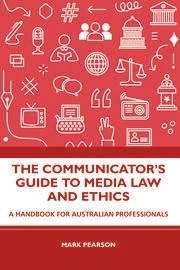
As my new book explains, professional communicators and educators can draw upon a range of reflective tools including variations of mindfulness-based meditation techniques expounded by the Buddha 2500 years ago to help them take a considered and purposive approach to ethical and legal decision-making.

Buddhism does not have an historical monopoly on the art of reflection. Socrates described self-examination as central to a virtuous life. The English philosopher John Locke (1632–1704) summed up the practice we now know as ‘metacognition’ (Tarricone, 2011) – being consciously aware of one’s own thinking and doing.

This is similar to the secular approach developed three centuries later by educationalist Donald Schön, whose research aimed to equip professionals with the ability to make crucial decisions in the midst of practice, which he called ‘reflection-in-action’ .

The application of MBM to morality and by extension to professional ethics echoes the step of ‘Right Conduct’ in the Noble Eightfold Path – samma kammanto – which involves ‘a call to understand one’s behaviour more objectively before trying to improve it’ and ‘to reflect on actions with an eye to the motives that prompted them’ (Smith and Novak, 2003: 43).

Communicators and educators need to ‘reflect-in-action’ upon ethical dilemmas as they arise in the midst of their work (Schön, 1987: 26).

The lack of reflection can lead to unnecessary harm to others. Unethical behaviour can exacerbate the trauma that victims have already encountered in shocking news events. Unlawful practice can bring reputational or financial damage to others and awards of damages or even jail terms for the offending communicators (Pearson, 2024, p.50).

Another crucial reason why it is important to engage in some method of careful reflection before making an ethical or legal decision is the mental health of the communication professionals and educators themselves.

In my recent book I stress the importance of students identifying their own unique ‘moral compass’ – their sense of right and wrong behaviour that can stem from a combination of a host of factors including one’s upbringing, religion, and values along with their professional ethical codes (Pearson, 2024, p.16).

As an exercise, I ask students to sit for a few moments to reflect upon influences upon their own moral decision-making and then draw their unique moral compasses, attributing the four main points on the compass to the four prime influences on their moral decisions, with the lesser points representing other factors.

I suggest this is a worthwhile exercise for all of us – teachers, students and practitioners.

Interconnections between MBM and mental health

Psychological studies of trauma have uncovered the notion of ‘moral injury’ – where individuals feel they have compromised their moral compasses through their unethical behaviour and blame themselves for the harm that has resulted when the professional expectations of an employee was at odds with that individual’s moral principles.

So students need a toolkit of techniques for inward reflection they can use to assess their thought processes, emotional states, workplace situations, learning and, most importantly, their ethical and legal decision-making (Pearson, 2024, p. 60).

The answer to pausing to identify the ‘red flags’ that might represent an ethical or legal dilemma lies in a developing a routine system of reflection. These might be situations or emotions, identifiable via mindful reflection.

Obviously, the key here is being able to identify a problematic emotion or situation, red flag it, then pause to weigh an appropriate ethical and legal course of action.

The approach calls upon students and communicators to pause to adopt the elements of the Eightfold Path into these eight steps of mindful reflection:

Stage of reflection Explanation
How might I improve this communication to minimise risk? [Wise Speech – Samma vaca ] Reconsider your words in any communication you are undertaking and refine and edit them to conform with legal requirements.

We put this into practice in the classroom in a pilot research project (Pearson, 2023) where mindfulness-based reflections were offered regularly during a media law course, with a strong emphasis upon emotional and situational analysis of media law dilemmas .

There were a variety of responses from 90 students to the mindfulness reflection experience. Some saw it as invaluable for their learning, lives and careers.

They said they were “reviewing in more depth”, “raising a mental flag on sections which were still unclear”, giving “a moment to understand the course better”, “consolidate learning”, helping “info to sink in”, and “consolidating the information” (Pearson, 2023).

Numerous respondents highlighted the mental health benefits of the practice.

Some students commented on the pause to reflect function and its benefits:

It made me realise that many times before making a decision or judgement, did I not stop to think or consider my actions.

Another said it trained them to “step back and assess an area, or myself, before venturing into a position, or stance or opinion”. This was metacognition in evidence (Flavell 1976; Tarricone 2011) – thinking about their own thinking – and ‘reflection-in-action’ actually happening (Schön 1987).

Such accounts offer encouragement to those incorporating pause and reflect exercises in their textbooks (Baker 2020; Pearson 2024). They give hope that some instruction in this might assist students to actually execute those strategies when encountering occupational dilemmas after graduation.

In this summary of my full paper – available from the organisers – we have journeyed through definitions of mindfulness in its modern educational context having established its roots in Buddhism and philosophy. We have learned how we might map our own moral compasses. We have looked at the relationship between MBM and mental health, and its potential for offering resilience to post-traumatic stress for journalists reporting tragic and gruesome stories. We have outlined MBM as a tool for ethical decision making. And we have reviewed a recent pilot project where students reported the pros and cons of engaging in MBM in the media law curriculum. Much is still to be explored in the application of this two millennia-old practice to tertiary education and communication and educational practice. I hope some of you are interested enough to undertake research to shed further light on this enlightening path with so many potential benefits.

References

Baker, S (2020) ‘The Ethics of Advocacy: Moral Reasoning in the Practice of Public Relations’, in Wilkins L and Christians CG (eds) The Routledge Handbook of Mass Media Ethics, 2nd edition, Taylor and Francis, NY. https://doi.org/10.4324/9781315545929

Bhikkhu, T. 2018, ‘The Buddha’s original teachings on mindfulness’, Tricycle – The Buddhist Review, 5 March, <https://tricycle.org/article/satipatthana-sutta-mindfulness/&gt;.

Blum, L. 2022, ‘Iris Murdoch’, The Stanford Encyclopedia of Philosophy, Winter 2022 Edition, Zalta, E.N. and Nodelman, U. eds, <https://plato.stanford.edu/archives/win2022/entries/murdoch/&gt;.

Bok, S. 1978, Lying: Moral Choice in Public and Private Life, Pantheon Books, New York.

Drumwright, M. and Murphy, P. 2013, ‘How advertising practitioners view ethics: Moral muteness, moral myopia, and moral imagination’, Journal of Advertising, 33 (2), 7– 24.

Feinstein, A. and Storm, H. 2017, The Emotional Toll on Journalists Covering The Refugee Crisis, Reuters Institute for the Study of Journalism, Oxford.

Germer CK, Siegel RD and Fulton PR (2005) Mindfulness and Psychotherapy, New York: Guilford Press.

Gunaratne, Shelton A., Mark Pearson and Sugath Senarath, (2015). Mindful Journalism and News Ethics in the Digital Era – A Buddhist Approach. Routledge, NY.

Gunaratne, S. A. (2005) The Dao of the press: A humanocentric theory, Cresskill, NJ, Hampton

Gunaratne, S. A. (2007) Let many journalisms bloom: Cosmology, Orientalism and freedom, China Media Research, Vol. 3, No. 4 pp 60-73

Gunaratne, S. A. (2009) A Buddhist view of journalism: Emphasis on mutual causality, Javnost: The Public, Vol. 16, No. 2 pp 61-75

Litz, B. T., Stein, N., Delaney, E., Lebowitz, L., Nash, W. P., Silva, C., & Maguen, S. 2009, ‘Moral injury and moral repair in war veterans: A preliminary model and intervention strategy’, Clinical Psychology Review, 29(8), 695–706. <https://doi.org/10.1016/j.cpr.2009.07.003&gt;

Locke, J. 1959, An Essay Concerning Human Understanding, Dover Publications, NY.

Merriam-Webster (2022) [online dictionary]. https://www.merriam-webster.com/dictionary/mindfulness

Pearson, M. (2024). The Communicator’s Guide to Media Law and Ethics – A Handbook for Australian Professionals. Routledge, London and New York.

Pearson, M. (2023). Student perceptions of mindful reflection as a media law teaching tool. Australian Journalism Review. 45 (2) pp. 197–211.

Pearson, M., McMahon, C., O’Donovan, A., & O’Shannessy, D. (2021). Building journalists’ resilience through mindfulness strategies. Journalism22(7), 1647-1664. https://doi.org/10.1177/1464884919833253

Pearson, M., McMahon, C., and O’Donovan, A. (2018) ‘Potential benefits of teaching mindfulness to journalism students’. Asia Pacific Media Educator (December). 28:2: https://doi.org/10.1177/1326365X18800080

Pearson, M. (2014). Towards ‘mindful journalism’: Applying Buddhism’s Eightfold Path as an ethical framework for modern journalism, Ethical Space 11 (4): 38 – 46.

Pearson, M. (May 5, 2013). Press freedom, social media and the citizen. Inaugural NZ UNESCO World Press Freedom Day Lecture 2013. Pacific Media Centre, AUT Auckland. Available: https://journlaw.com/2013/05/05/press-freedom-social-media-and-the-citizen-my-2013-unesco-world-press-freedom-day-lecture/

Riskin, LL and Wohl, RA (2015). ‘Mindfulness in the Heat of Conflict: Taking STOCK’ Harvard Negotiation Law Review, 20. https://ssrn.com/abstract=2754646

Schön, D. 1987, Educating the Reflective Practitioner: Toward a New Design for Teaching and Learning the Professions, Jossey-Bass, San Francisco.

Shay J. 2014.Moral injury’. Psychoanalytic Psychology, 31(2), 182–191.

Smith, H. and Novak, P. (2003) Buddhism: A concise introduction, New York, Harper San Francisco

Tarricone P (2011) The Taxonomy of Metacognition. Psychology Press, East Sussex.

Trammel RC (2015) ‘Mindfulness as Enhancing Ethical Decision-Making and the Christian Integration of Mindful Practice’, Social Work and Christianity 42(2): 165–177.

Disclaimer: While I write about media law and ethics, nothing here should be construed as legal advice. I am an academic, not a lawyer. My only advice is that you consult a lawyer before taking any legal risks.

© Mark Pearson 2024 – the moral right of the author has been asserted.

Leave a comment

Filed under Buddhism, cognitive reflection, defamation, Eightfold Path, journalism, journalism education, media ethics, media literacy, meditation, mindful journalism, privacy, reflective practice

Plenary address: Applying Buddhist principles to communication law and ethics – a mindful approach

By MARK PEARSON

 I had the honour of delivering an online plenary address on mindful communication last week to a seminar organised by the Bhawanipur Education Society College in Kolkata, India.

Coverage of the seminar in Edugraph

The seminar’s coverage in Edugraph

The topic was ‘Applying Buddhist principles to communication law and ethics: a mindful approach’.

The paper linked key principles from Buddhism’s Noble Eightfold Path to best practice in communication law and ethics.

It explained how a mindful and reflective approach to the ethical and legal consequences of professional communication can strengthen the credibility of communication and journalism and serve to minimise suffering and karmic consequences – both for the practitioner and the audience.

Special attention was paid to the practical and secular application of the key Buddhist principles of wise intent, wise speech, wise action and wise mindfulness in the professional communication process. Techniques for reflection in the midst of busy communication workplaces – including brief mindful reflections, journalling and mindmapping – were flagged and considered.

I drew upon my authored and co-authored books and research articles to offer illustrative examples of the application of such tools to legal and ethical problems including defamation, invasion of privacy, and breach of confidentiality.

Different religious approaches to truthfulness and honesty were also considered.

The starting point for students to identify their own ‘moral compass’ – the key biographical influences that inform their own system of morality –  was explained.

Also crucial is the ability to recognise the point at which an ethical or legal dilemma is arising and then to pause to reflect upon its implications and a suitable course of action.

The elements of Buddhism’s Noble Eightfold Path offer a starting point for this analysis because they are straightforward principles that can be distilled from most religions and philosophies but can be presented in a simple list form to offer a moral lens through which the professional ethical rules and the media laws of society can be assessed.

For some of my related research, please see:

Pearson, M. (2024). Chapter 3: Tools for reflection in a communication context. In Pearson, M. (2024). The Communicator’s Guide to Media Law and Ethics – A Handbook for Australian Professionals (Routledge, London and NY). Pp. 49-76. https://doi.org/10.4324/9781003372752-4

Pearson, M. (2014). Towards ‘mindful journalism’: Applying Buddhism’s Eightfold Path as an ethical framework for modern journalism, Ethical Space 11 (4): 38 – 46. http://www.communicationethics.net/journal/v11n4/feat1.pdf

Gunaratne, S.A; Pearson, M. and Senarath, S. (eds) (2015). Mindful Journalism and News Ethics in the Digital Era: A Buddhist Approach (Routledge, NY). https://doi.org/10.4324/9781315723341

Morton, T. and Pearson, M. (2015), Zones of silence: Forensic patients, radio documentary, and a mindful approach to journalism ethics. Pacific Journalism Review. 21 (2): 11-32. https://doi.org/10.24135/pjr.v21i2.113

Pearson, M. (2015). Enlightening communication analysis in Asia-Pacific: Media studies, ethics and law using a Buddhist perspective. International Communication Gazette, 77 (5): 456-470. https://doi.org/10.1177/1748048515586945

Pearson, M. (2019). “Spirituality in Journalism”, in Bernadette Flanagan and Lazlo Zsolnai (eds) (2019) The Routledge International Handbook of Spirituality and Society, Routledge, London. pp. 419-426 [ISBN 9781138214675 ] https://doi.org/10.4324/9781315445489

Pearson, M., McMahon, C., O’Donovan, A., & O’Shannessy, D. (2021). Building journalists’ resilience through mindfulness strategies. Journalism22(7), 1647–1664. https://doi.org/10.1177/1464884919833253

Pearson, M. (2023). Student perceptions of mindful reflection as a media law teaching tool. Australian Journalism Review. 45 (2) pp. 197–211. https://doi.org/10.1386/ajr_00132_1

Disclaimer: While I write about media law and ethics, nothing here should be construed as legal advice. I am an academic, not a lawyer. My only advice is that you consult a lawyer before taking any legal risks.

© Mark Pearson 2024 – the moral right of the author has been asserted.

Leave a comment

Filed under Buddhism, cognitive reflection, defamation, Eightfold Path, journalism, journalism education, media ethics, media literacy, meditation, mindful journalism, privacy, reflective practice

US election: 5 ways to manage your news consumption to reduce anxiety

As I started to disappear into the vortex of 24/7 media coverage of the US election, I recalled the news anxiety I experienced in 2020 at the start of the COVID-19 pandemic which prompted me to write an article for The Conversation titled “Coronavirus: 5 ways to manage your news consumption in times of crisis“.

I republish an edited version here for readers …

Following events in the US while habitually checking the news on devices – and allowing 24/7 news channels to play non-stop in the background – might erode your productivity and increase stress and anxiety.

A foundational element of media literacy in the digital era is striking an appropriate balance between news consumption and other activities. Even before COVID-19, Australian research demonstrated news avoidance had risen among news consumers from 57% in 2017 to 62% in 2019, driven by a sense of news fatigue.

Self-help expert Rolf Dobelli implores us to stop reading the news. While he advocates going cold turkey and abandoning all packaged news consumption, Dobelli makes exceptions for long-form journalism and documentaries.

So too does philosopher Alain de Botton in The News – A User’s Manual, while proposing more positive news and journalism’s examination of life’s deeper issues, emotions and aesthetics.

In journalism education there has been a move towards “peace journalism”, “mindful journalism”, “constructive journalism” and “solutions journalism”, where the news should not merely report what is wrong but suggest ways to fix it.

Of course, it would be a mistake to abstain from all news of an election in the world’s leading democracy given its unpredictable economic and social consequences.

Often it is best to navigate a middle path, so here are five suggestions on how you can stay in the loop while still maintaining your mental health.

1. Switch off

Avoid the 24/7 news channels and feeds unless it is your business to do so, or unless the information is likely to impact you directly.

Try to develop a routine of checking in on the main headlines once, twice or three times a day so you stay informed about the most important events without being sucked by click bait and news of incremental changes.

2. Dive deep

Look for long-form journalism and in-depth commentary on the topics that most interest you. Articles by experts (Editor’s note: like those in The Conversation!) include the most important facts you need to know, and are likely to have a constructive angle presenting incisive analysis and a pathway to a solution or best practice.

Spend your time engaging with well-researched and accurate stories.
Eugene Zhyvchik/Unsplash

On radio and television, look for big picture current affairs programs like the ABC’s AM and 7.30 – or on a lighter and more positive note Ten’s The Project – so you don’t have to be assaulted by a disturbing litany of petrol station hold-ups, motorway chases and celebrity gossip in the packaged morning and evening news.

3. Connect

Use social media wisely – for communicating with family and friends. But avoid the suggested and sponsored news feeds with dubious and unfiltered information (often shared as spam by social media illiterates).

Keep your social media commentary civil, empathetic and supportive – mindful of everyone’s mental health during a crisis.

4. Interrogate

Ask the key question: “What is the best source of the information I absolutely need to know?”

Go to primary sources where possible. Subscribe to official and authoritative information feeds.

5. Be mindful

Bear in mind the well being of any children in your household with the timing and selection of your hard/live news consumption. International research has shown more constructive news stories have fewer negative mental health impacts on children, particularly when combined with the opportunity to discuss the contents with their peers.

It’s important to think about where your children get their news, too.
Shutterstock.com

Finally, you might also aim to build your own media literacy – by pausing to reflect carefully upon what news you really need in your family’s life. This might vary markedly according to your work, interests and passions.

For many of us it will mean a much more critical diet of what we call “traditional hard news” – allowing us the time to read and view material that better contributes to the quality of our own lives and to our varied roles as informed citizens in a democracy.The Conversation

Mark Pearson, Professor of Journalism and Social Media, Griffith Centre for Social and Cultural Research, Griffith University, Griffith University

This article is an adaptation of an article in The Conversation and reproduced under a Creative Commons license. Read the original article.

Leave a comment

Filed under media literacy, mental health, online safety, Uncategorized

Former ombudsman offers insights into defamation #MLGriff

By MARK PEARSON

A former ombudsman who sued a major newspaper for defamation offers his insights into the experience in Episode #009 of our occasional Griffith University SMALL podcast – Social Media and Law Livestream.

Griffith University Media Law students Emily Soccol and Anna Swann interview Professor John McMillan AO about his successful defamation action against the Canberra Times in 2016.

Mr McMillan has held positions of Commonwealth Ombudsman, Integrity Commissioner for the Australian Commission for Law Enforcement Integrity, Australian Information Commissioner, NSW Ombudsman and a member of the Australian Copyright Tribunal.

He is also a legal consultant and an Emeritus Professor at the Australian National University. Drawing on his expertise over a five decade career, Professor McMillan offers his perspective on defamation laws and the legal risks associated with publishing damaging material.

The case was settled after mediation. The court judgment on the imputations can be viewed at https://www.austlii.edu.au/cgi-bin/viewdoc/au/cases/act/ACTSC/2016/286.html. [McMillan v The Federal Capital Press of Australia Pty Ltd [2016] ACTSC 286 (22 September 2016) ]

[Listen here: 14:26 min].


If you are a communication professional wanting to study in this area, please consider enrolling in our online courses Social Media Law and Risk Management (postgraduate, fully online) or Media Law (undergraduate, available online or on campus).

Disclaimer: While I write about media law and ethics, nothing here should be construed as legal advice. I am an academic, not a lawyer. My only advice is that you consult a lawyer before taking any legal risks.

© Mark Pearson 2023 – the moral right of the author has been asserted.

Leave a comment

Filed under blogging, communication, contempt of court, defamation, Internet, journalism, journalism education, libel, media law, media literacy, online education, open justice, podcast, public relations, reflective practice, risk, risk management, social media, social media law, strategic communication, sub judice, suppression, Whistleblowing

Retired magistrate offers advice to court reporters #MLGriff

By MARK PEARSON

Decades of experience as a magistrate and lawyer inform the advice offered to court reporters in Episode #008 of our occasional Griffith University SMALL podcast – Social Media and Law Livestream.

Retired magistrate Antoine Bloemen. Photo: Anne Bloemen.

Griffith University Media Law student Elizabeth Heseltine interviews retired Western Australian magistrate Antoine Bloemen about the traps faced by novice court reporters, with some fascinating examples.

He draws upon his 40 years of expertise as a legal professional to share his insights into courtroom etiquette and the potential legal ramifications of a poorly researched and written article [Listen here: 14:26 min].


If you are a communication professional wanting to study in this area, please consider enrolling in our online courses Social Media Law and Risk Management (postgraduate, fully online) or Media Law (undergraduate, available online or on campus).

Disclaimer: While I write about media law and ethics, nothing here should be construed as legal advice. I am an academic, not a lawyer. My only advice is that you consult a lawyer before taking any legal risks.

© Mark Pearson 2022 – the moral right of the author has been asserted.

Leave a comment

Filed under blogging, communication, contempt of court, defamation, Internet, journalism, journalism education, libel, media law, media literacy, online education, open justice, podcast, public relations, reflective practice, risk, risk management, social media, social media law, strategic communication, sub judice, suppression, Whistleblowing

Podcast offers rare inside view of FOI process

By MARK PEARSON

Episode #007 of our occasional Griffith University SMALL podcast – Social Media and Law Livestream – looks at Freedom of Information processes from a different perspective – that of a lawyer managing the Commonwealth Government’s FOI approvals and exemptions.

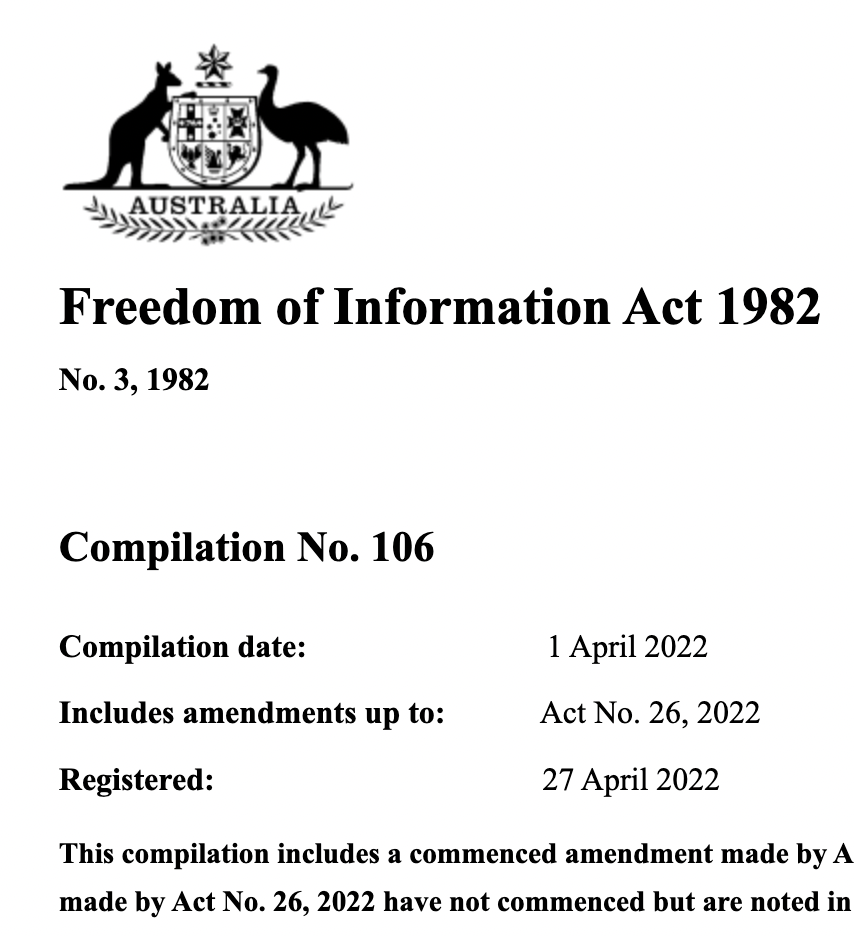
FOI Act imageGriffith University Media Law student Mia Durnan interviews Senior Lawyer Rodney Durnan about Freedom of Information laws (FOI); covering basic topics like ‘what is FOI?’, the process of an application, some of the exemptions that can apply and how the FOI laws interact with privacy laws from a practical perspective.

Mr Durnan is part of In-House Counsel for a large Federal Government agency.

With more than 15 years of experience, he and his team specialise in administrative law which includes Freedom of Information and Privacy. [15:25 min] Find Mia’s interview here.


If you are a communication professional wanting to study in this area, please consider enrolling in our online courses Social Media Law and Risk Management (postgraduate, fully online) or Media Law (undergraduate, available online or on campus).

Disclaimer: While I write about media law and ethics, nothing here should be construed as legal advice. I am an academic, not a lawyer. My only advice is that you consult a lawyer before taking any legal risks.

© Mark Pearson 2022 – the moral right of the author has been asserted.

Leave a comment

Filed under blogging, communication, contempt of court, defamation, Internet, journalism, journalism education, libel, media law, media literacy, online education, open justice, podcast, public relations, reflective practice, risk, risk management, social media, social media law, strategic communication, sub judice, suppression, Whistleblowing

Our SMALL podcast guest: Whistleblower expert Professor AJ Brown

By MARK PEARSON

In episode #006 of our occasional SMALL podcast – Social Media and Law Livestream – I speak with academic whistleblowing expert Professor A J Brown.

AJBrown-e1489729940533Professor Brown is leader of the Centre for Governance and Public Policy’s public integrity and anti-corruption research program in Griffith University’s School of Government and International Relations.

He is on the global board of the world anti-corruption organisation Transparency International and a leading expert on public interest whistleblowing. He talks about the legal framework for whistleblowers and the implications for journalists and their confidential sources. Find our interview here [21:49min].


If you are a communication professional wanting to study in this area, please consider enrolling in our online courses Social Media Law and Risk Management (postgraduate, fully online) or Media Law (undergraduate, available online or on campus).

Disclaimer: While I write about media law and ethics, nothing here should be construed as legal advice. I am an academic, not a lawyer. My only advice is that you consult a lawyer before taking any legal risks.

© Mark Pearson 2022 – the moral right of the author has been asserted.

Leave a comment

Filed under blogging, communication, contempt of court, defamation, Internet, journalism, journalism education, libel, media law, media literacy, online education, open justice, podcast, public relations, reflective practice, risk, risk management, social media, social media law, strategic communication, sub judice, suppression, Whistleblowing

Latest SMALL podcast gets Amy Remeikis’ take on social media law

By MARK PEARSON

Episode #005 of our occasional SMALL podcast – Social Media and Law Livestream – features Guardian Australia political reporter Amy Remeikis talking media law with tutor Susan Grantham.

From court and police rounds, to reporting on Australian federal politicians, Amy (pictured below) discusses how she navigates legal risks while reporting in a wired world.

This latest episode [22:11 mins] – published on The Source News – canvasses Amy’s views on recent defamation cases including the High Court judgment against media outlets’ hosted social media comments in the Dylan Voller case. Enjoy!

If you are a communication professional wanting to study in this area, please consider enrolling in our online courses Social Media Law and Risk Management (postgraduate, fully online) or Media Law (undergraduate, available online or on campus).

Disclaimer: While I write about media law and ethics, nothing here should be construed as legal advice. I am an academic, not a lawyer. My only advice is that you consult a lawyer before taking any legal risks.

© Mark Pearson 2022 – the moral right of the author has been asserted.
Leave a comment

Filed under blogging, communication, contempt of court, defamation, Internet, journalism, journalism education, libel, media law, media literacy, online education, open justice, podcast, public relations, reflective practice, risk, risk management, social media, social media law, strategic communication, sub judice, suppression

Latest SMALL podcast looks at Israel Folau matter

By MARK PEARSON

Episode #004 of our occasional SMALL podcast – Social Media and Law Livestream – is now available for listening.

Social Media Risk and the Law.inddThis latest episode [15:00 mins] – published on The Source News – is hosted by Griffith University Media Law student Brandon McMahon.

Brandon talks with Attwood Marshall lawyer Laura Dolan about the discrimination, religious freedom, unfair dismissal and contract dimensions of the case involving former Test rugby union player Israel Folau and his social media posts. [SMALL #004].

Enjoy!


If you are a communication professional wanting to study in this area, please consider enrolling in our online courses Social Media Law and Risk Management (postgraduate, fully online) or Media Law (undergraduate, available online or on campus).

Disclaimer: While I write about media law and ethics, nothing here should be construed as legal advice. I am an academic, not a lawyer. My only advice is that you consult a lawyer before taking any legal risks.

© Mark Pearson 2021 – the moral right of the author has been asserted.

Leave a comment

Filed under blogging, communication, contempt of court, defamation, Internet, journalism, journalism education, libel, media law, media literacy, online education, open justice, podcast, public relations, reflective practice, risk, risk management, social media, social media law, strategic communication, sub judice, suppression

Two more SMALL podcasts on our Social Media And Law Livestream

By MARK PEARSON

Episodes #002 and #003 of our occasional SMALL podcast – Social Media and Law Livestream – are now available for listening.

Social Media Risk and the Law.inddThese episodes – published on The Source News – are hosted by Media Law students Amy Sauvarin and Camille Chorley.

In Episode #002 [16:37 mins], Amy chats with veteran journalist and author Uli Schmetzer about freedom of expression and his encounters with censorship over his four decade career as a foreign correspondent. For more information on his books and reportage, see http://www.uli-schmetzer.com/index.html.

In Episode #003  [20 mins], Camille talks with ABC Landline producer and ABC News cadet trainer John Taylor about free expression issues in foreign correspondence, court reporting, social media and training journalists in media law. See his bio at https://www.abc.net.au/news/john-taylor/167072.

Enjoy!


If you are a communication professional wanting to study in this area, please consider enrolling in our online courses Social Media Law and Risk Management (postgraduate, fully online) or Media Law (undergraduate, available online or on campus).

Disclaimer: While I write about media law and ethics, nothing here should be construed as legal advice. I am an academic, not a lawyer. My only advice is that you consult a lawyer before taking any legal risks.

© Mark Pearson 2021 – the moral right of the author has been asserted.

Leave a comment

Filed under blogging, communication, contempt of court, defamation, Internet, journalism, journalism education, libel, media law, media literacy, online education, open justice, podcast, public relations, reflective practice, risk, risk management, social media, social media law, strategic communication, sub judice, suppression