Tag Archives: mindful journalism

Keynote: Strategies for building mindful reflection into communication and education

By MARK PEARSON

My keynote address last week to the international research conference at the University of Colombo, Sri Lanka, introduced strategies for enabling students and colleagues to reflect mindfully in the course of their communication and education.

The edited shorter address follows. The full version is available from the organisers (udari@spc.cmb.ac.lk ) and will be published in the conference proceedings later this year.

Thank you for the honour of delivering this keynote address. I thank and acknowledge the conference organisers, chair, university officials, invited dignatories, delegates and students.

I wish to acknowledge the traditional owners of this land where I have written and delivered this address – the Kombumerri people of the Yugambeh language group of indigenous peoples in Australia – and to their elders past, present and emerging.

I also acknowledge the communication, ethical and legal codes and practices they developed over tens of thousands of years, and to the cultural rules underpinning human communication in all communities internationally, including in Sri Lanka.

This paper introduces some strategies for enabling students and colleagues to reflect mindfully when engaging in their communication and education. In doing so it attempts to lay some foundation stones for proposing such strategies – offering the intellectual narrative of their conception and development.

Over the past decade I have been exploring the possibilities for mindful reflection in journalism – a concept I first raised in my UNESCO World Press Freedom Address in Auckland in 2013. That – and a follow-up article on mindful journalism in an academic journal led to an approach by the pioneer of this field, the late Professor Shelton Gunaratne to join him and our colleague Dr Sugath Senarath in the editing and authorship of the book Mindful Journalism in 2015, where we expounded upon how the various steps of Buddhism’s Noble Eightfold Path could underpin a more mindful approach to news gathering, selection and reporting. In the nine years since its publication I have attempted to develop strategies for applying mindfulness strategies in journalism, communication and legal education – to help students and colleagues forge solutions to ethical dilemmas that might constitute a genuine ‘middle way’. I thank Dr Senarath and the organising committee for inviting me here today to discuss some of those practical tools for use in the communication and education contexts.

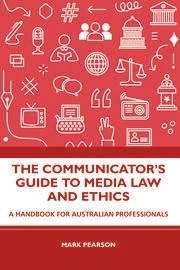
As my new book explains, professional communicators and educators can draw upon a range of reflective tools including variations of mindfulness-based meditation techniques expounded by the Buddha 2500 years ago to help them take a considered and purposive approach to ethical and legal decision-making.

Buddhism does not have an historical monopoly on the art of reflection. Socrates described self-examination as central to a virtuous life. The English philosopher John Locke (1632–1704) summed up the practice we now know as ‘metacognition’ (Tarricone, 2011) – being consciously aware of one’s own thinking and doing.

This is similar to the secular approach developed three centuries later by educationalist Donald Schön, whose research aimed to equip professionals with the ability to make crucial decisions in the midst of practice, which he called ‘reflection-in-action’ .

The application of MBM to morality and by extension to professional ethics echoes the step of ‘Right Conduct’ in the Noble Eightfold Path – samma kammanto – which involves ‘a call to understand one’s behaviour more objectively before trying to improve it’ and ‘to reflect on actions with an eye to the motives that prompted them’ (Smith and Novak, 2003: 43).

Communicators and educators need to ‘reflect-in-action’ upon ethical dilemmas as they arise in the midst of their work (Schön, 1987: 26).

The lack of reflection can lead to unnecessary harm to others. Unethical behaviour can exacerbate the trauma that victims have already encountered in shocking news events. Unlawful practice can bring reputational or financial damage to others and awards of damages or even jail terms for the offending communicators (Pearson, 2024, p.50).

Another crucial reason why it is important to engage in some method of careful reflection before making an ethical or legal decision is the mental health of the communication professionals and educators themselves.

In my recent book I stress the importance of students identifying their own unique ‘moral compass’ – their sense of right and wrong behaviour that can stem from a combination of a host of factors including one’s upbringing, religion, and values along with their professional ethical codes (Pearson, 2024, p.16).

As an exercise, I ask students to sit for a few moments to reflect upon influences upon their own moral decision-making and then draw their unique moral compasses, attributing the four main points on the compass to the four prime influences on their moral decisions, with the lesser points representing other factors.

I suggest this is a worthwhile exercise for all of us – teachers, students and practitioners.

Interconnections between MBM and mental health

Psychological studies of trauma have uncovered the notion of ‘moral injury’ – where individuals feel they have compromised their moral compasses through their unethical behaviour and blame themselves for the harm that has resulted when the professional expectations of an employee was at odds with that individual’s moral principles.

So students need a toolkit of techniques for inward reflection they can use to assess their thought processes, emotional states, workplace situations, learning and, most importantly, their ethical and legal decision-making (Pearson, 2024, p. 60).

The answer to pausing to identify the ‘red flags’ that might represent an ethical or legal dilemma lies in a developing a routine system of reflection. These might be situations or emotions, identifiable via mindful reflection.

Obviously, the key here is being able to identify a problematic emotion or situation, red flag it, then pause to weigh an appropriate ethical and legal course of action.

The approach calls upon students and communicators to pause to adopt the elements of the Eightfold Path into these eight steps of mindful reflection:

Stage of reflection Explanation
How might I improve this communication to minimise risk? [Wise Speech – Samma vaca ] Reconsider your words in any communication you are undertaking and refine and edit them to conform with legal requirements.

We put this into practice in the classroom in a pilot research project (Pearson, 2023) where mindfulness-based reflections were offered regularly during a media law course, with a strong emphasis upon emotional and situational analysis of media law dilemmas .

There were a variety of responses from 90 students to the mindfulness reflection experience. Some saw it as invaluable for their learning, lives and careers.

They said they were “reviewing in more depth”, “raising a mental flag on sections which were still unclear”, giving “a moment to understand the course better”, “consolidate learning”, helping “info to sink in”, and “consolidating the information” (Pearson, 2023).

Numerous respondents highlighted the mental health benefits of the practice.

Some students commented on the pause to reflect function and its benefits:

It made me realise that many times before making a decision or judgement, did I not stop to think or consider my actions.

Another said it trained them to “step back and assess an area, or myself, before venturing into a position, or stance or opinion”. This was metacognition in evidence (Flavell 1976; Tarricone 2011) – thinking about their own thinking – and ‘reflection-in-action’ actually happening (Schön 1987).

Such accounts offer encouragement to those incorporating pause and reflect exercises in their textbooks (Baker 2020; Pearson 2024). They give hope that some instruction in this might assist students to actually execute those strategies when encountering occupational dilemmas after graduation.

In this summary of my full paper – available from the organisers – we have journeyed through definitions of mindfulness in its modern educational context having established its roots in Buddhism and philosophy. We have learned how we might map our own moral compasses. We have looked at the relationship between MBM and mental health, and its potential for offering resilience to post-traumatic stress for journalists reporting tragic and gruesome stories. We have outlined MBM as a tool for ethical decision making. And we have reviewed a recent pilot project where students reported the pros and cons of engaging in MBM in the media law curriculum. Much is still to be explored in the application of this two millennia-old practice to tertiary education and communication and educational practice. I hope some of you are interested enough to undertake research to shed further light on this enlightening path with so many potential benefits.

References

Baker, S (2020) ‘The Ethics of Advocacy: Moral Reasoning in the Practice of Public Relations’, in Wilkins L and Christians CG (eds) The Routledge Handbook of Mass Media Ethics, 2nd edition, Taylor and Francis, NY. https://doi.org/10.4324/9781315545929

Bhikkhu, T. 2018, ‘The Buddha’s original teachings on mindfulness’, Tricycle – The Buddhist Review, 5 March, <https://tricycle.org/article/satipatthana-sutta-mindfulness/&gt;.

Blum, L. 2022, ‘Iris Murdoch’, The Stanford Encyclopedia of Philosophy, Winter 2022 Edition, Zalta, E.N. and Nodelman, U. eds, <https://plato.stanford.edu/archives/win2022/entries/murdoch/&gt;.

Bok, S. 1978, Lying: Moral Choice in Public and Private Life, Pantheon Books, New York.

Drumwright, M. and Murphy, P. 2013, ‘How advertising practitioners view ethics: Moral muteness, moral myopia, and moral imagination’, Journal of Advertising, 33 (2), 7– 24.

Feinstein, A. and Storm, H. 2017, The Emotional Toll on Journalists Covering The Refugee Crisis, Reuters Institute for the Study of Journalism, Oxford.

Germer CK, Siegel RD and Fulton PR (2005) Mindfulness and Psychotherapy, New York: Guilford Press.

Gunaratne, Shelton A., Mark Pearson and Sugath Senarath, (2015). Mindful Journalism and News Ethics in the Digital Era – A Buddhist Approach. Routledge, NY.

Gunaratne, S. A. (2005) The Dao of the press: A humanocentric theory, Cresskill, NJ, Hampton

Gunaratne, S. A. (2007) Let many journalisms bloom: Cosmology, Orientalism and freedom, China Media Research, Vol. 3, No. 4 pp 60-73

Gunaratne, S. A. (2009) A Buddhist view of journalism: Emphasis on mutual causality, Javnost: The Public, Vol. 16, No. 2 pp 61-75

Litz, B. T., Stein, N., Delaney, E., Lebowitz, L., Nash, W. P., Silva, C., & Maguen, S. 2009, ‘Moral injury and moral repair in war veterans: A preliminary model and intervention strategy’, Clinical Psychology Review, 29(8), 695–706. <https://doi.org/10.1016/j.cpr.2009.07.003&gt;

Locke, J. 1959, An Essay Concerning Human Understanding, Dover Publications, NY.

Merriam-Webster (2022) [online dictionary]. https://www.merriam-webster.com/dictionary/mindfulness

Pearson, M. (2024). The Communicator’s Guide to Media Law and Ethics – A Handbook for Australian Professionals. Routledge, London and New York.

Pearson, M. (2023). Student perceptions of mindful reflection as a media law teaching tool. Australian Journalism Review. 45 (2) pp. 197–211.

Pearson, M., McMahon, C., O’Donovan, A., & O’Shannessy, D. (2021). Building journalists’ resilience through mindfulness strategies. Journalism22(7), 1647-1664. https://doi.org/10.1177/1464884919833253

Pearson, M., McMahon, C., and O’Donovan, A. (2018) ‘Potential benefits of teaching mindfulness to journalism students’. Asia Pacific Media Educator (December). 28:2: https://doi.org/10.1177/1326365X18800080

Pearson, M. (2014). Towards ‘mindful journalism’: Applying Buddhism’s Eightfold Path as an ethical framework for modern journalism, Ethical Space 11 (4): 38 – 46.

Pearson, M. (May 5, 2013). Press freedom, social media and the citizen. Inaugural NZ UNESCO World Press Freedom Day Lecture 2013. Pacific Media Centre, AUT Auckland. Available: https://journlaw.com/2013/05/05/press-freedom-social-media-and-the-citizen-my-2013-unesco-world-press-freedom-day-lecture/

Riskin, LL and Wohl, RA (2015). ‘Mindfulness in the Heat of Conflict: Taking STOCK’ Harvard Negotiation Law Review, 20. https://ssrn.com/abstract=2754646

Schön, D. 1987, Educating the Reflective Practitioner: Toward a New Design for Teaching and Learning the Professions, Jossey-Bass, San Francisco.

Shay J. 2014.Moral injury’. Psychoanalytic Psychology, 31(2), 182–191.

Smith, H. and Novak, P. (2003) Buddhism: A concise introduction, New York, Harper San Francisco

Tarricone P (2011) The Taxonomy of Metacognition. Psychology Press, East Sussex.

Trammel RC (2015) ‘Mindfulness as Enhancing Ethical Decision-Making and the Christian Integration of Mindful Practice’, Social Work and Christianity 42(2): 165–177.

Disclaimer: While I write about media law and ethics, nothing here should be construed as legal advice. I am an academic, not a lawyer. My only advice is that you consult a lawyer before taking any legal risks.

© Mark Pearson 2024 – the moral right of the author has been asserted.

Leave a comment

Filed under Buddhism, cognitive reflection, defamation, Eightfold Path, journalism, journalism education, media ethics, media literacy, meditation, mindful journalism, privacy, reflective practice

Plenary address: Applying Buddhist principles to communication law and ethics – a mindful approach

By MARK PEARSON

 I had the honour of delivering an online plenary address on mindful communication last week to a seminar organised by the Bhawanipur Education Society College in Kolkata, India.

Coverage of the seminar in Edugraph

The seminar’s coverage in Edugraph

The topic was ‘Applying Buddhist principles to communication law and ethics: a mindful approach’.

The paper linked key principles from Buddhism’s Noble Eightfold Path to best practice in communication law and ethics.

It explained how a mindful and reflective approach to the ethical and legal consequences of professional communication can strengthen the credibility of communication and journalism and serve to minimise suffering and karmic consequences – both for the practitioner and the audience.

Special attention was paid to the practical and secular application of the key Buddhist principles of wise intent, wise speech, wise action and wise mindfulness in the professional communication process. Techniques for reflection in the midst of busy communication workplaces – including brief mindful reflections, journalling and mindmapping – were flagged and considered.

I drew upon my authored and co-authored books and research articles to offer illustrative examples of the application of such tools to legal and ethical problems including defamation, invasion of privacy, and breach of confidentiality.

Different religious approaches to truthfulness and honesty were also considered.

The starting point for students to identify their own ‘moral compass’ – the key biographical influences that inform their own system of morality –  was explained.

Also crucial is the ability to recognise the point at which an ethical or legal dilemma is arising and then to pause to reflect upon its implications and a suitable course of action.

The elements of Buddhism’s Noble Eightfold Path offer a starting point for this analysis because they are straightforward principles that can be distilled from most religions and philosophies but can be presented in a simple list form to offer a moral lens through which the professional ethical rules and the media laws of society can be assessed.

For some of my related research, please see:

Pearson, M. (2024). Chapter 3: Tools for reflection in a communication context. In Pearson, M. (2024). The Communicator’s Guide to Media Law and Ethics – A Handbook for Australian Professionals (Routledge, London and NY). Pp. 49-76. https://doi.org/10.4324/9781003372752-4

Pearson, M. (2014). Towards ‘mindful journalism’: Applying Buddhism’s Eightfold Path as an ethical framework for modern journalism, Ethical Space 11 (4): 38 – 46. http://www.communicationethics.net/journal/v11n4/feat1.pdf

Gunaratne, S.A; Pearson, M. and Senarath, S. (eds) (2015). Mindful Journalism and News Ethics in the Digital Era: A Buddhist Approach (Routledge, NY). https://doi.org/10.4324/9781315723341

Morton, T. and Pearson, M. (2015), Zones of silence: Forensic patients, radio documentary, and a mindful approach to journalism ethics. Pacific Journalism Review. 21 (2): 11-32. https://doi.org/10.24135/pjr.v21i2.113

Pearson, M. (2015). Enlightening communication analysis in Asia-Pacific: Media studies, ethics and law using a Buddhist perspective. International Communication Gazette, 77 (5): 456-470. https://doi.org/10.1177/1748048515586945

Pearson, M. (2019). “Spirituality in Journalism”, in Bernadette Flanagan and Lazlo Zsolnai (eds) (2019) The Routledge International Handbook of Spirituality and Society, Routledge, London. pp. 419-426 [ISBN 9781138214675 ] https://doi.org/10.4324/9781315445489

Pearson, M., McMahon, C., O’Donovan, A., & O’Shannessy, D. (2021). Building journalists’ resilience through mindfulness strategies. Journalism22(7), 1647–1664. https://doi.org/10.1177/1464884919833253

Pearson, M. (2023). Student perceptions of mindful reflection as a media law teaching tool. Australian Journalism Review. 45 (2) pp. 197–211. https://doi.org/10.1386/ajr_00132_1

Disclaimer: While I write about media law and ethics, nothing here should be construed as legal advice. I am an academic, not a lawyer. My only advice is that you consult a lawyer before taking any legal risks.

© Mark Pearson 2024 – the moral right of the author has been asserted.
Leave a comment

Filed under Buddhism, cognitive reflection, defamation, Eightfold Path, journalism, journalism education, media ethics, media literacy, meditation, mindful journalism, privacy, reflective practice

‘Global Justice, Factual Reporting and Advocacy Journalism’: my chapter in global ethics handbook

By MARK PEARSON

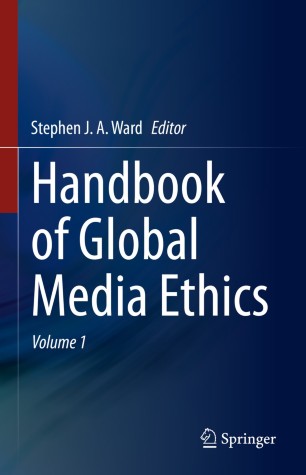
The long awaited Handbook of Global Media Ethics, edited by the internationally lauded Professor Stephen Ward, has now been published and includes my chapter on global justice, factual reporting and advocacy journalism.

It sits among 71 chapters by media ethics experts including Australia’s own Susan Forde, Kristy Hess and Ian Richards, Cait McMahon and Matthew RicketsonJohan Lidberg, Beate Josephi and Jahnnabi Das, Kerry McCallum and Lisa Waller, Andrew Fowler and Catriona Bonfiglioli.

WardEthicsbook coverMy chapter argues global justice can be a legitimate ethical objective of journalism, requiring factuality as a platform, achievable in some situations through advocacy journalism.

It explores definitional boundaries and ethical dimensions of the three terms ‘global justice’, ‘factual reporting’ and ‘advocacy journalism’.

It compares and contrasts legal and jurisprudential notions of global justice from its meanings to international journalism, offering examples of some works of investigation and reportage that might pursue global justice goals but which have been contested in the courts over their factuality or partisanship.

It explains that while judicial cases are only one approach to the analysis of underlying ethical issues, their systematic approach based on laws and precedents offers some useful insights.

The chapter explains that some works of advocacy journalism might fall outside the law, or broadly accepted journalism ethical guidelines, but perhaps still encourage ‘ethical flourishing’.

Indeed, as Ward argues, some stories require journalists to “adopt the perspective of global justice and to consider what is best for the global community”.

The chapter explores the notion of ‘factual reporting’, distinguishing it from false news and from a legal standard of factuality, and introduces a taxonomy of factuality in ethical reporting, which includes a spectrum of fact sourcing, selection, verification, inclusion, exclusion, ordering, ramifications and revisiting. It examines the dimensions of ‘advocacy journalism’ and exemplifies how the notions of factuality and advocacy are not mutually exclusive.

It links this with the mindful exploration of intent and livelihood suggested in the foundational principles of ‘mindful journalism’.

I explain there:

Purposive reflection on one’s intent – and one’s livelihood – is examined in the relatively new area of ‘mindful journalism’, where Buddhist ethics and phenomenology are applied to journalism. Such structured meditation on these considerations – sitting to reflect upon the intent of a work of journalism, taking into account the implications for a range of stakeholders, along with a mental review of where the particular assignment and techniques sit with one’s livelihood – together form three of the eight steps involved in the mindful journalism approach.

The chapter offers an approach for reporters and editors to examine carefully the motivational roots (‘intent’) of a work of journalism to identify the source of any advocacy and its purpose, and to reflect upon how this sits with their professional identity and values.

It suggests all journalism is by some definitions ‘advocacy journalism’, but that not all advocacy journalism meets aspirational standards of global justice or factuality.

If the mindful journalism approach is adopted, then the journalist’s perception of their livelihood and its professional ethical framework is crucial to the examination of intent and to the decision over the ethics of a particular course of action. The protagonist must decide whether they are first and foremost a journalist or an advocate. Central questions include: Are you a journalist using a factual base to advocate for a human right? Or, alternatively, are you an advocate using some journalistic techniques to advocate for a human right? This self-identification with a particular occupation or profession invokes a particular ethical framework to the investigation and publishing enterprise. If the self-perception of livelihood is that of a journalist, then the protagonist should abide by a journalistic ethical code such as the MEAA or SPJ code. If, however, the methods are journalistic but the protagonist identifies as an advocate, then other ethical frameworks might be invoked, such as professional ethics of activist organisations (such as Greenpeace), governing bodies (like the UNHRC) or a public relations association like the PRIA.

The mindful examination of intent must begin with the acceptance that all journalism has elements of advocacy journalism, but that it can be alleviated by disclosing agendas and allegiances and being transparent about funding and influences. Such an approach can assist the ethical journalist in carefully navigating the fault lines of global justice, factual reporting and advocacy journalism.

The chapter includes examples of international works of journalism involving advocacy for global justice, premised upon factual reporting, which navigate the ethical fault lines inherent in the hybrid term ‘advocacy journalism’.

Disclaimer: While I write about media law and ethics, nothing here should be construed as legal advice. I am an academic, not a lawyer. My only advice is that you consult a lawyer before taking any legal risks.

© Mark Pearson 2022 – the moral right of the author has been asserted.

Leave a comment

Filed under Eightfold Path, global journalism, journalism, journalism education, media ethics, media law, mindful journalism, online education, reflective practice, social media

See The Conversation for my piece: ‘5 ways to spot misinformation and stop sharing it online’ #MLGriff

By MARK PEARSON

Mark Pearson, Griffith UniversityThe blame for the recent assault on the US Capitol and President Donald Trump’s broader dismantling of democratic institutions and norms can be laid at least partly on misinformation and conspiracy theories.

Shutterstock

Those who spread misinformation, like Trump himself, are exploiting people’s lack of media literacy — it’s easy to spread lies to people who are prone to believe what they read online without questioning it.

We are living in a dangerous age where the internet makes it possible to spread misinformation far and wide and most people lack the basic fact-checking abilities to discern fact from fiction — or, worse, the desire to develop a healthy skepticism at all.


Read more:
Stopping the spread of COVID-19 misinformation is the best 2021 New Year’s resolution


Journalists are trained in this sort of thing — that is, the responsible ones who are trying to counter misinformation with truth.

Here are five fundamental lessons from Journalism 101 that all citizens can learn to improve their media literacy and fact-checking skills:

1. Distinguishing verified facts from myths, rumours and opinions

Cold, hard facts are the building blocks for considered and reasonable opinions in politics, media and law.

And there are no such things as “alternative facts” — facts are facts. Just because a falsity has been repeated many times by important people and their affiliates does not make it true.

We cannot expect the average citizen to have the skills of an academic researcher, journalist or judge in determining the veracity of an asserted statement. However, we can teach people some basic strategies before they mistake mere assertions for actual facts.

Does a basic internet search show these assertions have been confirmed by usually reliable sources – such as non-partisan mainstream news organisations, government websites and expert academics?

Students are taught to look to the URL of more authoritative sites — such as .gov or .edu — as a good hint at the factual basis of an assertion.

Searches and hashtags in social media are much less reliable as verification tools because you could be fishing within the “bubble” (or “echo chamber”) of those who share common interests, fears and prejudices – and are more likely to be perpetuating myths and rumours.

2. Mixing up your media and social media diet

We need to be break out of our own “echo chambers” and our tendencies to access only the news and views of those who agree with us, on the topics that interest us and where we feel most comfortable.

For example, over much of the past five years, I have deliberately switched between various conservative and liberal media outlets when something important has happened in the US.

By looking at the coverage of the left- and right-wing media, I can hope to find a common set of facts both sides agree on — beyond the partisan rhetoric and spin. And if only one side is reporting something, I know to question this assertion and not just take it at face value.

3. Being skeptical and assessing the factual premise of an opinion

Journalism students learn to approach the claims of their sources with a “healthy skepticism”. For instance, if you are interviewing someone and they make what seems to be a bold or questionable claim, it’s good practice to pause and ask what facts the claim is based on.

Students are taught in media law this is the key to the fair comment defence to a defamation action. This permits us to publish defamatory opinions on matters of public interest as long as they are reasonably based on provable facts put forth by the publication.

The ABC’s Media Watch used this defence successfully (at trial and on appeal) when it criticised a Sydney Sun-Herald journalist’s reporting that claimed toxic materials had been found near a children’s playground.

This assessment of the factual basis of an opinion is not reserved for defamation lawyers – it is an exercise we can all undertake as we decide whether someone’s opinion deserves our serious attention and republication.


Read more:
Teaching children digital literacy skills helps them navigate and respond to misinformation


4. Exploring the background and motives of media and sources

A key skill in media literacy is the ability to look behind the veil of those who want our attention — media outlets, social media influencers and bloggers — to investigate their allegiances, sponsorships and business models.

For instance, these are some key questions to ask:

  • who is behind that think tank whose views you are retweeting?
  • who owns the online newspaper you read and what other commercial interests do they hold?
  • is your media diet dominated by news produced from the same corporate entity?
  • why does someone need to be so loud or insulting in their commentary; is this indicative of their neglect of important facts that might counter their view?
  • what might an individual or company have to gain or lose by taking a position on an issue, and how might that influence their opinion?

Just because someone has an agenda does not mean their facts are wrong — but it is a good reason to be even more skeptical in your verification processes.


Read more:
Why is it so hard to stop COVID-19 misinformation spreading on social media?


5. Reflecting and verifying before sharing

We live in an era of instant republication. We immediately retweet and share content we see on social media, often without even having read it thoroughly, let alone having fact-checked it.

Mindful reflection before pressing that sharing button would allow you to ask yourself, “Why am I even choosing to share this material?”

You could also help shore up democracy by engaging in the fact-checking processes mentioned above to avoid being part of the problem by spreading misinformation.The Conversation

Mark Pearson, Professor of Journalism and Social Media, Griffith Centre for Social and Cultural Research, Griffith University, Griffith University

This article is republished from The Conversation under a Creative Commons license. Read the original article.

Disclaimer: While I write about media law and ethics, nothing here should be construed as legal advice. I am an academic, not a lawyer. My only advice is that you consult a lawyer before taking any legal risks.

© Mark Pearson 2021 – the moral right of the author has been asserted.


Leave a comment

Filed under journalism, journalism education, media literacy, mindful journalism, online education, social media

A formula for success in study and in life

By MARK PEARSON

My media law students are in their final week of studies for the year so I took the opportunity to offer them my observations on some crucial ingredients for their success in this course and beyond into their lives and careers.

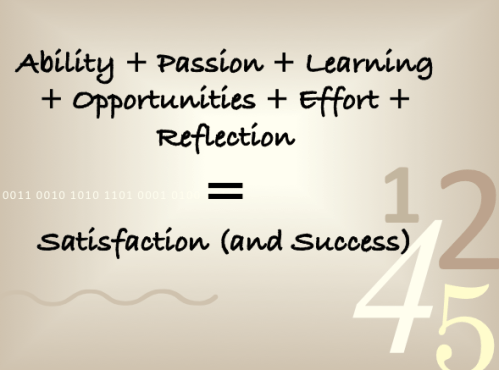
It is encapsulated in this formula:

Ability

We all have talents for some things and but are not so good at others. I know that if I decided suddenly at my age that I wanted to be a concert pianist, never having learned a musical instrument, I guess I might learn to play a basic tune on the piano but my abilities would prevent me actually achieving that dream. On the other hand, if I paid for piano lessons for one of my young grandchildren they would have a much better chance, yet they would still need some inherent ability. I guess the lesson here is that we each need to acknowledge our abilities – and pursue those from that set that really interest us as well.

+ Passion

I’ve found most things I’ve done in my life have been a success if they have had a passion element to them. I’ve really needed the heart for it before I’ve been able to make something a success. And there have been things I’ve done along the way that have not been so successful because they lacked such enthusiasm. I remember my father took me along to join a swim school and I only attended twice because I didn’t have the passion for swimming. My granddaughter, however, has that passion, and she’s in the state championships. She has the ability and the enthusiasm. If you’re going to do well at something – including media law – you need some ability and a good dose of passion.

+ Learning

Then of course you need the learning. No matter how talented you are at something you really need to commit yourself to learning more about it and that comes into play in all walks of our life. I did work at a previous university and I really love the motto of that place – “Forever Learning”. I’ve come to believe we all really are forever learning, and even when we’re really good at something we can always learn more. I think part of my joy in media law is in always learning something new. Only last week a student told me about a new case involving emojis and how they can leave you vulnerable to a defamation action – and that was something new I’d learned so I was really excited to share that on Twitter. Even though you might be a so-called ‘expert’, if you see yourself as forever learning more about something you maintain the passion and you do actually improve in the process.

+ Opportunities

There is no denying we also need opportunities. Those of us attending Griffith University have a certain level of advantage over many of our peers. Others might be deprived of such an opportunity for a host of reasons. We really owe it to ourselves, to our parents, to each other, and to the rest of society to maximise the chances we have been given. That can help drive the passion for what we are doing if we understand it and take advantage of every chance we can to pay it back along the way by creating opportunities for others.

 + Effort

Sometimes it really does take considerable effort, even if you have some natural ability, passion, and you are willing to learn and are presented with the opportunities. There’s a point at which you really have to lift yourself to put in the effort. Some of you are already doing well in media law, but with that extra effort you’ll do even better. It could be you’ve decided by this stage of the course that your ability and passion is not really in media law, but that extra effort can get you over the pass line and perhaps an even higher result.

+ Reflection

Reflection is important in this formula. We need to reflect as we go – as we address a particular problem – but we also need reflection upon our own progress in our career and life. We need time out – whether it is a dedicated meditation period – or something less formal like a mind-mapping or journaling session, or perhaps a brainstorm or heart to-heart chat with a mentor. We need to assess and reassess where we are in our pursuit of our goals and in resetting them along the way, perhaps as we adjust them to ethical or moral frameworks or in response to other priorities that have emerged. We all make our New Year’s resolutions, but how seriously do we take them and how well do they truly map our foreseeable futures? Perhaps we need to engage in that process more frequently than annually. I think we all can benefit from a timetable of serious reflection upon where we have been, where we are headed, what the realistic goals are, whether this is what we really should be doing, and how to perform even better on each of the above criteria.

= Satisfaction (and Success)

These six factors I believe add up to constitute your satisfaction with what you are pursuing – the level of satisfaction in your life, your career and even in a particular course like media law if you apply yourself to each of them in a considered way. You’ll notice I placed in brackets after the word Satisfaction “(and Success)” because success can be measured in so many different ways. Some people finish their careers with others seeing them as extremely successful in terms of wealth, position and other social acknowledgements. But do they actually have satisfaction? Some do – they are indeed satisfied with their lives and what they have achieved in their careers and the opportunities they have created for others. But really I think the success element is linked strongly to satisfaction. We can get substantial satisfaction without those monetary and other tokenistic rewards but through intangible rewards by having pursued and achieved considered goals with passion, to the best of our abilities, making the most of each opportunity – and learning from our studies and our mistakes along the way.

May you be safe. May you be well. May you be content.

Disclaimer: While I write about media law and ethics, nothing here should be construed as legal advice. I am an academic, not a lawyer. My only advice is that you consult a lawyer before taking any legal risks.

© Mark Pearson 2020 – the moral right of the author has been asserted.
Leave a comment

Filed under cognitive reflection, journalism, journalism education, media ethics, media literacy, meditation, mindful journalism, reflective practice, social media

Using cognitive reflections in teaching and learning media law

By MARK PEARSON

Cognitive reflection can be a useful technique for introducing and revising media law topics.

Google Images – pxfuel.com

Our research on the use of mindfulness based meditation techniques pointed to the possibility of short focussed reflections upon media law and ethics topics as a device to encourage a “pause and reflect” approach in the workplace and to deepen learning.

Please  see:

Pearson, M., McMahon, C., O’Donovan, A. and O’Shannessy, D. (2019), ‘Building journalists’ resilience through mindfulness strategies’. Journalism. https://journals.sagepub.com/doi/abs/10.1177/1464884919833253

Pearson, M., McMahon, C., and O’Donovan, A. (2018) ‘Potential benefits of teaching mindfulness to journalism students’. Asia Pacific Media Educator (December). 28:2: https://doi.org/10.1177/1326365X18800080

This year I have recorded nine such media law cognitive reflections for the use of media law students – all of 7-11 minutes’ duration.

Anecdotal feedback from students to date has been that some love them as another means of accessing the topic at hand, while others found them to be of little value.

I recommend a basic introduction to meditation/reflection prior to the subject-based reflections, such as this “Invitation to Focus” from the Griffith University Counselling and Well Being team.

So, here are the nine cognitive reflections on media law topics. I’d appreciate any feedback.

Reflection 1 – Open Justice

Reflection 2 – Contempt

Reflection 3 – Defamation introduction

Reflection 4 – Defending defamation

Reflection 5 – Secrets and confidentiality

Reflection 6 – Hate speech

Reflection 7 – Intellectual property

Reflection 8 – Privacy

Reflection 9 – Media law in practice / revision

Disclaimer: While I write about media law and ethics, nothing here should be construed as legal advice. I am an academic, not a lawyer. My only advice is that you consult a lawyer before taking any legal risks.

© Mark Pearson 2020 – the moral right of the author has been asserted.

Leave a comment

Filed under cognitive reflection, journalism, journalism education, media ethics, media literacy, meditation, mindful journalism, reflective practice, social media

Ten steps to wisdom and compassion in times of crisis

By MARK PEARSON

The world’s great religions and philosophies offer us solace and strategies during crises and chaos. In recent years I have worked with colleagues to apply some of the foundational principles of Buddhism at a secular level to journalism, ethics, communication and teaching.

Most Creative Charity Awareness Campaigns | Causes | Buengo App

Google Commons image. Unknown photographer.

That research might have benefits for others as we face threats to our health and finances.

This 10-step approach can offer a blueprint for leadership in life, work and education for those who might not already possess a guiding religious, moral or ethical compass.

  1. The getting of wisdom: There’s much more to wisdom than just being smart. It is much closer to ‘emotional intelligence’ with a key factor being compassion for the welfare and feelings of other beings. A key to wisdom is routine reflection on each of the elements here.
  2. Perspective: The starting point is to acknowledge that suffering and stress are inevitable in our lives, and that it pays to reflect on their source – attachment to the people and things we love (including our own egos), ignorance of the information we need, and aversion to situations we fear. Things cause us pain each day, and life is punctuated by major moments of suffering interspersed with periods of joy. Knowing and accepting this might help ease suffering when it arises.
  3. Key understandings: The psychological literature supports this perspective on life’s ups and downs, and further demonstrates even small acts of kindness can improve the mental health of both the giver and receiver.
  4. Considering intent: Our big decisions – and even many of the smaller ones – can benefit from us exploring our real motivations. Why am I thinking of doing this? What’s really driving it? Is it self-advancement or self-gratification or am I trying to enhance the welfare of others?
  5. Wise livelihood: Many of us are reconsidering our jobs, careers and routines. How does this recalibration sit with our moral compass and our work ethics? Can our practices be better tailored to ease the suffering of others, or at least not add to it?
  6. Thoughtful communication: Our speech, social media use and even our body language are crucial to our relationships to others and the wider world. A short reflection before any communication shows wisdom and can contribute to the well-being of others, especially when we know so many others are anxious and troubled right now. If some leaders had paused to reflect, they might not have spoken certain words in recent weeks.
  7. Acting carefully: Speech is just one of our actions. What we do also has impacts on others, as we have learned in recent times as hoarding and distancing have suddenly appeared on our social radars. If we think before we act we can ease suffering and contribute to the happiness of others. For example, we might act to turn off the news if it is causing anxiety in our household.
  8. Maintaining effort: As we already know, all of this can take considerable effort on a range of fronts. We are being called upon to pause to reflect before we do many things we would have done without a thought just weeks ago – a handshake, a hug, touching our faces and going to the shops.
  9. Being mindful: If we can build into our daily routine just a few moments of reflection – perhaps a formal period of meditation or note-taking or a thoughtful walk, we can train ourselves to be mindful of our own thoughts and actions and their ripple effect on those close by and far away. The spread of this pandemic has involved the ripple effect of the acts of others globally, and our acts of kindness can have a similar ripple effect.
  10. Finding your ‘flow’: Just like the classical pianist or the Olympic champion, we can get ‘in the zone’ or ‘in the flow’ by combining the above strategies in our work and our lives. Practised repeatedly and effectively, we can all become maestros of wisdom and compassion even in the midst of crises – by doing what we do best to the limit of our abilities, by assessing our core talents and perhaps applying them in new ways, and by becoming kindness ambassadors by easing the burden of others.

For some of my related research, please see:

Pearson, M., McMahon, C., O’Donovan, A. and O’Shannessy, D. (2019), ‘Building journalists’ resilience through mindfulness strategies’. Journalism. https://journals.sagepub.com/doi/abs/10.1177/1464884919833253

Pearson, M., McMahon, C., and O’Donovan, A. (2018) ‘Potential benefits of teaching mindfulness to journalism students’. Asia Pacific Media Educator (December). 28:2: https://doi.org/10.1177/1326365X18800080

Disclaimer: While I write about media law and ethics, nothing here should be construed as legal advice. I am an academic, not a lawyer. My only advice is that you consult a lawyer before taking any legal risks.

© Mark Pearson 2020 – the moral right of the author has been asserted.

Leave a comment

Filed under cognitive reflection, journalism, journalism education, media ethics, media literacy, meditation, mindful journalism, reflective practice, social media

See The Conversation for my piece: ‘Coronavirus: 5 ways to manage your news consumption in times of crisis’ #MLGriff

By MARK PEARSON

Thousands of employees internationally are already working from home in COVID-19 self-isolation because of their recent travel, related symptoms or immune system vulnerability.

But to do so while habitually checking the news on devices – and allowing 24/7 news channels to play non-stop in the background – might erode your productivity and increase stress and anxiety.

A foundational element of media literacy in the digital era is striking an appropriate balance between news consumption and other activities. Even before the current crises, Australian research demonstrated news avoidance had risen among news consumers from 57% in 2017 to 62% in 2019, driven by a sense of news fatigue.

Self-help expert Rolf Dobelli implores us to stop reading the news. While he advocates going cold turkey and abandoning all packaged news consumption, Dobelli makes exceptions for long-form journalism and documentaries.

So too does philosopher Alain de Botton in The News – A User’s Manual, while proposing more positive news and journalism’s examination of life’s deeper issues, emotions and aesthetics.

In journalism education there has been a move towards “peace journalism”, “mindful journalism”, “constructive journalism” and “solutions journalism”, where the news should not merely report what is wrong but suggest ways to fix it.

Please read the full article – including my five tips on how you can stay in the loop at home while you get your work done (and help maintain your mental health)  here.

Disclaimer: While I write about media law and ethics, nothing here should be construed as legal advice. I am an academic, not a lawyer. My only advice is that you consult a lawyer before taking any legal risks.

© Mark Pearson 2020 – the moral right of the author has been asserted.

 

Leave a comment

Filed under coronavirus, journalism, journalism education, media literacy, mindful journalism, online education, social media

A mindful approach to introducing defamation to students #MLGriff

By MARK PEARSON

Colleagues from Griffith University gathered for a celebration of teaching and learning this week and I had the honour of presenting an open class session.

The forum was called ‘Teaching Using Engaging and Empowering Pedagogies’ and my class was titled ‘Practising mindfulness in the tertiary classroom’.

It was an attempt at putting into practice some of the research we have been undertaking in this space in recent years.

For the research underpinning it, please see:

Pearson, M., McMahon, C., O’Donovan, A. and O’Shannessy, D. (2019), ‘Building journalists’ resilience through mindfulness strategies’. Journalism. https://journals.sagepub.com/doi/abs/10.1177/1464884919833253

Pearson, M., McMahon, C., and O’Donovan, A. (2018) ‘Potential benefits of teaching mindfulness to journalism students’. Asia Pacific Media Educator (December). 28:2: https://doi.org/10.1177/1326365X18800080

You should get the gist of the mindfulness-based activities involved from the slide show captured below.

Enjoy.

Disclaimer: While I write about media law and ethics, nothing here should be construed as legal advice. I am an academic, not a lawyer. My only advice is that you consult a lawyer before taking any legal risks.

© Mark Pearson 2019 – the moral right of the author has been asserted.
 

Leave a comment

Filed under defamation, Eightfold Path, journalism, journalism education, media ethics, media law, mindful journalism, online education, reflective practice, social media

RIP Mike Grenby 1941-2019 – the parable of the kind professor

By MARK PEARSON

Australian journalism education lost one of its most dynamic and internationally regarded teachers this month – Bond University’s Emeritus Professor Mike Grenby.

The late Emeritus Professor Mike Grenby (left) and the author in March 2019

After employing him as a visiting journalist in 1998, Mike soon became a valued colleague and a treasured personal friend – a bond that continued to strengthen over the ensuing 21 years. He dined with us often as a regular guest at our family table and we had many adventures together in Australia and internationally. We already miss him greatly.

Bond University has published a worthy tribute to Mike, and his former employer, the Vancouver Sun, has run this obituary that focussed more on his earlier career as a reporter and personal finance columnist. Hundreds of former students, colleagues and acquaintances have commented on social media on the positive influences he had upon their lives.

I penned this piece of prose which his son Matthew read to Mike at a gathering of friends and family just a few days before he died on July 3.

Parable of the kind professor

It is said that many years ago a storytelling professor – a master of the written and oral arts – arrived with his wife from a foreign land where he was acclaimed nationally for his communication prowess. They soon forged many friendships and wide respect for their polite and caring inquiries into the lives and problems of those they met in their new community. Some colleagues even thought he was a Buddhist because of his outlook and demeanour, the Tibetan prayer flags he hung from his office door, and the chime of bells in the corridor each morning. But they soon learned the flags were souvenirs and the bells were simply the signal that the morning tea trolley had arrived.

In just a short time he lost his life partner and missed her greatly. After a period of deep mourning he began his search for a new love.  He travelled the world for almost half of every year, but he was never able to find a single love as deep and lasting as the first. Yet he offered his wisdom and his kindness in morsels to all those he encountered on his life’s journey.

Eventually, when this kind professor lay in a hospital bed – facing the inevitable end of all mortal beings – he realised that he had actually found the new love he had been seeking over all those miles and years. It lay not in a single individual (who could never be replaced) but it flowed from the thousands of kind and generous words and actions he had bestowed upon all he had met on his journey … students, colleagues, high officials, servants, fellow travellers and complete strangers. Their encounters with this kind professor – some fleeting, and many of a long duration – were life-changing. The sum of all these instances of the love and kindness he had given – and had in turn received – amounted to a greater love than any individual human could provide, and he realised that this had been the key to his life-long vitality, positive outlook and good fortune.

Some cultures believe the paths to enlightenment lie in acts of loving kindness and in the offering of wise counsel to others. This generous storytelling professor reached enlightenment in his final weeks and days as he was showered in the golden rays of all the love and kindness he had offered others throughout his almost four score years. The world was improved forever by the ripples of love he had bestowed upon it.

Thus, fellow travellers, pay heed to the lessons of this kind storytelling professor. Lend an ear to those in sorrow or distress, offer words of comfort and compassion, practice selfless generosity, and be a friend to all as you pass them in the corridor, on the beach or at the market. Our small gestures and courtesies ease suffering and cast light and warmth into the lives of those around us, and the life of this kind professor bears testimony to that universal truth.      

Rest in peace my good friend.

Disclaimer: While I write about media law and ethics, nothing here should be construed as legal advice. I am an academic, not a lawyer. My only advice is that you consult a lawyer before taking any legal risks.

© Mark Pearson 2019 – the moral right of the author has been asserted.


Leave a comment

Filed under journalism, journalism education, mindful journalism